Amir Shokeen Arrest: Tripura Police in Delhi as Racial Discrimination Debate Returns
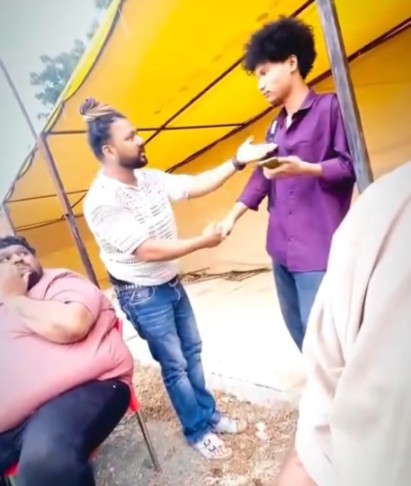
The case has revived questions about racial stereotyping and discrimination against people from the Northeast in the national capital. (Image video grab)
By NIRENDRA DEV
The influencer was arrested by Delhi Police over a controversial video involving a man from Tripura. The case has revived questions about racial stereotyping, discrimination against people from the Northeast and the response of institutions in the national capital.
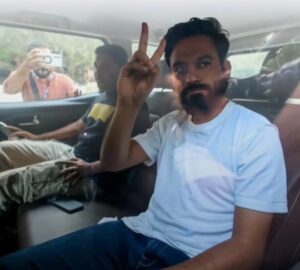
Agartala, October 23, 2026 — A team of Tripura Police has reached the national capital to take custody of social media influencer Amir Shokeen, who was arrested by Delhi Police in connection with an alleged incident of racial harassment and humiliation involving a person from Tripura.
The case relates to a video circulating on social media that allegedly depicts the harassment of the individual. Delhi Police registered a First Information Report at Sadar Bazar police station under Sections 192, 196, 352 and 353 of the Bharatiya Nyaya Sanhita (BNS).
According to officials, Shokeen was arrested on Wednesday evening in the Karol Bagh area with the help of technical surveillance. Police said he had been staying at a relative’s house and had been changing locations. His location was also traced to Shahdara on Thursday afternoon.
Tripura Police, which had registered a separate case, reached Delhi to take custody of the influencer. He was to be produced before a court for transit remand.
Shokeen had earlier apologised after the video triggered backlash on social media. He claimed that the video was scripted and that the man featured in it was known to him. According to Shokeen, the man had previously worked at a friend’s café in Ahmedabad, and the exchange was intended as humour, with both participants joking.
The explanation, however, has not ended the wider debate over racial stereotyping and the treatment of people from the Northeast in the national capital.
A 2007 booklet and the question of institutional attitudes
The controversy has revived memories of a booklet published by West Delhi Police in 2007 titled Security Tips for North East Students/Visitors. The publication offered advice to people from the Northeast on travelling and living in Delhi, including recommendations that drew criticism for placing the burden of avoiding harassment on those potentially facing it.
Among the reported recommendations were warnings against wearing “revealing clothes” on isolated roads or bylanes, advice to carry pepper spray and suggestions to visit “decent places” for dating. The booklet also referred to preparing bamboo shoots and other strong-smelling foods without disturbing neighbours.
Nearly two decades later, these recommendations remain a reminder of how official advice can reflect prevailing social attitudes. Tips framed as personal safety guidance can also reinforce stereotypes when they suggest that people from a particular region should alter their clothing, food habits or behaviour to avoid hostility.
The political context has changed since 2007, but the underlying question remains: how much progress has been made in addressing prejudice against people from the Northeast?
Manipuri Musician Beaten to Death in Delhi: When Did a Noise Complaint Become a Death Sentence?
Everyday prejudice beyond the capital
The problem is not limited to public encounters or viral videos. People from northeastern states have long described experiences of being questioned about their food habits, cultural practices and regional identities.
One office-goer who had studied in Delhi recalled being asked whether people from Mizoram ate beef and pork or consumed dried fish, particularly on Tuesdays or during festivals. Such questions may be presented as curiosity, but repeated assumptions about food, appearance and cultural practices can turn everyday interactions into experiences of exclusion.
A former chief secretary of Nagaland, A. M. Gokhale, was recalled as having described New Delhi as a city that still “thinks and behaves like Aurangzeb’s Delhi”. The remark captures a broader criticism: that the national capital’s institutions and social attitudes have not always kept pace with India’s cultural diversity.
Northeastern students have also spoken of being stereotyped through associations with insurgency, drugs and criminality. Women from the region have recounted additional experiences of harassment and discrimination.
These accounts point to a problem that cannot be measured solely by the number of police cases registered. They raise questions about whether people from different regions can live, study and work in metropolitan India without being treated as outsiders.
From Pink to the demand for equal opportunity
The 2016 Bollywood film Pink, starring Amitabh Bachchan among others, explored questions of consent, gender prejudice and the tendency to judge women through social stereotypes. Its courtroom drama included a character invoking a woman’s northeastern identity to justify assumptions about her behaviour.
Although fictional, such portrayals reflect a wider social problem: prejudice often operates through assumptions that people belonging to a particular region, community or gender are expected to conform to a prescribed set of behaviours.
The Sachar Committee had recommended broadening institutional support for India’s diverse population beyond narrowly defined religious, caste and ethnic identities. It also proposed an Equal Opportunity Commission. The recommendation raised the possibility of a more systematic mechanism to address discrimination, although the proposal did not lead to the institutional change envisaged in the report.
Who will address the problem?
The arrest of Amir Shokeen may lead to legal proceedings in the specific case, but it cannot, by itself, settle the wider debate over discrimination against people from the Northeast.
Police action is essential when allegations of harassment or humiliation warrant investigation. Equally important is the conduct of institutions, public awareness and the willingness of citizens to question everyday prejudice.
Laws can establish accountability, and commissions can provide mechanisms for addressing discrimination. But neither can automatically erase stereotypes embedded in social habits and attitudes.
The central question is not merely whether Delhi Police acts after an offensive video goes viral. It is whether people from the Northeast can expect equal dignity and respect in the capital without being asked to change who they are.
Not Just a Manipuri: Delhi-NCR’s Lawlessness Should Terrify Everyone
Follow The Raisina Hills on WhatsApp, Instagram, YouTube, Facebook, and LinkedIn




About The Author