Mamata vs Janata? Inside West Bengal’s 90 Lakh Voter Deletions
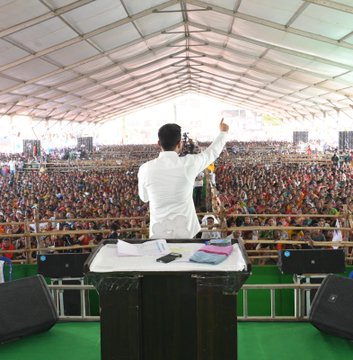
West Bengal Assembly election 2026 voter list SIR deletion controversy. (Image TMC on X)
With West Bengal’s first polling phase just days away on April 23, a fierce battle over electoral rolls has erupted — pitting the TMC’s narrative of Hindu voter suppression against the BJP’s claim of surgical cleansing of illegal Bangladeshi infiltrators from the state’s voter lists.
By NIRENDRA DEV
Kolkata, April 11, 2026 — The numbers at the centre of this storm are stark. West Bengal’s electorate now stands at 6.75 crore voters — down sharply from 7.66 crore before the Special Intensive Revision (SIR) began in October 2025, and even below the 7.34 crore who voted in the 2021 Assembly elections. Over 90 lakh names have been deleted through the SIR and adjudication process.
Analysts have broken down the deletions: approximately 63% of excluded voters are Hindus and 34% are Muslims. This figure has been seized upon by TMC and a section of the media to construct a narrative of deliberate disenfranchisement of Hindu voters — particularly Matuas — in BJP-targeted constituencies. But the full picture is considerably more complex.
Why Voters Get Deleted: The Facts First
Electoral deletions happen for multiple documented reasons. Change of residence — where a voter has permanently moved to another constituency but not updated their registration — is among the most common. Duplicate registrations, deceased voters whose names remain on rolls due to slow updating, and “not found” cases where Booth Level Officers cannot locate a voter after repeated visits are all standard grounds for removal. None of these are ideologically driven.
In West Bengal specifically, both the Left and the TMC have historically exploited these gaps — benefiting from names of people who moved or died remaining on rolls. The SIR was designed precisely to address this long-standing distortion.
The Muslim Deletion Angle: What’s Being Left Out
Muslims constitute 27% of West Bengal’s population. Their 34% deletion rate under SIR is being cited as evidence of Muslim targeting. But what this narrative conspicuously omits is the undeniable reality of illegal Bangladeshi immigration into West Bengal — a phenomenon that, by its very nature, would disproportionately affect Muslim demographics on electoral rolls. Sociologists and sections of the media appear either unable or unwilling to make this distinction.
The highest deletions under adjudication were recorded in Muslim-dominated districts. Murshidabad — the district with the highest Muslim population percentage in the state — recorded over 4.55 lakh exclusions out of 11.01 lakh names that went for judicial scrutiny. Significantly, Bhawanipore and Nandigram also saw more Muslim voter deletions than Hindu ones — a detail that makes the TMC leadership visibly nervous.
The Matua Question: Complexity the Headlines Miss
The Matuas are a powerful socio-religious community of Namasudra Scheduled Castes, founded by Harichand Thakur in the 19th century, who migrated from Bangladesh fleeing persecution. They influence over 40-45 Assembly seats in West Bengal and are central to BJP’s electoral arithmetic through the promise of citizenship under the Citizenship Amendment Act (CAA).
Reports of high Hindu deletion rates in Matua-dominated border constituencies like Bagda — where 46,826 of 50,230 deleted voters are Hindu — and Bongaon Uttar — where 37,101 of 42,164 deleted voters are Hindu — are accurate. But critically absent from most coverage is a vital constitutional clarification: the deletion of a Hindu name from electoral rolls does not mean deportation. The Government of India has been unambiguous — illegal Muslim infiltrators will be identified and removed, while Hindus facing religious persecution from Bangladesh, Pakistan, or Afghanistan will receive a sympathetic, constitutionally grounded approach under the CAA.
One community member, quoted anonymously in a Kolkata daily, expressed anxiety: “We have voter cards, Aadhaar cards and PAN cards. If we now declare that we were born in Bangladesh… all these identity documents will become invalid.” What the report did not add is that Aadhaar and PAN cards can always be verified by competent authorities — their existence does not confer immunity from scrutiny if underlying documents are found incorrect.
In Jangalmahal’s low-Muslim districts, the deletion pattern shifts entirely: Hindus account for 94% of exclusions in Jhargram, 91% in Bankura, and 88% in Purulia — figures best explained by migration patterns and residence changes rather than any communal targeting.
West Bengal: Women’s Quota Bill Puts TMC in Political Crossfire
The Political Battle Lines
Home Minister Amit Shah drew the sharpest line at a campaign rally: “BJP wants West Bengal to be free of infiltrators. Mamata Banerjee wants to protect them. We will trace each illegal immigrant and send them away.”
BJP’s West Bengal unit chief Samik Bhattacharya framed the election in sweeping terms: “This time the contest is between the public versus Mamata Banerjee.” He emphasised the party’s vision for all communities rather than dependence on specific caste or community blocs.
The TMC, meanwhile, raised multiple objections during the SIR process — at one point linking deaths of Booth Level Officers to SIR-related pressure — a claim that stretched credibility but gained media amplification.
As April 23 approaches, the battle in West Bengal is not just between two parties. It is a battle over who gets to define the electorate itself — and whose version of that story the voters believe.
FAQ
Q: How many voters were deleted in West Bengal before the 2026 election?
Over 90 lakh voters were deleted from West Bengal’s electoral rolls through the Special Intensive Revision (SIR) and adjudication process. The electorate now stands at 6.75 crore, down from 7.66 crore before SIR began in October 2025.
Q: Why were Hindu voters deleted in Matua-dominated constituencies in West Bengal?
High Hindu deletion rates in Matua-dominated constituencies like Bagda and Bongaon Uttar are largely attributed to migration patterns, residence changes, and documentation gaps among refugees from Bangladesh — not deliberate suppression. The Government of India has clarified that Hindu deletions do not mean deportation, with CAA providing a constitutional pathway for religiously persecuted Hindus from Bangladesh.
Q: What is the Matua community’s political significance in West Bengal?
The Matuas are a Namasudra Scheduled Caste socio-religious community founded by Harichand Thakur in the 19th century, who migrated from Bangladesh. They are estimated to influence over 40-45 Assembly seats in West Bengal and are central to BJP’s electoral strategy through the promise of CAA citizenship.
Q: Which district recorded the highest voter deletions in West Bengal 2026?
Murshidabad, the district with the highest Muslim population percentage in West Bengal, recorded the highest deletions under adjudication — with over 4.55 lakh voters excluded from 11.01 lakh names sent for judicial scrutiny.
Swinging Pendulum: West Bengal 2026 and the Battle for Narrative
Follow The Raisina Hills on WhatsApp, Instagram, YouTube, Facebook, and LinkedIn




About The Author