Can India and China Together Stop the US-Iran War?
After American strikes on Kharg Island — the source of 90% of Iran’s oil exports — geopolitics analyst Manish Anand says only a joint India-China diplomatic push can end the conflict
By TRH World Desk
New Delhi, March 15, 2026 — The US-Iran conflict has reached a dangerous new threshold. American forces, acting on President Donald Trump’s orders, carried out an intense bombing campaign targeting Kharg Island — the nerve centre of Iran’s petroleum exports, responsible for shipping 90% of the country’s oil to global markets. The strikes covered an area of roughly 20 square kilometres — comparable, in scale, to Delhi’s compact NDMC zone.
Trump maintained that only military targets were hit and that oil infrastructure was deliberately spared. But the fallout has deepened an already volatile crisis with no clear exit in sight.
“Every war ends eventually — one side agrees to talk,” said Manish Anand, geopolitics analyst and host of The Raisina Hills. “But the question is: who brokers that conversation between Washington and Tehran, and how?”
India Wants to Help — But Can Tehran Trust New Delhi?
A senior American official, speaking to a prominent US podcaster, reportedly suggested Trump’s best option is to call Prime Minister Narendra Modi and ask India to mediate between the US and Iran. But Anand is sceptical.
“India is not in a position to mediate,” Anand said, citing former Foreign Secretary Kanwal Sibal’s assessment. The former diplomat suggested a podcaster: that “Modi’s visit to Israel has firmly cast India as a pro-Israel nation in Tehran’s eyes.” And when India stopped buying Iranian oil under alleged American pressure — only resuming after Washington gave a green light — it possibly signalled to Iran that India follows the US line. Tehran won’t see New Delhi as neutral, suggested the former diplomat.
Anand pointed to a telling episode: it took four rounds of talks between External Affairs Minister S. Jaishankar and his Iranian counterpart, a direct call between Modi and Iran’s President, and a chartered flight to repatriate Iranian naval personnel stranded in Kochi — before two Indian tankers were finally cleared to cross the Hormuz Strait safely. “That entire episode showed Iran doesn’t fully trust India right now,” Anand noted.
China Is Strategically Positioned — But Washington Won’t Trust Beijing Either
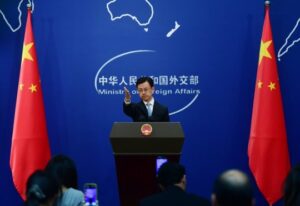
China, Iran’s closest strategic partner and its largest oil customer, appears better placed to negotiate with Tehran. Trump is scheduled to visit Beijing around March 30, and President Xi Jinping is expected to raise the war directly.
But Anand argues the US has its own reasons to resist Chinese mediation. “The American narrative has been that this war is partly about breaking China’s dominance in the Middle East — built on Iranian oil revenues,” he said. “Why would Washington hand Beijing the role of peacemaker?”
He added that China appeared to have anticipated the conflict well in advance, stockpiling Iranian crude and building up strategic reserves before hostilities began. “In strategic terms, China may be the biggest winner of this war so far — they were prepared.”
The Only Path Out: A Joint India-China Initiative
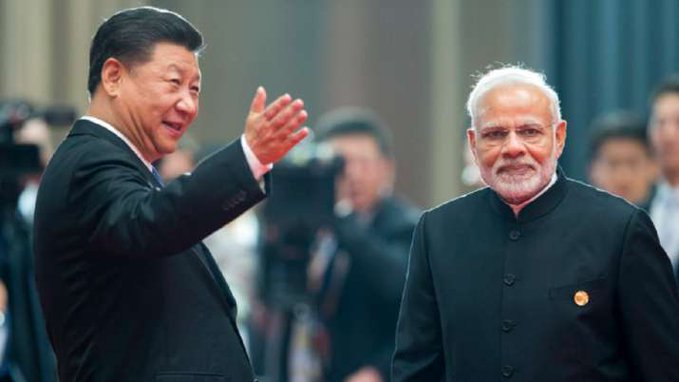
Anand sees one credible off-ramp — a coordinated diplomatic push by both India and China, leveraging India’s chairmanship of BRICS this year.
“India talks to America and Israel. China talks to Iran. Both work in parallel under a BRICS framework,” he said, adding: “Neither can do it alone. But together, they might find a middle path.”
For that to work, he argues Iran would need two firm guarantees: security assurances against future attacks, and a credible roadmap to end the sanctions regime. “Without those two pre-conditions from Tehran’s side, Iran has no incentive to seek a ceasefire,” Anand said.
The human and economic cost of the conflict is mounting fast. Iran is suffering battlefield losses it publicly celebrates as martyrdom — making any Iranian climb-down politically difficult domestically. Gulf oil infrastructure faces the threat of Iranian retaliation. And with the Houthis in Yemen threatening to shut down another critical global shipping lane alongside the Strait of Hormuz, global supply chains face severe disruption.
“For India, this is a net loss on every front,” Anand warned, adding: “Ten million Indian diaspora in the Gulf, heavy dependence on Gulf oil, deep trade ties with Saudi Arabia and the UAE — all of it is at risk.”
War and Prestige
“This war has become a prestige issue for both sides,” Anand concluded, adding: “America is the world’s largest military power — it can’t be seen to lose. Iran martyrs its dead and calls it strength — it won’t bow easily. The only realistic exit is a face-saving formula both sides can call a win. And right now, the only people who can construct that formula together are India and China.”
Trump’s Ego-Trip War Driving the Iran Conflict Toward Catastrophe
Follow The Raisina Hills on WhatsApp, Instagram, YouTube, Facebook, and LinkedIn




About The Author