Iran Rejects Ceasefire — Trump May Extend Deadline for 4th Time
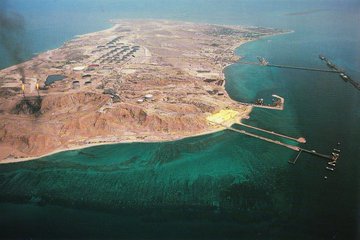
US President Donald Trump announced bombing Kharg Island in Iran (Image X.com)
US President issues apocalyptic ultimatum to Tehran over Strait of Hormuz deal; JD Vance confirms strikes on military targets; Iran deadline set for midnight GMT
By NIRENDRA DEV
New Delhi, April 7, 2026 —United States President Donald Trump issued a stark, civilization-level warning to Iran late Tuesday, posting on Truth Social: “A whole civilization will die tonight, never to be brought back again. I don’t want that to happen, but it probably will. However, now that we have Complete and Total Regime Change, where different, smarter, and less radicalized minds prevail, maybe something revolutionarily wonderful can happen, WHO KNOWS?”
“We will find out tonight, one of the most important moments in the long and complex history of the World. 47 years of extortion, corruption, and death, will finally end. God Bless the Great People of Iran.”
The post immediately triggered global alarm — with analysts, diplomats and world leaders scrambling to decode whether Trump was signalling a catastrophic military escalation, a nuclear threat, or deploying his signature pressure-negotiation playbook against Tehran.
Trump’s warning carries a specific condition: Iran must reach a deal — one “acceptable to me” — that guarantees free passage of oil through the Strait of Hormuz, one of the world’s most strategically critical waterways through which roughly 20% of global oil supply passes.
The US has set a hard deadline of 20:00 EDT (00:00 GMT / 01:00 BST Wednesday) for Iran to respond.
Iran Strikes SABIC: Global Industrial ‘Cardiac Arrest’ Feared
US Strikes Kharg Island — Iran’s Key Oil Export Terminal
Even as diplomatic channels remain open, the US has already acted militarily. American forces carried out fresh strikes on military targets on Kharg Island, Iran’s most critical oil export hub.
US Vice President JD Vance confirmed the strikes, stating he was aware of intentions to “strike some military targets” on the island and believes the US has “done so.”
Vance stressed the strikes do not represent a change in overall strategy, reiterating Trump’s earlier threat of “complete demolition” of Iranian infrastructure if Tehran fails to meet tonight’s deadline.
Meanwhile, Iranian state media reports two people were killed in a strike on a bridge in Kashan — hours after Israel had separately warned Iranian civilians not to travel by train “for the sake of your security.”
Vance Outlines Two Pathways — Deal or Economic Collapse
Speaking to reporters, Vance said the US has “fundamentally” completed its military objectives in Iran, and that how the conflict ends now rests with Tehran. He outlined two scenarios:
Pathway 1 — Deal: Iran agrees to become “a normal country” — ending funding of terrorism and rejoining the global system of commerce and trade.
Pathway 2 — No Deal: If Iran refuses to come to the table, “the economic situation in Iran will continue to be very, very bad.”
On Iran’s attempts to disrupt global energy markets, Vance said Tehran is trying to “exact as much economic pain on the world as possible” — but warned the US has the capacity to inflict “much greater pain.”
Nuclear Strike or Negotiating Theatre? The Question the World Is Asking
Trump’s language — “a whole civilization will die” — has triggered uncomfortable questions globally: Is the world’s most powerful leader signalling a nuclear or catastrophic military strike, or is this the same high-octane psychological pressure tactic he has deployed from Pyongyang to Beijing to Moscow?
The answer matters enormously. When a sitting US President uses the language of civilizational extinction, even if intended as leverage, the geopolitical, financial and humanitarian stakes are immediate and global.
Markets are watching. Allies are watching. And Tehran is watching.
A Lesson From History: Military Force Alone Does Not Win Wars
Sound military strategy is never purely about firepower. Non-military factors — timing, terrain, diplomacy, domestic politics, and economic realities — shape outcomes just as decisively as troop strength.
History offers a sharp lesson. In 1971, India’s Bangladesh Liberation War could have ended very differently had India rushed into East Pakistan in April or May. The monsoon flooding of June would have paralysed the Indian Army’s advance. It was Field Marshal Sam Manekshaw who had the strategic wisdom — and the professional courage — to say no to Prime Minister Indira Gandhi when she pushed for an early offensive. And crucially, Indira Gandhi had the rare political wisdom to listen.
The result: a swift, decisive victory in December 1971 — one of the most celebrated military campaigns in modern history.
Fast forward to May 2025: Prime Minister Narendra Modi made a similar call, choosing not to extend Operation Sindoor beyond its defined objectives. Restraint, at the right moment, is not weakness — it is strategic mastery.
The question tonight is whether Washington — and Tehran — have leaders capable of the same wisdom.
Retired U.S. General: Something “Amiss in trump’sPersonality”
Iran Rejects Ceasefire — Trump May Be Forced to Extend Deadline for Fourth Time
As the midnight GMT deadline approaches, there is little indication that Tehran is prepared to accept Trump’s ultimatum.
Iran has rejected a temporary ceasefire and responded instead with its own set of demands — which a senior US official bluntly described as “maximalist.”
The standoff places Trump in an increasingly uncomfortable position. If no agreement materialises before the deadline, the US President faces an outcome he has repeatedly sought to avoid: extending the deadline yet again.
This would mark the fourth extension in three weeks — a pattern that risks undermining the credibility of Washington’s threats and emboldening Tehran to hold its ground further. No hint of a move toward peace. No breakthrough. No back-channel signal of surrender.
The world is watching a high-stakes game of brinkmanship — and the clock is running out.
What Happens If There Is No Deal Tonight?
Three scenarios are now in play:
1. Trump Extends the Deadline (Fourth Time) The most likely outcome based on recent precedent. Buys more time for diplomacy but further erodes the credibility of US ultimatums and signals to Iran that waiting out Washington may be a viable strategy.
2. Massive Military Escalation Trump follows through on his threat of “complete demolition” of Iranian infrastructure. This risks a full-scale regional war, oil price shocks, and potential Iranian retaliation against US assets, Israel, and Gulf allies.
3. Last-Minute Back-Channel Deal A partial or face-saving agreement emerges through back-channel diplomacy — possibly brokered by Oman or Qatar — allowing both sides to claim a version of victory. This remains the most diplomatically desirable but currently the least likely outcome.
Iran Has Become the World’s Fourth Military Power, Says Analyst
Follow The Raisina Hills on WhatsApp, Instagram, YouTube, Facebook, and LinkedIn




About The Author