Olivia Rodrigo’s Daisy Chain Fields Brings Women in Music Together as Artists Warn of a ‘Crisis Point’
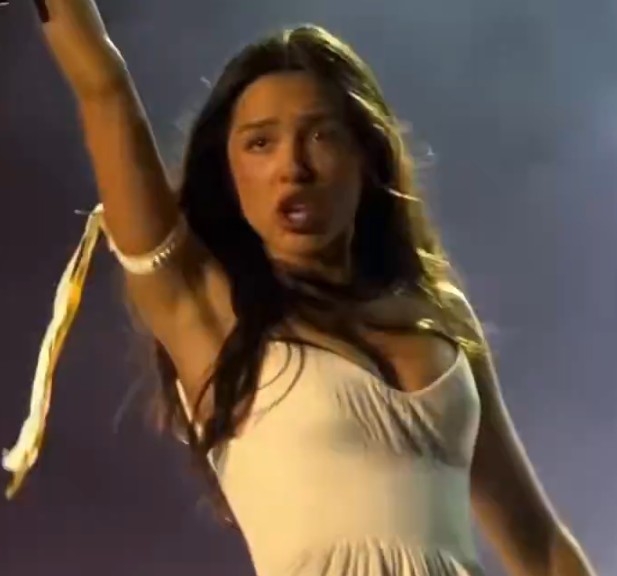
Olivia Rodrigo performs at her debut festival Daisy Chain Fields (Image video grab)
By TRH Entertainment Desk
Olivia Rodrigo’s first festival landed in Irvine this weekend with an intentionally cross-generational lineup and a stated political purpose — organizers say it wasn’t just a concert, but a response to a “crisis point” for women’s rights.
Mumbai, August 31, 2026 — Daisy Chain Fields, the debut charitable music festival founded and curated personally by Olivia Rodrigo, took place on Saturday, August 29, at Great Park in Irvine, California — a one-day event built around an unusually wide-spanning, all-women-led lineup and a fundraising mission Rodrigo framed as inseparable from the music itself.
The bill spanned musical generations in a way few modern festivals attempt. Performers included Chappell Roan, Doechii, Mitski, the Breeders, Bikini Kill, Garbage, and Rodrigo herself, with special guest appearances from Karen O, Sarah McLachlan, and Stevie Nicks. Chappell Roan performed before Rodrigo’s own headlining set, while Rodrigo and McLachlan shared a joint performance in addition to their individual sets.
Rodrigo didn’t leave the booking process to industry intermediaries — she called each artist personally to invite them onto the bill. Garbage frontwoman Shirley Manson, recalling the invitation, per media reports, said: “I told her it was very unusual for an agent not to be doing that,” praising Rodrigo for directly reaching out to musicians who had shaped her own sound.
Why Now: A Direct Answer to “Crisis Point”
Organizers and performers alike have been explicit that Daisy Chain Fields wasn’t purely a celebratory event. The festival was designed to promote community, inclusivity, and women’s rights at a moment several artists described in urgent terms. Manson was quoted in media reports, saying: “I might have been naive, but it felt like there was more progress for women then. And here we are in 2026, as women’s rights are regressing all over the world. We’re at a crisis point.”
That framing extends directly into where the festival’s money goes. Reporting on the event notes that 100% of net proceeds are being directed to organizations including Planned Parenthood and the Center for Reproductive Rights, alongside broader nonprofit partners focused on advancing opportunities for women and girls, according to the festival’s own official materials.
Daisy Chain Fields draws its clearest lineage from Lilith Fair, the touring women-led festival Sarah McLachlan founded in 1997. Reporting on the festival’s origins notes McLachlan was the first person Rodrigo called when she began developing the idea, and that Rodrigo has cited Lilith Fair as a direct inspiration — including in her appearance in the 2025 documentary “Lilith Fair: Building a Mystery.”
The connection carries its own layer of history: Garbage was invited to play the original Lilith Fair in the 1990s and declined at the time, making Manson’s participation in Daisy Chain Fields, nearly three decades later, something of a delayed answer to that earlier invitation.
Behind the Scenes
The production itself had been built around the festival’s stated values. The Hollywood Reporter reported that Daisy Chain Fields was shot largely by female photographers — a deliberate choice extending the festival’s women-forward mission behind the camera as well as on stage.
The event was formally announced on June 22, 2026, through social media, a Pitchfork e-magazine feature, and Southern California radio station 88.5 The SoCal Sound, with organizers noting an “overwhelming” response from ticket buyers and continued fundraising support in the lead-up to the event.
For Rodrigo, Daisy Chain Fields marks a notable evolution — from pop headliner to festival curator with an explicit activist mission — arriving at a moment when she and several of her fellow performers, including recent breakout star Chappell Roan, have increasingly folded political and social commentary into their public platforms. The festival’s structure — an intentional bridge between riot grrrl-era acts like Bikini Kill, 1990s alt-rock veterans like Garbage and the Breeders, and current chart-toppers like Doechii and Roan — is itself part of the message organizers sent: that the fight the original Lilith Fair generation waged in the 1990s remains, in their view, very much unfinished.
Nada Brahma in Delhi: Music for Meditation at Bharat Mandapam
Follow The Raisina Hills on WhatsApp, Instagram, YouTube, Facebook, and LinkedIn




About The Author