Did Israel’s Iran Victory Become a Strategic Defeat?
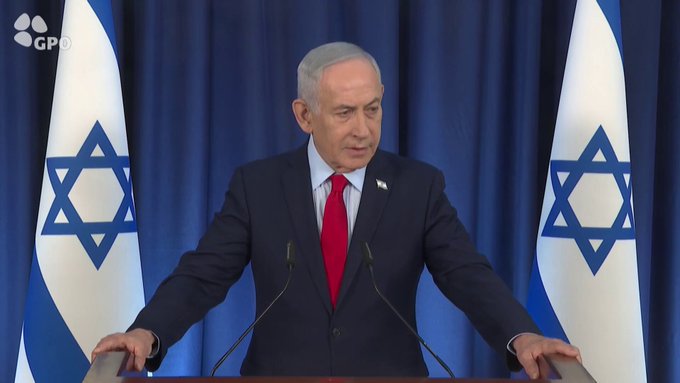
Israel PM Benjamin Netanyahu press conference explained (Image video grab)
By TRH World Desk
Netanyahu’s Endless War? Analyst Says Israel’s Iran Strategy May Be Backfiring
New Delhi, June 17, 2026 — After the electronic signing of the US-Iran deal, there is a sense of a major strategic loss in Tel Aviv. Israeli Prime Minister Benjamin Netanyahu stays belligerent. He has vowed that the deal will not limit Israel from its operations in Lebanon. But Israel faces a swift rupture in aggressive posturing as US President Donald Trump wires Tehran into his geopolitical loop.
Several analysts had termed the US-Iran war as a war for Netanyahu. In Trump, the Israeli Prime Minister had found a willing ally who walked the line to attack for a “swift regime change.” But Iran stunned the US, as Washington counted losses in the Middle east. A prolonged conflict may possibly have sunk the prospects of the Republicans in the Mid-Term elections in the US in November this year.
Azriel Bermant, a geopolitical analyst, reasons that “the Israeli government has become increasingly dependent on conflict and resistant to diplomatic solutions.” In his analysis on his Substack platform, Bermant recalls “supporting Israel’s June 2025 military campaign against Iran, known as Operation Rising Lion, because Tehran’s nuclear programme appeared to have reached a critical stage.”
He argued in the article that “Israel’s strikes severely damaged Iranian nuclear facilities, eliminated senior Revolutionary Guard commanders, and degraded Tehran’s missile capabilities.” “The operation was widely viewed as a military success. Even then-German Chancellor Friedrich Merz described it as the dirty work Israel is doing for all of us,” he added.
Yet one year later, Bermant notes, Israeli children had to take shelter from Iranian missile attacks rather than attending school. “If the war in 2025 was such a success, why did the conflict return,” he asked.
His answer is blunt. Netanyahu, he argues, never intended the confrontation with Iran to truly end.
According to Bermant, the current escalation cannot be understood solely through the lens of Iranian provocations. While Tehran responded to Israeli strikes on Hezbollah-linked targets in Beirut, the analyst contends that Netanyahu had already signalled his intention to continue “the struggle against Iran after the previous conflict ended.”
The deeper concern, Bermant writes, is that military victories may have failed to achieve their intended strategic objectives. “Rather than weakening the Iranian regime, the joint US-Israeli campaign appears to have strengthened hardline forces in Tehran,” he added.
Bermant also suggests that Netanyahu faces domestic political incentives to maintain a wartime footing. With elections approaching and public confidence in the government under strain, continued conflict can shift attention away from political challenges and reinforce the image of a leader confronting existential threats.
Perhaps most significantly, the analyst warns of a growing divergence between Washington and Jerusalem. “That tension could become the defining geopolitical story of the coming months. For decades, Israeli and American interests in the Middle East largely moved in parallel,” Bermant wrote, arguing that the latest crisis suggests those interests may now be diverging.
The central paradox, he concludes, is that a war launched to weaken Iran may have left Tehran more resilient, more radical, and more influential than before. “If that assessment proves correct, Israel’s military successes may ultimately be remembered as tactical victories that failed to deliver lasting strategic gains,” he added.
From Dismissal to Realism: What Hasnain’s Pakistan Thesis Means for Indian Strategy
Follow The Raisina Hills on WhatsApp, Instagram, YouTube, Facebook, and LinkedIn




About The Author