Ideological Crisis in More Ways Than One: Mamata Loses Nandigram Candidate as TMC Identity Is Split
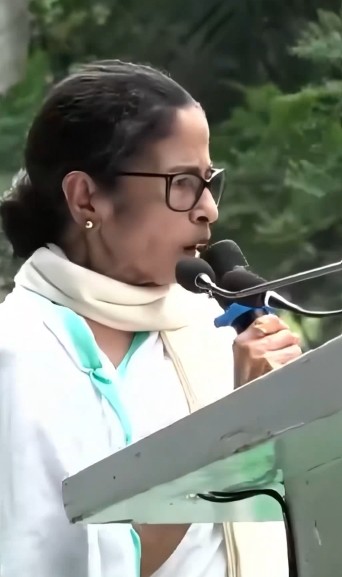
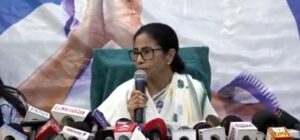
Mamata Banerjee faces a fresh political test after her faction's Nandigram bypoll candidate withdrew her candidature. (Image AITMC on X)
By NIRENDRA DEV
The withdrawal of Mamata Banerjee’s Nandigram candidate, followed by the freezing of the TMC’s traditional name and symbol, has exposed a deeper organisational crisis ahead of the October 6 bypoll.
Kolkata, September 19, 2026 — The political crisis surrounding Mamata Banerjee has acquired an unusual dimension in West Bengal. In the space of barely two days, her faction lost its Nandigram bypoll candidate, saw the Trinamool Congress’s familiar electoral identity frozen by the Election Commission and then faced another bout of uncertainty in Rejinagar.
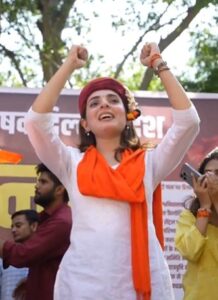
The Nandigram development was particularly striking. Sanchita Pradhan Dey, nominated by the Mamata Banerjee faction for the October 6 Assembly bypoll, withdrew her candidature after meeting Chief Minister Suvendu Adhikari at Nabanna. Mamata subsequently announced that her faction would support Congress candidate Milan Pradhan instead.
The timing was significant because the Election Commission had, a day earlier, frozen the original Trinamool Congress name and its familiar twin-flowers-on-grass symbol amid the dispute between rival factions.
For the bypolls, Mamata’s faction was allotted the name “Mamata All India Trinamool Congress” and the “Football Player” symbol, while the rival faction led by Ritabrata Banerjee was allotted “Democratic Trinamool Congress” and the “Envelope” symbol.
For a political organisation whose electoral identity has been built around the Jora Ghas-Phul, this is more than a change in ballot graphics. Symbols are organisational shorthand in Indian elections. They connect candidates, cadres and voters to a political brand built over decades.
The symbolism is particularly striking because Mamata Banerjee’s political journey is inseparable from the Trinamool identity. She broke away from the Congress and founded the Trinamool Congress in 1998. The party’s twin-flower symbol subsequently became one of the most recognisable political images in Bengal.
Now, for the October bypolls, that familiar identity will not appear on the ballot.
Nandigram Comes Full Circle
The Nandigram episode carries an additional political resonance.
Nandigram was central to the anti-land-acquisition movement that helped transform Bengal politics in 2007 and contributed to the political environment in which the Left Front eventually lost power in 2011. Suvendu Adhikari, whose political base is strongly associated with East Midnapore and Nandigram, later broke with Mamata and joined the BJP.
He defeated Mamata Banerjee in the 2021 Nandigram Assembly contest, turning the constituency into one of the defining symbols of their political rivalry.
The withdrawal of Mamata’s candidate now adds another layer to that history.
It would be premature, however, to conclude from one candidate’s withdrawal that Nandigram has permanently ceased to be relevant to Mamata’s politics. The immediate electoral fact is narrower: her faction is no longer fielding its own candidate and has instead backed the Congress nominee.
‘Ghas-Phul’ Vanishes: TMC Loses Its Name and Symbol as Bengal Politics Enters a New Phase
From ‘BJP Finish’ to a Changed Political Landscape
Mamata’s political rhetoric over the years has often presented the BJP as an adversary that could be contained in Bengal. Her “2019, BJP finish” formulation became part of the political vocabulary surrounding the Lok Sabha election.
The subsequent political trajectory has been very different.
The BJP expanded its presence in Bengal, while Suvendu Adhikari emerged as one of its most prominent leaders in the state. The 2021 Nandigram contest gave the BJP a symbolic victory over Mamata, even though the TMC retained power in Bengal at the time.
The current crisis is therefore not simply about one bypoll. It concerns political identity, organisational cohesion and the ability of a party faction to retain a recognisable electoral brand.
The Rejinagar Twist
The Rejinagar episode has added to the uncertainty, although it remains fluid.
Rabiul Alam Chowdhury, the Mamata faction’s candidate, initially announced his withdrawal on Saturday, citing concerns including the loss of the traditional symbol and difficulties facing his campaign. But after meeting Mamata Banerjee and receiving assurances regarding support and security, he reversed his decision and said he would remain in the contest.
That reversal is important. It shows that the Mamata faction’s difficulties are real, but the political situation is moving too quickly for every setback to be treated as permanent.
The Nandigram episode, meanwhile, was followed by another dramatic development: Congress candidate Milan Pradhan, whom Mamata backed after withdrawing her own candidate, was arrested in connection with an old case. Congress leaders described the timing as political retaliation, while the authorities’ action remains a matter of legal and political dispute.
An Ideological Crisis?
The deeper question is whether Mamata’s politics is facing an ideological as well as organisational crisis.
Her political journey has included alliances and tactical relationships with parties across the ideological spectrum. In an interview in 2001, she described the BJP as a “natural ally” while opposing the CPI(M). Years later, the BJP became her principal political challenger in Bengal.
That history does not by itself establish ideological inconsistency. Indian coalition politics has frequently involved tactical realignments. But it does underline how dramatically Bengal’s political axis has shifted.
The immediate challenge for Mamata is now more concrete: can her faction retain organisational coherence when its established name and symbol are unavailable and when candidates themselves become vulnerable to political uncertainty?
The Election Commission’s decision has transformed an internal party dispute into an electoral test. Mamata’s faction has challenged the decision in the Supreme Court, while the rival camp is preparing to contest under its newly allotted identity.
For the moment, therefore, the story is not simply about the disappearance of Ghas-Phul.
It is about whether a political brand built over nearly three decades can retain its electoral meaning when the symbol, organisation and leadership are all being contested simultaneously.
Nandigram Nemesis: Why Mamata Banerjee Now Faces an Existential Crisis?
Follow The Raisina Hills on WhatsApp, Instagram, YouTube, Facebook, and LinkedIn




About The Author