July CPI Cools to 3.4% — But the Fed’s September Dilemma Is Far From Over
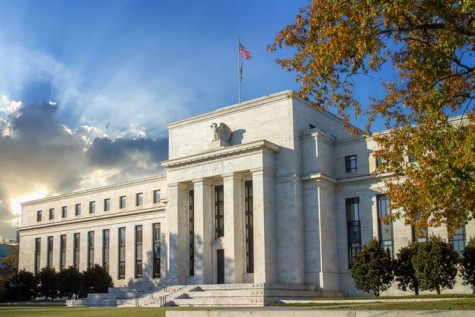
Will the US Federal Reserve stay on pause mode on rate or hike?
By S. JHA
Core inflation in the US hits lowest since March 2021, Iran war energy shock fades from price data — yet rate hike odds remain alive as Warsh signals zero tolerance for above-target prices
Mumbai, August 14, 2026 — Wednesday’s inflation report handed Wall Street a moment of relief — but not a resolution.
The annual inflation rate in the US slowed for a second consecutive month to 3.4% in July 2026, down from 3.5% in June, as the impact of the energy shock caused by the war with Iran continued to ease. Core CPI, which excludes food and energy, rose 0.2% on the month, with the annual core rate easing from 2.6% to 2.5% — both figures landing in line with the Dow Jones consensus forecast.
For market analyst Mark Minervini, the headline obscures a more nuanced signal. Core inflation matching its pre-Iran-war low — the best reading since March 2021 — suggests the conflict’s energy shock has not meaningfully bled into underlying price pressures. The implication: the Fed has breathing room in September, even if it isn’t obliged to use it.
The data confirms that reading, at least partially. Shelter was the biggest contributor to the monthly increase, accounting for roughly two-thirds of the overall 0.1% rise. Grocery prices actually fell 0.1%, helped by a 0.7% decline in the index for meat, poultry, fish and eggs — though food away from home rose 0.3%, with limited-service meals up 0.4%.
The Iran War Wildcard
The backstory to this data is geopolitical. Gasoline prices rose 24.6% year-over-year in July, down from 26.7% in June, while fuel oil prices increased 39.1% compared with 42.9% previously. The Iran conflict sent oil briefly to $115 per barrel earlier in the year, triggering a headline inflation spike to 4.2% in May. The subsequent moderation — oil has since retreated toward $80 per barrel — is now visibly feeding through.
Before new Fed Chair Kevin Warsh took the helm, the prevailing view among officials had been that any inflation uptick driven by the Iran war would likely be temporary, rendering rate hikes unnecessary. But Warsh, appointed by Trump, arrived with a different mandate — and a different tone.
The Warsh Factor
In remarks following the Fed’s most recent rate hold, Warsh was direct: “For some households, businesses and market professionals, five years of high inflation have left a mistaken impression that’s hard to shake — that the Fed’s implicit inflation target was somehow above 2%. Let me reiterate: there is no soft inflation target. There is no soft implicit target, not on this committee’s watch.”
That hawkishness is already fracturing the FOMC. Three dissenters at the July meeting voted to raise rates from their current range of 3.50% to 3.75%. Cleveland Fed President Beth Hammack wrote publicly that “now is the time to act,” warning that the longer the Fed waits to bring inflation back to 2%, the more costly the eventual adjustment will be for American households.
Market Reaction: A Coin Flip Tilts Toward Pause
The data moved the needle — but did not settle the debate. Following the July CPI release, futures traders priced in a 64% chance the Fed will keep rates unchanged in September, up from 52% the previous day. The odds of a 25-basis-point hike declined to 38.1% from 48.4% the day before.
Morgan Stanley Wealth Management’s chief economic strategist Ellen Zentner, per media reports, noted that the in-line inflation print “will keep the ‘no need to hike rates’ narrative that took hold after last week’s jobs report intact,” adding that unless August’s data tells a significantly different story, the Fed will likely hold in September.
That jobs report is the other half of the equation. July’s payrolls data showed employers shed 23,000 jobs against a forecast of roughly 95,000 new hires — a sharp miss that independently dampened the case for near-term tightening.
The Risks That Haven’t Gone Away
Minervini flags two upside risks to inflation that could yet force the Fed’s hand: supply shocks from the ongoing geopolitical environment and AI-driven demand — particularly as power-hungry data centres accelerate electricity consumption. Fed officials are actively assessing how the rapid adoption of AI could affect inflation, as total US power usage is expected to climb sharply in 2026, spurred largely by a surge in commercial demand from data centre expansion.
Karen Manna, fixed income investment director at Federated Hermes, summed up the prevailing Fed posture: “After more than five years of above-target inflation, policymakers want to see a clear and lasting trend before acting. Until then, this is a Fed in wait-and-see mode.”
Minervini’s read — that a September hike, if it comes, will be a modest 25 basis points already priced into the market — is consistent with where consensus has landed. Looking through year-end, markets still see a single 25-basis-point hike as the most likely outcome, with 45% odds, compared with a 28.9% chance rates stay at current levels and a 22.5% chance of two hikes.
The Fed gets one more CPI reading before its September decision. That print — not this one — may be the real deciding vote.
Global Fuel Crisis: Not Just Modi—Countries Enforce Energy Curbs
Follow The Raisina Hills on WhatsApp, Instagram, YouTube, Facebook, and LinkedIn




About The Author