Why India Is Becoming a New Pole of Global Power: Gonzalo Fiore Viani Explains

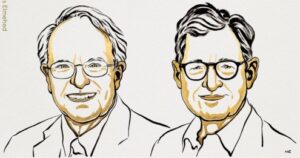
Gonzalo Fiore Viani exclusive interview. (Image The Raisina Hills)
Argentine international relations scholar Gonzalo Fiore Viani argues that the world is moving toward a polycentric order shaped by India, China, BRICS and the Global South. In this exclusive interview, he discusses great-power competition, strategic autonomy, technological rivalry and the future of global governance.
Gonzalo Fiore Viani — Argentine international relations scholar, geopolitical analyst, and author specializing in China, Russia, BRICS, the Global South, and the evolving international order — spoke to Manish Anand in a wide ranging interview.
Viani holds a Ph.D. in International Relations and a degree in Political Science, his work focuses on Asia’s rise, Eurasian geopolitics, strategic autonomy, and the transition toward a multipolar world. He is the author of Murallas de Neón: Crónicas de Beijing and Moscú no cree en lágrimas, and regularly contributes to media outlets on global politics, great-power competition, and economic transformation. He also teaches and lectures on international relations, Asian affairs, and contemporary geopolitics.
On His New Book and China
The most persistent misunderstanding among many Western policymakers is the tendency to interpret China’s rise through analogies derived from Western historical experience. There is often an assumption that because previous rising powers sought regional or global hegemony, China must inevitably pursue the same objective. However, this perspective overlooks the specific historical and civilizational context that shapes Chinese strategic thinking.
China’s leadership does not primarily frame its objectives in terms of global domination but rather in terms of national rejuvenation, political stability, technological advancement, and the restoration of what it considers its legitimate place in world affairs after the “Century of Humiliation.”
This does not mean that China is a status quo power. On the contrary, it seeks significant changes in the international system. Yet those changes are aimed less at replacing the United States as a hegemon and more at creating a world order in which multiple centers of power can coexist and where China’s interests are not constrained by institutions designed during an era of Western predominance.

This perspective also informed my recent book, Murallas de Neón: Crónicas de Beijing, which combines travel writing, political analysis, and cultural observation to explore China’s transformation from the ground level.
The book argues that understanding China requires moving beyond both fascination and fear. Beijing appears not merely as the political capital of a rising power, but as a space where imperial history, communist revolution, digital technology, and long-term strategic planning coexist simultaneously.
The metaphor of the “neon walls” refers to the new forms of power that define contemporary China such as high-speed railways, digital ecosystems, urban megaprojects, and technological infrastructures that reveal a civilization advancing toward the future without fully abandoning its past.
More broadly, the book suggests that China thinks not only in terms of territory or military balances, but in terms of historical time horizons that often extend far beyond the electoral cycles that shape decision-making in the West.
The danger lies in the fact that if policymakers assume China is pursuing inevitable confrontation, they may inadvertently create the very dynamic they seek to avoid. A more productive approach would be to understand China on its own terms, recognizing both the differences and the points of convergence that characterize one of the most important geopolitical relationships of our century.
On Polycentrism and the Emerging World Order
We have one thing for certain and that is that the old liberal international order no longer exists as such. I believe we are witnessing the consolidation of a genuinely polycentric order, although the transition remains uneven and incomplete.
Much of the contemporary debate still revolves around the notion of a bipolar rivalry between the United States and China. While this competition is undoubtedly central, it does not fully capture the complexity of the transformations underway.
Unlike the bipolar structure of the Cold War, today’s international system is characterized by the simultaneous rise of multiple actors with distinct sources of power. India, Russia, Türkiye, Saudi Arabia, Indonesia, Brazil and other regional powers increasingly possess the ability to shape outcomes independently of Washington or Beijing.
Moreover, power itself has become more diffuse. Technological innovation, financial networks, multinational corporations, sovereign wealth funds and even digital platforms have become important geopolitical actors.
Polycentrism therefore should not be understood simply as the redistribution of power among states but as the emergence of a more fragmented and complex architecture in which no single actor is capable of imposing its preferences globally.
India’s Place in the New Global Architecture
India’s trajectory is one of the most consequential developments of the twenty-first century. For decades, analysts described India primarily as a balancing power, seeking equilibrium among competing actors. Today, however, India increasingly sees itself as a leading power with global responsibilities and ambitions.
Prior to the Industrial Revolution, India accounted for a significant share of global economic output and served as a hub of commerce, intellectual exchange and technological innovation across the Indian Ocean. From this perspective, contemporary India’s emergence should not be viewed simply as the rise of a new power, but also as the return of an ancient civilization to a position of greater international influence after two centuries marked by colonial domination and relative decline.
What makes India unique is its ability to occupy multiple geopolitical spaces simultaneously. It is a member of the Quad, yet also participates actively in BRICS. It maintains strategic ties with Western countries while preserving strong relations with Russia. It speaks the language of the Global South while simultaneously aspiring to become one of the world’s major economic and technological powers. This flexibility reflects a long-standing tradition of strategic autonomy that can be traced back to the Non-Aligned Movement and to India’s determination to avoid excessive dependence on any external power.
India’s growing international profile is also closely linked to the resurgence of civilizational narratives in global politics. Unlike many twentieth-century states that defined themselves primarily through ideology, contemporary India increasingly presents itself as a civilization-state whose identity extends far beyond the modern nation-state. This historical consciousness shapes not only domestic politics but also the country’s vision of its place in the world.
In my view, India is evolving into an autonomous strategic center rather than merely a bridge between blocs. Its civilizational depth provide the foundations for becoming one of the principal poles of the emerging international system. The significance of India’s rise lies not only in its growing material power, but also in the fact that it represents a broader redistribution of influence from the Atlantic world toward Asia, a process that may define global politics for much of the twenty-first century.
Russia After Ukraine
The Ukraine conflict undoubtedly altered Russia’s position in the international system, but many Western forecasts underestimated Moscow’s capacity for adaptation. Expectations of economic collapse, diplomatic isolation and strategic irrelevance did not materialize in the manner many anticipated.
This perspective was also shaped by the research and field observations that informed my book Moscú no cree en lágrimas: Crónicas sobre el país que Occidente no entiende. Rather than analyzing Russia exclusively through the lenses of military power or geopolitical confrontation, the book explores how history, memory and identity continue to shape everyday life in contemporary Russia.
Through journeys across Moscow and Saint Petersburg, encounters with ordinary citizens, observations of Soviet monuments, Orthodox churches, metro stations and public spaces, I sought to understand a country that often appears in Western debates as an abstraction rather than a lived reality. The central argument is that Russia cannot be reduced either to the Soviet past or to the current conflict in Ukraine. It is a civilization-state with a distinct historical consciousness, one that continues to influence how Russian elites and society perceive their place in the world.
One of the lessons of the book is that many external observers underestimate the importance of historical memory in Russian political culture. Questions of security, sovereignty and international status are not viewed solely through contemporary calculations of power but are deeply connected to centuries of invasions, territorial expansion, imperial experience and national sacrifice. Understanding Russia therefore requires moving beyond headlines and recognizing the enduring influence of these historical narratives on both domestic politics and foreign policy. The objective of the book was not to idealize Russia, but rather to examine a society that remains far more complex, contradictory and difficult to categorize than many prevailing Western interpretations suggest.
Russia remains one of the world’s leading military powers, possesses vast natural resources and continues to play a critical role in Eurasian geopolitics. Equally important, the conflict accelerated Russia’s strategic pivot toward Asia, the Middle East and Africa. Relations with China deepened significantly, while countries across the Global South often resisted pressure to fully align with Western sanctions.
The Rise of the Global South
The concept of the Global South is often criticized for being excessively broad, heterogeneous and analytically imprecise. To some extent, this criticism is justified. India, Brazil, South Africa, Saudi Arabia, Indonesia and Nigeria possess distinct historical experiences, political systems, economic structures and strategic priorities. Unlike the Western alliance during the Cold War, the Global South is not united by a common ideology, a collective security framework or a shared institutional architecture.
However, focusing exclusively on these differences risks overlooking a more profound historical transformation. The significance of the Global South lies not in political uniformity but in the emergence of a shared awareness that the distribution of power in the international system no longer reflects contemporary realities.
What we are witnessing is the gradual political awakening of regions that account for the majority of the world’s population, an increasing share of global GDP, and some of the fastest-growing centers of technological and industrial development, yet remain underrepresented in many of the institutions that govern international affairs.
The origins of this phenomenon can be traced back to the Bandung Conference of 1955 and the subsequent Non-Aligned Movement. Yet the contemporary Global South differs significantly from those earlier projects. During the Cold War, many developing countries sought primarily to preserve their autonomy between two competing blocs.
Today, their objective is not merely non-alignment but active participation in shaping the rules, norms and institutions of the new international order. In that sense, the Global South should be understood less as a defensive coalition and more as a revisionist force seeking greater representation within global governance.
What unites these countries is a growing dissatisfaction with the asymmetries embedded in the post-1945 international architecture. This dissatisfaction extends beyond questions of political representation. It encompasses access to development finance, technology transfers, industrial policy, trade regimes, climate governance and the structure of international financial institutions.
Many governments in Asia, Africa and Latin America increasingly argue that existing mechanisms were designed during a period when economic and political power was concentrated in a relatively small group of Western states and have not adapted sufficiently to the realities of the twenty-first century.
At the same time, it would be a mistake to romanticize the Global South as a coherent geopolitical bloc. Significant tensions exist between many of its members, including competing regional ambitions, border disputes and divergent economic interests.
India and China, for example, cooperate within forums such as BRICS while simultaneously competing for influence across Asia. Gulf states pursue priorities that differ substantially from those of Latin American democracies or African development-oriented governments. The Global South is therefore better understood as a political space rather than a unified strategic actor.
Nevertheless, its growing influence is one of the defining features of our era. The expansion of BRICS, the increasing diplomatic activism of middle powers, and the reluctance of many states to align automatically with either Washington or Beijing all suggest that international politics is becoming more decentralized. The Global South is not seeking to overturn the international order entirely, rather, it seeks to renegotiate the terms of participation within it.
Ultimately, the rise of the Global South reflects a broader transition from a predominantly Western-centric order toward a more pluralistic and polycentric world. The central question is not whether the Global South will become a unified geopolitical force, but whether its diverse actors can collectively exert enough influence to reshape the institutions, norms and power structures that will define global governance in the decades ahead.
India–Argentina Relations
The relationship between Argentina and India has become increasingly important in recent years, driven by structural complementarities between the two countries. India represents one of the fastest-growing major economies in the world, while Argentina possesses significant resources in sectors that are strategically important for India’s development.
Lithium is perhaps the most obvious example. As India seeks to expand its electric vehicle and renewable energy sectors, access to critical minerals becomes increasingly important. At the same time, Argentina remains a major producer of food and agricultural commodities that can contribute to India’s long-term food security.
Beyond economics, both countries share an interest in promoting a more plural international order. While their foreign policy traditions differ, there is considerable room for cooperation in multilateral forums, technology, energy and South-South diplomacy. The challenge is to move beyond a primarily commercial relationship and build a more comprehensive strategic partnership.
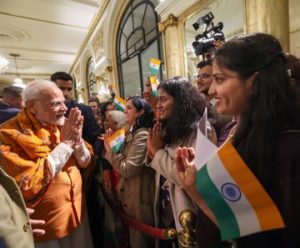
In 2025, for example, Modi visited Buenos Aires and it was historic because he was the first Indian prime minister in visiting Argentina in more than over half a century.
Why India Must Go Beyond ‘Buy Local’ and Follow Brazil’s Lead
Europe’s View of India
Europe’s perception of India has undergone a profound transformation over the last decade. Previously, India was often viewed primarily through an economic lens as a large market and a destination for investment. Today, it is increasingly regarded as a strategic actor.
Several factors explain this shift. The pandemic exposed vulnerabilities in global supply chains. Growing tensions between the United States and China highlighted the risks associated with excessive dependence on a single manufacturing hub. At the same time, concerns regarding technological sovereignty and critical infrastructure became more prominent.
Within this context, India emerged as an attractive partner. European policymakers increasingly view India not only as a market but also as a potential pillar of economic diversification, technological cooperation and geopolitical stability. In many respects, Europe’s growing engagement with India reflects broader efforts to adapt to a more fragmented international environment.
The rise of India is also significant I think because it challenges one of the central assumptions of the post-Cold War era, namely that the future of international politics would be shaped primarily by the Atlantic world and, later, by the U.S.-China relationship.
India’s emergence suggests that the twenty-first century may not be defined by a simple bipolar competition, but by the return of several historical centers of power that had occupied prominent positions in the global economy before the rise of the modern Western order. In this sense, India’s ascent is not only a national story but part of a broader rebalancing of global power toward Asia.
Trumpism and the Global South
The significance of Trumpism extends far beyond Donald Trump himself. It reflects deeper structural transformations within American society, including skepticism toward globalization, concerns about deindustrialization, growing distrust of political institutions, and the resurgence of economic nationalism. In this sense, Trumpism should not be understood merely as a political movement or an electoral phenomenon, but as a symptom of broader changes affecting many Western democracies.
What makes Trumpism particularly important from an international perspective is that it challenges several assumptions that shaped the post-Cold War order. For decades, many countries operated under the expectation that the United States would remain committed to free trade, liberal internationalism, multilateral institutions and a relatively predictable foreign policy.

Whether under Republican or Democratic administrations, those broad pillars appeared relatively stable. Today, that certainty has eroded. Even when different administrations pursue different policies, the underlying debates about protectionism, industrial policy, immigration and strategic competition are likely to remain central features of American politics.
For countries of the Global South, the key lesson is that the international environment is becoming more volatile and less predictable. Strategic assumptions based on the permanence of a particular model of globalization can no longer be taken for granted. As a result, states must place greater emphasis on diversification, and resilience. This means expanding trade partnerships, strengthening regional institutions, investing in domestic technological and industrial capabilities, and avoiding excessive dependence on any single external actor.
At the same time, it is important to recognize that Trumpism is no longer exclusively an American phenomenon. Across Latin America and other regions, political leaders and movements have adopted elements of its discourse, including criticism of traditional political elites, opposition to progressive cultural agendas, appeals to national sovereignty and skepticism toward established institutions.
The electoral success of figures such as Javier Milei in Argentina, and the emergence of candidates such as Vicky Dávila and Abelardo de la Espriella in Colombia, suggest that some of the political dynamics associated with Trumpism are increasingly resonating beyond the United States.
This does not mean that these movements are identical. Each emerges from distinct national contexts and responds to specific domestic challenges. However, they share certain characteristics that reflect broader global trends that includes political polarization, dissatisfaction with established parties, the growing influence of social media, and demands for alternative political narratives.
In that sense, Trumpism may be understood not simply as an American political current but as one manifestation of a wider international reaction against aspects of the liberal-globalist consensus that dominated the post-Cold War era.
Ultimately, countries of the Global South must avoid viewing these developments solely through an ideological lens. Whether the future brings greater economic nationalism, intensified great-power competition or continued fragmentation of globalization, states will need greater flexibility and autonomy to navigate an increasingly complex international system.
BRICS, Multipolarity and Institutional Reform
BRICS is often judged according to unrealistic expectations. It is not an alliance and was never intended to function like NATO or the European Union. Its significance lies elsewhere.
The grouping reflects a broader historical shift in the distribution of economic and political power. The recent expansion of BRICS demonstrates that many countries perceive existing international institutions as insufficiently representative of contemporary realities. This does not mean BRICS will replace the current architecture, but it can contribute to its gradual transformation.
The organization’s effectiveness will depend on its ability to produce tangible outcomes in areas such as development finance, trade facilitation, technological cooperation and institutional reform. Internal differences certainly exist, but those differences are also a reflection of the increasingly diverse and decentralized nature of the new international system.
Looking Ahead to 2035
By 2035, I expect the international order to be characterized by three defining features such as multipolarity, technological competition and regionalization.
First, power will be more widely distributed among several major actors. The relative dominance of the West will continue to decline, not because Western countries are collapsing, but because other regions are rising more rapidly.
Second, technological competition will become a central dimension of geopolitics. Artificial intelligence, semiconductors, quantum computing and biotechnology may prove as important as military power in determining international influence.
Third, regional organizations and regional powers will play a larger role in global governance. As the international system becomes more fragmented, states will increasingly rely on regional mechanisms to manage economic and security challenges.
The most influential actors of 2035 will not necessarily be those with the largest armies, but those capable of integrating economic, technological, demographic and diplomatic power.
Beyond the Post-Cold War Paradigm
Perhaps the most important assumption that scholars and policymakers should abandon is the idea that the post-Cold War period represented the culmination of a universal historical process. During the 1990s, a significant part of Western intellectual and political elites came to believe that liberal democracy, market capitalism and economic globalization were not merely successful models, but the inevitable horizon toward which all societies would eventually converge.
The collapse of the Soviet Union was interpreted as evidence that ideological competition had been resolved and that the fundamental debates about political and economic organization had been settled.
Three decades later, reality appears considerably more complex. The expansion of globalization did not eliminate geopolitical rivalry. Economic integration did not dissolve national interests. Technological modernization did not produce political uniformity. Instead of convergence, the international system has witnessed the reemergence of historical, cultural and civilizational differences that many analysts assumed were becoming irrelevant.
What is particularly striking is that many of the actors shaping the twenty-first century have done so by challenging assumptions that were widely accepted during the unipolar era. China achieved extraordinary economic growth without adopting Western political institutions. India combines democratic governance with a strong civilizational consciousness and an increasingly autonomous foreign policy.
Russia has reasserted itself as an independent pole despite repeated predictions of decline. Across the Middle East, Asia, Africa and Latin America, states are seeking greater room for maneuver rather than deeper incorporation into a system dominated by a single center of power.
For this reason, contemporary geopolitics cannot be understood through frameworks developed during the exceptional circumstances of the 1990s. The world is no longer organized around a clear hierarchy in which one power establishes the rules while others adapt to them. Nor is it moving toward a new bipolarity comparable to that of the Cold War.
What is emerging is a far more fragmented landscape in which several centers of power coexist, compete and cooperate simultaneously.
Another assumption that deserves reconsideration is the tendency to equate modernization with Westernization. Much of the intellectual architecture of the post-Cold War period rested on the belief that economic development would gradually produce similar political, social and cultural outcomes across different societies.
Yet the contemporary international system demonstrates that multiple paths to modernity exist. Different countries are combining technological advancement, state capacity, market mechanisms and cultural traditions in ways that do not necessarily resemble the Western experience.
The resurgence of industrial policy, the return of strategic competition, the weaponization of finance and technology, and the growing importance of energy security all suggest that the era of hyper-globalization is giving way to a period in which states once again occupy a central role. Sovereignty, national resilience and control over critical technologies have returned to the center of strategic thinking in ways that would have seemed outdated to many observers twenty years ago.
At a deeper level, we may be witnessing the end of a historical cycle that began with the expansion of Western power during the modern era. This does not imply the decline of the West as a civilization or the collapse of the liberal order. Rather, it suggests that Western predominance is becoming one component of a broader and more diverse international system. The future will likely be shaped not by the universalization of a single model, but by the interaction of multiple political traditions, economic systems and civilizational perspectives.
The central challenge for scholars and policymakers is therefore not to explain why the world is deviating from the expectations of the post-Cold War era. It is to develop new conceptual frameworks capable of understanding a reality in which power is more diffuse, identities are more resilient and historical trajectories are more diverse than many theories once anticipated. The new international order is unlikely to be defined by convergence. It will be defined by coexistence, competition and negotiation among different visions of modernity.
Iran to Greenland: New Grammar of Empire with Silent Control
Follow The Raisina Hills on WhatsApp, Instagram, YouTube, Facebook, and LinkedIn




About The Author