Is the 2026 FIFA World Cup the BRICS Moment of Football?
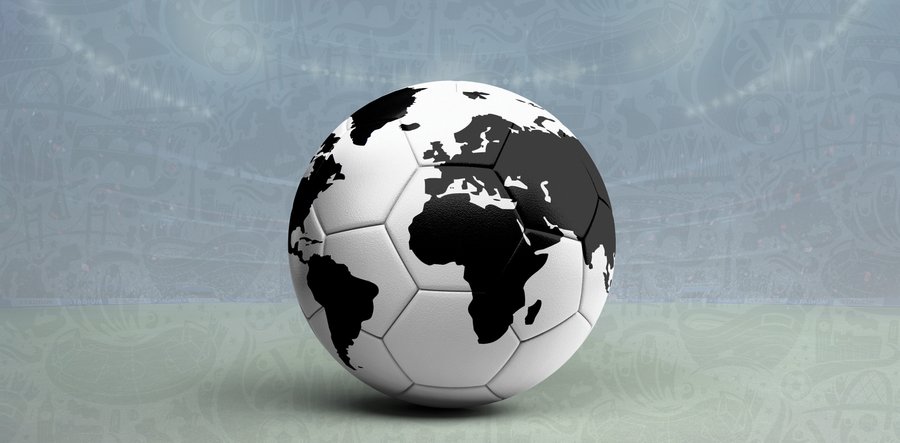
The expansion of the 2026 FIFA World Cup to 48 teams mirrors the rise of the Global South (image Gonzalo Fiore Viani on X)
By TRH World Desk
2026 FIFA World Cup Reflects Rise of Global South as Football’s Power Structure Evolves
New Delhi, June 23, 2026 — The decision to expand the FIFA World Cup from 32 to 48 teams is usually discussed in sporting terms. More matches, more revenues, and more countries getting a chance to participate. But there is another way to look at the 2026 World Cup. It may be the clearest sporting expression yet of a larger geopolitical transformation: the rise of the Global South.
Argentinian academic Gonzalo Fiore Viani argues that football is beginning to mirror the same shift that economists and international relations scholars have observed for years. The world is becoming less concentrated around the traditional Atlantic powers and more dispersed among emerging nations in Asia, Africa, the Middle East, and Latin America.
The comparison with BRICS is difficult to ignore. For years, countries such as Brazil, India, China, South Africa, and more recently Saudi Arabia and others have sought greater representation in global governance institutions. The argument has been straightforward: the distribution of power has changed, but international institutions have not fully adapted. Something similar is happening in football, added Viani.
For much of modern history, the World Cup was effectively an exclusive club dominated by Europe and South America. “The sport’s most prestigious tournament reflected the hierarchy of football power. Expansion challenges that structure by bringing more teams from Africa, Asia, and the Middle East into the global spotlight,” Viani noted.
Morocco’s remarkable run to the semifinals in Qatar in 2022 may prove to be remembered as a turning point. It was not merely an underdog story, added Viani. He further stated that “across Africa and the Arab world, Morocco’s success was interpreted as evidence that regions long regarded as football’s periphery could compete at the highest level. The symbolism went beyond sport. It echoed broader demands for recognition in global politics and economics.”
Africa’s rise deserves particular attention. Demographics alone suggest the continent will play a much larger role in the 21st century. By 2050, Africa is expected to account for a significant share of global population growth. “Football is already reflecting that trend. Countries such as Morocco, Senegal, Nigeria, Ivory Coast, and South Africa have invested heavily in academies, coaching systems, and professional structures,” he added. They are no longer viewed merely as entertaining outsiders.
The Middle East has chosen a different path. “Saudi Arabia’s aggressive investments in football, tourism, and global sporting events represent one of the most ambitious soft-power projects in modern history,” wrote Viani. Just as countries use diplomacy, trade, and development aid to build influence, Riyadh is increasingly using sport to shape perceptions and expand its global footprint.
Yet the relationship between geopolitical power and football success is not always straightforward.
China presents the most obvious contradiction. No country has transformed the global economy more dramatically over the past four decades. Beijing has become a major geopolitical actor, a technological power, and a central player in global trade. Yet Chinese football remains largely absent from the sport’s elite competitions. “The gap illustrates an important reality: economic influence can buy infrastructure and visibility, but it cannot automatically create sporting excellence,” added Viani.
This is where the argument for a footballing power shift becomes more complicated.
History offers reasons for caution. Every World Cup cycle seems to produce predictions that a new region is about to break through. “Cameroon thrilled the world in 1982 and again in 1990. South Korea reached the semifinals in 2002. African and Asian teams have repeatedly produced memorable performances. Yet when the tournament reaches its decisive stages, the trophy almost always remains within the traditional circle of power,” stressed Viani.
The favourites for 2026 remain familiar names: Argentina, Brazil, France, Spain, England, and perhaps Germany. The football establishment is not collapsing. Europe and South America still possess the deepest talent pools, the strongest domestic leagues, and the most developed football ecosystems.
“What is changing is not necessarily who wins, but who participates, who matters, and who gets seen,” added Viani.
That distinction mirrors developments in international politics. The rise of the Global South has not displaced the West from the center of the global system. Rather, it has made the system more plural. “Power is increasingly shared among a larger number of actors. Influence is more dispersed than it was three decades ago,” wrote Viani.
The 2026 World Cup may therefore be less about the end of European and South American dominance than about the beginning of a more representative football order. Just as BRICS seeks greater voice for emerging powers in global governance, FIFA’s expansion offers greater visibility to nations that historically stood on the margins of football’s biggest stage.
“Whether that visibility eventually translates into championships remains an open question. But the direction of travel is unmistakable. Football, like geopolitics, is becoming more multipolar,” Viani suggested.
Follow The Raisina Hills on WhatsApp, Instagram, YouTube, Facebook, and LinkedIn




About The Author