Chidambaram, Nara Lokesh Clash Over Delimitation Math
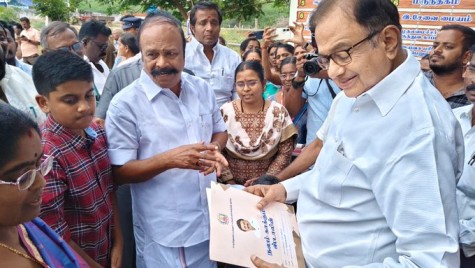
Former Finance Minister P. Chidamabaram during public outreach in Tamil Nadu. (Image X.com)
By AMIT KUMAR
A public exchange between P. Chidambaram and Nara Lokesh has revived the delimitation debate and southern states’ concerns over post-2026 parliamentary representation.
New Delhi, May 22, 2026 — A fresh political exchange over the contentious issue of delimitation erupted on Friday after senior Congress leader P. Chidambaram publicly challenged Andhra Pradesh minister Nara Lokesh over his remarks on the post-2026 redistribution of Lok Sabha seats, reviving anxieties among southern states over potential erosion of political representation.
In a post on X, Chidambaram urged Lokesh to “do his math again” while arguing that southern states would lose relative representation in the Lok Sabha if Article 81 of the Constitution is implemented without modifications after the freeze on seat allocation ends.
“My young friend, Mr Nara Lokesh, Minister in Andhra Pradesh should do his math before talking about delimitation,” Chidambaram wrote, referring to Lokesh’s interview to The Hindu.
The former finance minister said opposition parties had opposed the constitutional amendment proposal on delimitation because calculations showed that the five southern states would lose relative strength in Parliament while some northern states would gain due to demographic changes.
“The BJP tried to mask the outcome by increasing the representation in LS of each State by 50%, but that was exposed as an illusion,” he said.
Chidambaram argued that even if Andhra Pradesh’s Lok Sabha seats rose from the current 25 to 38, the state’s relative representation would still decline if Article 81 remained unchanged.
Lokesh hit back, saying the Congress itself had failed to explain why it opposed a mechanism aimed at addressing southern concerns.
“Every South Indian state — without exception — stands to lose relative representation compared to the northern states. That is precisely the concern we have consistently raised,” Lokesh wrote on X.
He pointed out that the constitutional freeze on seat allocation based on the 1971 Census is due to end after the first Census conducted post-2026, making reapportionment unavoidable.
The Telugu Desam Party leader argued that the NDA’s delimitation approach and proportional increase in parliamentary seats for all states was intended to prevent political imbalance.
“Why did the Congress party oppose the Delimitation Bill in Parliament? Was it political posturing at the cost of South India’s long-term interests?” Lokesh asked.
Delimitation Row and Southern Concerns
The delimitation debate has re-emerged sharply ahead of the expected exercise after 2026, with several southern states expressing concern that their success in population control may paradoxically reduce their influence in Parliament.
States such as Tamil Nadu, Kerala, Karnataka, Andhra Pradesh and Telangana have historically recorded lower fertility rates and slower population growth compared with parts of northern India.
Political leaders in the South have argued that redrawing parliamentary representation strictly on population numbers could reward states with higher population growth while penalising those that implemented family planning measures more effectively.
The issue gathered momentum earlier after leaders from southern states raised fears that post-2026 delimitation could shift parliamentary weight towards northern states, altering the federal balance.
The Union government has maintained that no final decision has been taken and consultations would be required before any exercise.
Delimitation Hits Congress in Assam as Muslim Shift Cracks Base
Follow The Raisina Hills on WhatsApp, Instagram, YouTube, Facebook, and LinkedIn




About The Author