Census 2027: Will Caste Data Revive Mandal Politics?
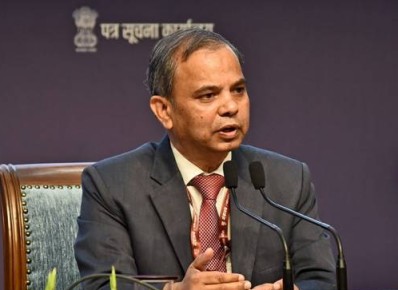
Registrar General and Census Commissioner of India addresses Press Conference on Census-2027, in New Delhi (Image PIB)
India finally begins its decadal Census today — with a five-year delay. The bigger question: when caste data is released, will it reshape Indian politics as the Opposition hopes?
By MANISH ANAND
New Delhi, April 1, 2026 — At last, India begins counting the population. The decadenal Census begins from today. Enumerators will check and verify with visits to households. India will be conducting the Census after a delay of five years. The data vacuum had left the policy makers to bank on 2011 Census data. Others banked on private data, and some even ventured into guess works.
Caste enumeration will be done in the second phase of the Census. That will be taken up in the latter parts of the year. Segregation of 33-question survey and caste enumeration delinks the two exercises. The first part of the Census is for the policy makers to adjust schemes on the basis of empirical data. The second part will reveal the caste numbers in India.
The statisticians have not given the dateline of the release of the verified caste data from the Census 2027. The Socio-Economic and Caste Census 2011 should as of now act as an example of how the government releases data. The caste data was never released even after the government had spent massively. The explanation offered unofficially was of humongous erroneous data. Castes, sub-castes, and their unending mutations had fretted the enumerators. The data on the caste never became public. ‘
Afterwards, Bihar Chief Minister Nitish Kumar in the company of his then deputy CM Tejashwi Yadav became a cheerleader of caste enumeration. After litigations and major expanses, Kumar faced blushes as his own caste, the Kurmi, was shown to be just about 2.8 percent of Bihar’s population. Until then, claims were made that Kurmis in Bihar were almost six to seven percent. Predictably, Kumar lost interest in caste survey.
But Bihar-based Hindi dailies had documented pains of enumerators in noting castes and sub-castes. Enumerators were stressed with the exercise. But Census 2027 ventures to note down castes of the people.
Simple expectation will be for the caste data to become public at the earliest. That will form basis for the Opposition to demand reservations in jobs and educational institutions proportionately for the backward castes. The politics of social justice will take the centre stage.
But recent electoral trends suggest that predicting politics in simplistic terms is hazardous. Bihar presented the biggest test for the politics around caste census and reservation on basis actual arithmetic. Late Ram Vilas Paswan arguably first began asking for reservation in private sector.
Leader of the Opposition in the Lok Sabha Rahul Gandhi approached Bihar elections on the plank of revisiting reservation on basis of caste census. “X-Ray will reveal the truth,” Gandhi repeated in all his outings in Bihar.
The Congress sank to a single digit after the Bihar elections. The Rashtriya Janata Dal faced the worst defeat in decades. The people buried the Mandal politics firmly.
After the Bihar verdict, Gandhi has not been heard speaking of “X-Ray” and caste census. In fact, the Caste census arguably has lost the shock value after politicians went to the towns saying that “backwards constitute 85 percent of the population.” The Census cannot logically say that backwards in India are 100 percent of the population.
Besides, the issue of employment in the Indian elections has evidently become impotent. Doles and reels swing elections. The Mandal politics may possibly stay in its grave in near future.
(This is an opinion piece. Views expressed are author’s own.)
Follow The Raisina Hills on WhatsApp, Instagram, YouTube, Facebook, and LinkedIn




About The Author