Why Ann Patchett’s ‘Whistler’ Is Being Hailed as the Must-Read Novel
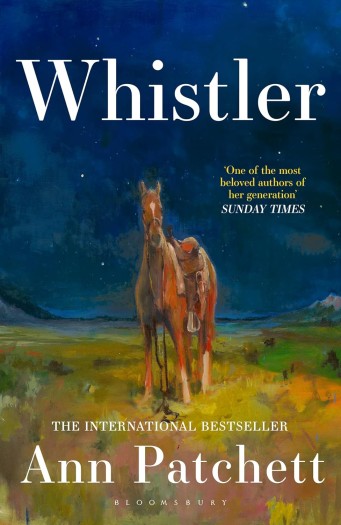
The Ghosts We Carry: Ann Patchett's 'Whistler' Examines the Secrets That Shape a Family
Book Review | 21 June 2026 | ★★★★★
WHISTLER by Ann Patchett: A Masterclass in Quiet Devastation
A forgotten stepfather, a childhood tragedy, and a family mystery four decades in the making power Patchett’s most emotionally resonant novel yet.
There are novelists who write big, loud, plot-driven books, and then there is Ann Patchett, who does something rarer and harder: she writes small, still, devastatingly true ones. Whistler, her tenth novel, is the fullest expression yet of everything she does best — and the critical response has been close to unanimous in saying so.
The premise is elegant in its simplicity. Daphne Fuller, 53, is wandering the Metropolitan Museum of Art with her husband Jonathan when they notice an older, white-haired gentleman appearing to follow them. He turns out to be Eddie Triplett — her former stepfather, who had been married to her mother for little more than a year when Daphne was nine years old. She hasn’t seen him in over four decades. He was removed from their lives suddenly, in the aftermath of a traumatic car accident. Now, by chance, here he is.
What follows is a story of excavation — emotional, familial, and moral. The accident, and the precise reasons Eddie disappeared so abruptly from Daphne’s life, are the buried nerve at the novel’s centre. Her younger sister Leda, a clinical psychologist, steadily prods at Daphne’s assumptions. Her current stepfather is a self-help guru too depleted to follow his own advice. And Eddie himself, as Daphne slowly discovers, has been sustaining a fiction of his own for forty years.
The novel’s title comes from a horse — a horse in a manuscript that Eddie, a book editor, once reviewed. It is a beautifully understated metaphor for everything Patchett does here: a detail, small in itself, that turns out to contain an entire emotional history.
The American critical establishment has received it as something approaching a major event. The Boston Globe called it “a rare phenomenon in contemporary fiction: a novel both majestic and intimate, original and masterful in its structure, crystalline in its prose, revelatory in its insights, utterly devastating yet ultimately uplifting in its emotional impact.” It added, saying that it may be Patchett’s best novel yet.
Ron Charles, writing in his Substack newsletter, described it as “that loveliest of summer gifts, a story of reconciliation, of old affections renewed, of a family’s circumference enlarged.” Charles noted that fans of Patchett’s previous work will open these pages like an old shoebox of family photos.
Charles observed that Whistler is Patchett’s most essayistic novel and, in that sense, her most confident — a reflection on fatherhood largely unruffled by the exigencies of plot. That is exactly right. This is not a thriller in literary clothing. There is no trick ending, no dramatic reversal. The sting of fear has been mellowed over time, like onions caramelized by heat.
Publishers Weekly, in a starred review, called it an evocative and moving tribute to the death-defying, heart-opening, infinitely redemptive power of storytelling, adding that like many of Patchett’s works, this beautiful and generous novel feels effortless, never straining for effect, and is one of her best.
NPR noted that Patchett only burnishes her sterling reputation with Whistler, calling it a finely crafted account of a reunion between daughter and stepfather.
What is most striking, reading Whistler, is how rigorously Patchett resists the melodramatic. Everything about this plot operates on a daring level of subtlety and nuance — which only puts more pressure on her prose, and her prose bears it without complaint. Her dialogue captures, with rare precision, the erratic flight of witty banter and the tentative questions of a daughter prodding her mother for answers as though checking for a bruise she doesn’t want to find.
This is a novel about the choices we make and the ones made for us, about the way stories can rescue lives and simultaneously erase them. Every family, Patchett suggests, eventually inspires an act of uncertain excavation — and Whistler is that excavation performed with the gentleness of a master.
It will be read and re-read. It deserves to be.
Regime Change: The Trump Book That Even Trump Was Waiting For — With Dread
Follow The Raisina Hills on WhatsApp, Instagram, YouTube, Facebook, and LinkedIn




About The Author