High Turnout, Low Violence: West Bengal’s Big Signal
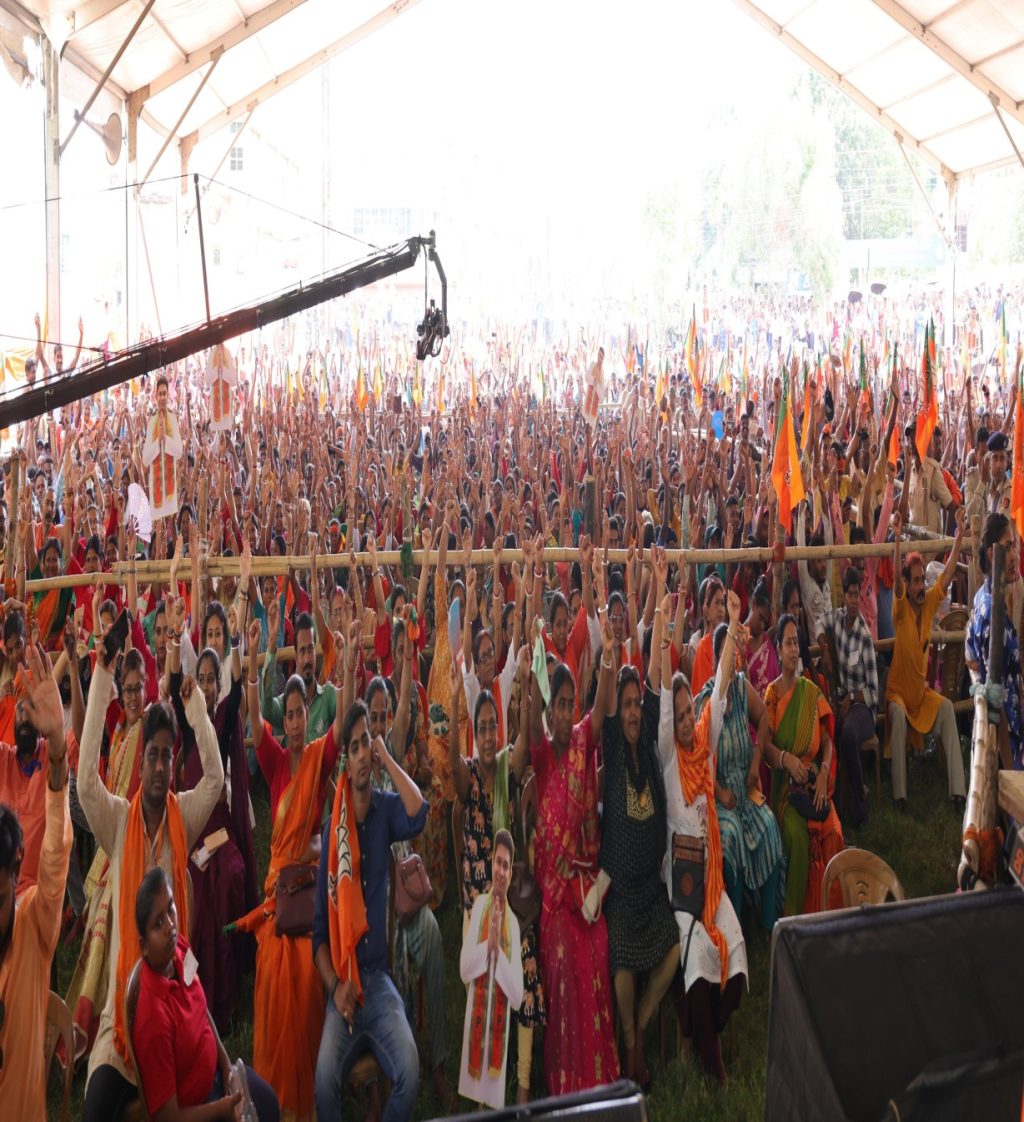
Image credit X @BJP4India
Record voter turnout and tighter security mark a calmer Phase 1, as political battle between BJP and TMC intensifies amid isolated incidents
By NIRENDRA DEV
Kolkata, April 23, 2026 — The first phase of polling in the West Bengal Assembly Elections 2026 recorded a massive voter turnout of nearly 90 per cent, with the Election Commission describing the exercise as “largely peaceful” — a notable shift from the state’s violence-marred electoral past. The first phase of the polling also scaled the voters’ turnout in 2011 when the 34-year-old Left rule ended.
Chief Election Commissioner Gyanesh Kumar indicated that despite sporadic incidents, the overall polling environment remained under control, marking what observers are calling a “significant improvement” in election management.
Polling was conducted across 152 constituencies in 16 districts, with over 3.60 crore electors eligible to vote. As of 5 pm, turnout stood at an impressive 89.93 per cent, among the highest in recent electoral history of the state.
District-wise, Dakshin Dinajpur led with 93.12 per cent turnout, while Raghunathganj constituency recorded the highest at 95.64 per cent — reflecting strong grassroots participation. Long queues outside polling booths throughout the day underscored voter enthusiasm in what is widely seen as a high-stakes electoral battle.
Prime Minister Narendra Modi, addressing a rally in Krishnanagar, said the turnout figures point towards a decisive electoral shift. He also lauded the Election Commission for maintaining relative peace.
“This is the first time in the last 50 years of West Bengal’s poll history that violence has been kept at a minimum. The record turnout indicates an overwhelming mandate for change,” Modi said.
The contest remains primarily between the ruling Trinamool Congress led by Chief Minister Mamata Banerjee and the Bharatiya Janata Party, which has mounted an aggressive campaign focusing on governance, law and order, and political violence.
While the Election Commission maintained that polling was largely peaceful, isolated incidents of violence and disruption were reported. In Murshidabad district’s Nowda area, a crude bomb explosion injured several people, marking one of the early flashpoints of the day. Tensions escalated further in Raghunathganj when a political visit triggered clashes between party workers and police, prompting a mild lathicharge to disperse the crowd.
Additionally, complaints of intimidation and attacks on candidates — including two from the BJP — surfaced from select constituencies, leading the Election Commission to seek detailed reports from district authorities.
EVM glitches were also reported at a few polling stations, briefly disrupting the voting process before being addressed by officials.
Despite these incidents, the overall scale of participation has drawn attention. Political observers note that the turnout has already surpassed levels seen during the landmark 2011 Assembly elections, when Mamata Banerjee ended 34 years of Left Front rule.
The high voter turnout is being interpreted in multiple ways — as a sign of electoral mobilisation, possible anti-incumbency, or simply heightened political awareness among the electorate.
As West Bengal moves into subsequent phases of polling, the focus will remain on whether the Election Commission can sustain this relatively peaceful environment — and whether the voter momentum translates into a decisive mandate.
Follow The Raisina Hills on WhatsApp, Instagram, YouTube, Facebook, and LinkedIn




About The Author