US-Canada Trade Talks Collapse: What Happened and Why
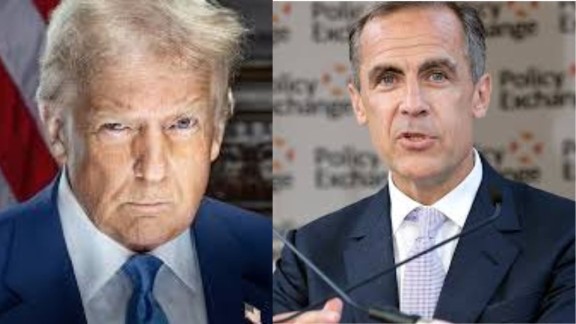
US President Donald Trump and Canada PM Mark Carney (Image credit X.com)
By TRH World Desk
After more than a year of negotiations, both governments walked away angry, both are imposing steep new tariffs, and — unusually — neither side disputes that a deal was genuinely close before it fell apart.
New Delhi, August 23, 2026 — Trade talks between the United States and Canada collapsed late Friday night, just hours before a 50% US tariff on roughly $20 billion in Canadian goods was set to take effect. What makes this breakdown different from the two countries’ many prior trade flare-ups isn’t just its scale — it’s that both governments agree talks had gotten close to a deal in the days beforehand, and are now offering sharply conflicting accounts of exactly what happened in the final hours.
NPR reported that Prime Minister Mark Carney instructed Canada’s negotiators to return to Ottawa on Friday night, hours after the Trump administration began enforcing the 50% tariffs on Canadian goods including dairy products, alcoholic beverages, cement, and hockey equipment. Carney said Canada’s team had worked “in good faith” for more than a year, and confirmed his government would release details of new retaliatory tariff measures in the coming days, set to take effect the Tuesday after Labour Day.
CNN reported Carney was more specific about his objections at a Saturday news conference in Ottawa, saying the US had proposed terms that were “uneconomic, unfair, and undermined the net benefits for Canada, and called into question the reliability of any deal,” adding bluntly that Washington “asked too much, and they offered too little.”
The retaliatory tariffs, taking effect September 8, will target sectors including dairy, appliances, agricultural equipment, pulp and paper, and electronics.
Washington’s Competing Account
The US response has been just as pointed — and just as fast. Fox Business reported that US Trade Representative Jamieson Greer said Friday night that “Canada declined to finalize the trade deal under the terms agreed earlier this week,” and accused Ottawa of making new demands and walking back previous commitments that had upended a carefully balanced arrangement reached days earlier. Greer’s statement framed the US offer as generous, arguing Washington had proposed significant tariff reductions on steel, aluminium, autos and lumber.
What’s notable is what’s missing from that account: an outright accusation that Canada negotiated in bad faith from the start. Both sides’ public statements describe a deal that was close, not one that was never realistic — which is part of what makes this collapse read differently from previous rounds of US-Canada tariff brinkmanship.
Stock Market: Sit Tight with Agility to Weather Trump Tariff Storm
The Scale of What’s at Stake
NBC News reported the breakdown came after nearly two weeks of intensive talks and marked a dramatic reversal from earlier in the week, when Trump had publicly declared a deal was in hand, albeit “still subject to” final details. Two-way trade between the countries totalled $376 billion in the first half of the year alone — more than double the volume with China, and trailing only Mexico among all US trading partners.
Carney, asked at his Saturday news conference why the moment felt like an escalation, didn’t soften the framing. “Because we were attacked.”
The breakdown lands on top of a year defined by unusually public friction between the two governments. Global News has documented a long string of prior flashpoints — including Carney calling a previous round of US tariffs a “miscalculation,” and Canada temporarily lifting its own retaliatory measures as a goodwill gesture earlier this year, only to see talks stall again. That history — of repeated attempts at de-escalation followed by fresh setbacks — is part of why this collapse, even with tariffs now confirmed on both sides, is being treated as more consequential than earlier disputes in the relationship.
Unclear Diplomatic Path
With retaliatory tariffs set to take effect September 8, the immediate diplomatic path forward is unclear. Neither government has signalled an imminent return to the table, and the current 50% US tariffs on the affected Canadian goods remain in force. For a trading relationship worth hundreds of billions of dollars annually and built over decades of deep economic integration, the coming weeks will likely determine whether this collapse marks a temporary rupture or a more lasting shift in how the two countries do business with each other.
SCOTUS Kills Trump Tariffs, President Unleashes Defiant Rant
Follow The Raisina Hills on WhatsApp, Instagram, YouTube, Facebook, and LinkedIn




About The Author