Sweden’s First Female PM Set to Return, in a Result That Exactly Mirrors 2022 — In Reverse
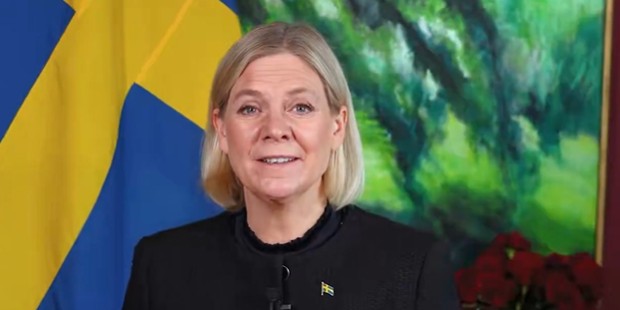
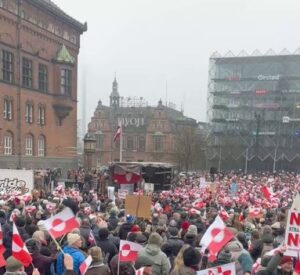
Sweden’s election just mirrored itself: the same 176-173 seat split that ousted Magdalena Andersson in 2022 has now brought her back. (Image Video grab)
By TRH World Desk
Four years after conceding power by a razor-thin margin, Magdalena Andersson is poised to reclaim the job she held for less than a year — after her bloc won this time by the same wafer-thin margin that once defeated her.
New Delhi, September 18, 2026 — Sweden’s September 13 general election has produced a result almost too symmetrical to be coincidental: a centre-left bloc led by Social Democrat leader Magdalena Andersson has won 176 of the Riksdag’s 349 seats against 173 for the governing right — the exact mirror image of the 173-176 split that ousted Andersson from the prime minister’s office in 2022.
Prime Minister Ulf Kristersson has confirmed he will resign, setting up Andersson’s likely return as Sweden’s first female prime minister for a second time.
Reporting on the vote count as it neared completion, Swedish broadcaster SVT stated: “The likelihood of a turnaround at this stage is so low that we can confidently state that the opposition will secure the most seats in this election” — a declaration made even before the final overseas ballots, traditionally more favourable to the right, had been fully counted.
That caution around overseas votes reflected genuine uncertainty in the race’s final days. Svenska Dagbladet captured just how close the contest was heading into the count, reporting that the Liberal party was on course to clear the four percent parliamentary threshold, while noting Andersson’s bloc “looks set to win” even as the right-leaning Sweden Democrats fell well behind, ending up smaller than the Moderate party for the first time in years.
Winning the most seats and forming a government are two different things, and Swedish media flagged the negotiating difficulty ahead. Dagens Nyheter reported that the Social Democrats had already invited other opposition parties to coalition talks, though the paper noted the party “gave no further details” on the substance of those discussions.
The complication is structural: the Centre Party, one of the four parties in Andersson’s opposition bloc, has said it will not join any coalition that includes the further-left Left Party — meaning Andersson faces the task of reconciling ideologically distant partners, from the socialist Left Party to the liberal Centre Party, in order to actually form a government rather than simply having won the most seats on paper.
Outgoing Christian Democrat leader and deputy prime minister Ebba Busch, addressing what happens if Andersson’s coalition talks stall, offered only a noncommittal assessment: “it remains to be seen” what happens next.
Under Sweden’s constitution, if parliament rejects four separate candidates for the prime minister’s post, a fresh election must be called — a real, if currently unlikely, contingency given how narrow the seat margin is.
A Second Chance at History
Andersson’s political story adds real weight to this particular result. She first became Sweden’s prime minister on November 30, 2021, making her the first woman to hold the office in Swedish history — a tenure that lasted less than a year before her coalition’s defeat in the 2022 election handed power to Kristersson.
Her return now, four years later, via an almost mirror-image seat count, gives her the chance to build on a historic first that was previously cut short almost as soon as it began.
One of the more consequential threads has been the declining fortunes of the Sweden Democrats, the anti-immigration party with roots on the far right that has propped up Kristersson’s government from outside cabinet since 2022.
The party’s vote share fell from 20.5% to 17.5% between elections, dropping it to third place behind the Moderates — even as the party had spent the campaign pushing for actual cabinet seats rather than its previous arrangement of providing parliamentary support without formal government roles.
That retreat, rather than any single dramatic swing toward the left, appears to have been decisive in flipping the outcome back in Andersson’s favour.
The scale of the coalition-building challenge ahead is captured in the vote breakdown: the Left Party secured 8.2% and 29 seats, the Centre Party took 7.1% and 25 seats, and the Greens secured 6.1% and 22 seats — meaning Andersson’s Social Democrats, while the single largest party in every one of Sweden’s 21 counties, still depend entirely on assembling this fractious four-party coalition to convert their seat total into an actual governing majority.
Turnout for the election stood at 79.9%, reflecting the closely-watched nature of a contest that both major blocs treated as too close to call until the final days of counting.
For a country voting for the first time since joining NATO in 2024, and one still governed for the past four years around a right-wing coalition dependent on far-right parliamentary support, this week’s result marks a genuine reversal — even if the hardest political work, assembling an actual government, is only just beginning.
Follow The Raisina Hills on WhatsApp, Instagram, YouTube, Facebook, and LinkedIn




About The Author