SJM Takes Aim at US Tariffs: Calls for Boycott of US Companies, Firm Stand on Russian Oil
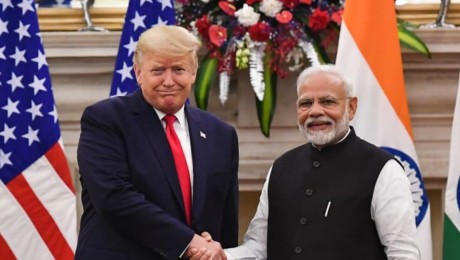
Image credit X.com
By TRH Economy Desk
Swadeshi Jagaran Manch says India’s energy policy cannot be dictated by Washington and urges the government to remain firm in India-US trade negotiations.
New Delhi, August 12, 2026 — The Swadeshi Jagaran Manch (SJM) has urged the government to firmly reject any attempt by the United States to use tariffs as a tool to influence India’s energy purchases from Russia, saying the country’s energy security and trade policy are sovereign matters.
Reacting to recently passed US Senate legislation that, according to SJM, authorises the US President to impose tariffs of up to 100% on countries making significant purchases of Russian oil, the organisation said India cannot allow its energy policy to be dictated by a third country.
SJM said it understands that the legislation has yet to complete the full legislative process and that tariffs would not be imposed automatically. However, it described the proposed measure as a serious threat to free and fair international trade and the sovereign right of countries to determine their own energy policies.
The organisation backed the Government of India’s position that purchases of Russian crude are driven by energy security, availability, pricing, diversification of supplies and the interests of Indian consumers.
“India’s sovereign right to purchase energy from legitimate international markets cannot be dictated by any third country,” SJM said.
SJM Criticises US Tariff Policy
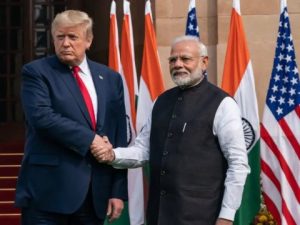
SJM said threats of higher US tariffs have persisted since the beginning of Donald Trump’s second term and have affected Indian exports.
The organisation said US tariffs have been described under different categories, including reciprocal tariffs, national security tariffs, Section 301 and Section 232 tariffs, punitive tariffs linked to Russian oil purchases, trade-deficit tariffs and forced-labor tariffs.
SJM expressed concern over what it described as the growing use of tariffs as an instrument of foreign policy.
According to the organisation, unilateral tariffs aimed at pressuring countries to change their economic or energy policies create uncertainty for exporters, importers, investors and consumers.
SJM also argued that restrictions on Russian oil purchases could have consequences for US consumers by contributing to higher global energy prices.
India Must Not Compromise Energy Security
SJM said India’s dependence on imported crude oil makes diversification of energy sources an important element of national security.
Russian crude, it said, has provided Indian refiners with an additional source of supply and helped diversify the country’s import basket.
The organisation argued that access to Russian crude has helped ease inflationary pressure on Indian consumers and contributed to lower energy prices.
“India’s energy policy must therefore be determined by India’s national interest, and not by external political pressure,” SJM said.
The organisation also framed the Russia-Ukraine conflict as a broader geopolitical contest between Western countries and Russia and other members of the Commonwealth of Independent States.
It said the US should be free to pursue its own foreign-policy objectives but should not use those objectives to impose unilateral economic pressure on sovereign countries such as India.
India-US Trade Deal Stays Speculative Amid Intense Negotiations
India-US Trade Talks Should Not Be Conducted Under Pressure
SJM said the proposed US legislation assumes significance because India and the US are simultaneously negotiating a bilateral trade agreement.
According to the organisation, trade negotiations between sovereign countries should be based on mutual respect, reciprocity and equality rather than punitive tariff threats.
SJM said it expects the proposed tariff powers to be used as leverage in the ongoing India-US trade negotiations and backed the Government’s position on sensitive sectors such as agriculture and dairy.
It urged New Delhi to remain equally firm on India’s sovereign right to determine its energy policy.
SJM Questions FDI and UPI Decisions
At the same time, SJM expressed unhappiness over two recent developments that it believes could amount to concessions to US companies in the context of India-US trade negotiations.
The first relates to Press Note 3 (2026 Series), under which restrictions on inventory for FDI-backed e-commerce entities have been removed for exports.
SJM argued that the move could primarily benefit US-linked e-commerce companies such as Amazon and Flipkart-Walmart and could work against Indian exporters.
The second issue concerns the Taxation and Other Laws (Amendment) Bill, 2026. SJM said the legislation seeks to amend Section 10A of the Payment and Settlement Systems Act to enable the introduction of Merchant Discount Rate (MDR) on UPI transactions.
The organisation described UPI as one of India’s major digital success stories and argued that allowing banks and other notified electronic payment providers to impose MDR could shift the balance towards global card networks such as Visa and Mastercard.
SJM said that while the government has maintained that UPI transactions for ordinary users would remain free, it believes the proposed framework requires reconsideration.
SJM Calls for Action Against US Tech Companies
SJM went further and called for unilateral restrictions on US technology and social media companies in response to the proposed US tariff legislation.
The organisation alleged that some US social media companies have adopted unethical and illegal practices that could contribute to social unrest and threaten national security.
SJM said it was therefore the appropriate time to consider banning companies it described as acting against India’s interests.
It also appealed to “nationalist and patriotic forces” to oppose what it described as unilateral actions by the United States.
SJM’s Demands to Government
SJM urged the Government of India to take several measures:
- Reject any attempt to use US tariffs to dictate India’s purchases of Russian oil.
- Make clear that India’s energy procurement is a sovereign matter.
- Ensure India-US trade negotiations are based on equality, reciprocity and mutual respect.
- Refuse demands that compromise India’s agriculture, dairy sector, energy security or strategic autonomy.
- Withdraw the notification allowing FDI-backed e-commerce entities such as Amazon and Flipkart-Walmart to hold inventories for exports.
- Reconsider provisions permitting banks and other electronic payment service providers to impose MDR on UPI transactions.
- Consider restrictions on US technology and social media companies over alleged threats to national security.
The SJM said the Government should stand firm against what it described as economic and geopolitical coercion and ensure that India’s strategic and economic decisions remain guided by national interest.
Follow The Raisina Hills on WhatsApp, Instagram, YouTube, Facebook, and LinkedIn




About The Author