Sandesara vs Anil Ambani: ‘Pay-and-Close’ Deals in Debt Wars
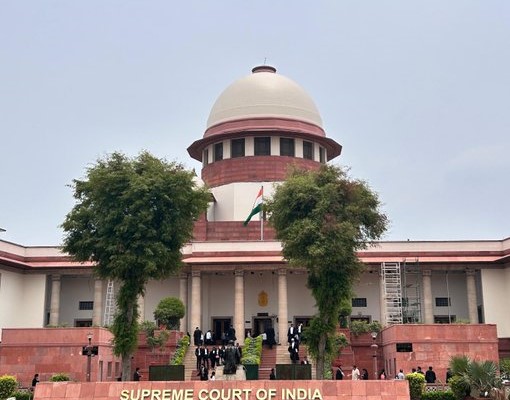
Image credit X.com
As Anil Ambani seeks parity with the Sandesara Group precedent, the debate exposes legal grey zones, moral hazard, and the politics of big-ticket debt settlements.
By P. SESH KUMAR
New Delhi, March 25, 2026 — The social media pops a question that is as political as it is legal: if the Sandesara group could secure a Supreme Court-backed closure after paying money into the system, why should Anil Ambani (ADAG group) not be allowed a similar route? It is a sharp analogy, and that is precisely why it is so tempting.
But sharp analogies can also be misleading. The Sandesara matter was not merely a story of “pay and walk away”; it was an extraordinary, court-recorded settlement reached in what the Supreme Court itself described as the “peculiar facts” of that case, after prior deposits, prior recoveries and a negotiated consensus with lenders and agencies.
The ADAG matter, by contrast, is still very much inside the furnace of investigation, with the Supreme Court pressing the ED and CBI to move faster, allegations of far larger wrongful losses under examination, and no concluded consensus on what the real net dues are. The central comparison therefore has force as a critique of inconsistency, but it weakens when it tries to convert one exceptional settlement into a ready-made entitlement for another borrower.
What makes the argument rhetorically powerful is that it exposes a discomfort many Indians already feel: the system often looks harsher when it is noisy, and more accommodating when it is negotiated behind the curtains of banking, tribunals and courtrooms. On the face of it, the Sandesara case does seem startling. The Supreme Court’s November 19, 2025 order recorded that the petitioners agreed to deposit ₹5,100 crore as “full and final payment” towards lender banks and for quashing or closure of a wide range of proceedings.
The Court expressly said this course was being adopted because public money returning to lender banks was the central concern, and because the matter arose in highly unusual circumstances. Later filings by secured lenders put the group’s total outstanding dues at ₹19,283.77 crore, which immediately gave critics ammunition: how does a case involving such large dues end with closure after a settlement of ₹5,100 crore?
The answer lies in the details that often disappear in social media or television debate. The ₹5,100 crore was not the whole story; the order itself recorded earlier deposits of about ₹3,507.63 crore and recoveries of around ₹1,192 crore through insolvency proceedings, while also referring to prior One Time Settlement (OTS) figures running much higher.
In other words, the Sandesara outcome was extraordinary, but it was not as simple as “one-third paid, all forgiven.”
That is where the argument’s analogy begins to wobble. ADAG is indeed arguing that if such a structured closure was possible even for the Sandesaras, who had fled India and were treated as fugitive economic offenders in public discourse, then a similar framework should be available to him/it, especially when the promoter says he has remained within India’s jurisdiction and has undertaken not to leave without the Supreme Court’s permission.
Reports on the promoter’s March 17, 2026 letter and supplementary affidavit say he has asked for a lenders’ committee or high-powered committee to determine the “actual” net dues after taking account of recoveries, asset monetisation, promoter infusions and insolvency outcomes. That argument has a certain intuitive appeal.
Equal treatment under law cannot become a decorative slogan. If the state and the banking system are willing to strike a structured peace in one giant case, they cannot act shocked when another large borrower asks for the same rulebook.
But that is only half the picture, and the missing half is decisive. The ADAG matters may not be standing at the same legal station as the Sandesara case stood when the Supreme Court passed its 2025 order. In February 2026, the Supreme Court directed the ED to constitute a Special Investigation Team and said the CBI must also probe possible collusion by bank officials.
In March 2026, the Court was still expressing dissatisfaction over the pace and seriousness of the probe.
LiveLaw’s report on the hearing records the Court noting from an ED report that claims of about ₹2,983 crore against certain ADAG companies were extinguished in insolvency proceedings for just ₹26 crore, and that this warranted deeper scrutiny. Separately, the ED has said its cumulative attachments in ADAG-linked cases have reached ₹16,310 crore, and in the RHFL/RCFL cases alone it said more than ₹11,000 crore of public funds turned into NPAs.
This is not the profile of a matter that has already been reduced to an accepted recovery template. It is the profile of a matter in which the state itself is still trying to understand the scale, structure and mechanics of the alleged wrongdoing.
So the real distinction is not merely between two businessmen. It is between two stages of the legal process and two very different architectures of dues. In the Sandesara case, the Supreme Court was dealing with a settlement proposal after prior payments, prior recoveries and a consensus figure proposed through the Solicitor General after consultation with lenders. The Court repeatedly stressed the “peculiarity” of that situation and tied the quashing to actual deposit of the money.
CAG Performance Audit on UPSIDA: Audit or After-Action Report?
In the ADAG case, there is no such concluded consensus on the net payable amount. There is instead a contest over how much is really owed, how much has already been recovered, whether insolvency mechanisms were used legitimately or manipulatively, whether bank officials colluded, and whether what looks like a debt dispute is in fact interwoven with criminal misconduct. That difference is not cosmetic. It goes to the heart of why one case could be disposed of through a negotiated judicial closure while the other remains under investigative heat.
The narrative in media, however, deserves credit for one important insight: the Indian state looks intellectually inconsistent when it speaks the language of moral outrage in one case and the language of pragmatic recovery in another. That inconsistency creates a perception of selective compassion for large borrowers. The Sandesara precedent, especially because it involved closure of multiple proceedings upon a financial settlement, has made that problem impossible to hide.
Once the system says, in effect, “our priority is public money coming back,” it inevitably weakens the absolutist claim that all such matters must travel the full criminal route irrespective of recoverability. In that sense, the analogy in the video is politically potent. It asks an embarrassing question the establishment cannot easily duck: is India punishing financial offenders, or negotiating with them?
Yet the demerit of the analogy is even more serious. It risks turning an exceptional judicial compromise into a portable defence strategy for every large promoter facing serious allegations. That would be disastrous. A system that allows “settle some money, close all cases” as a standard script would create the mother of all moral hazards.
It would quietly tell corporate India that if the sums are large enough, the legal language can eventually shift from guilt and accountability to calibration and haircut. The Sandesara order itself seems conscious of this risk; that is why it repeatedly anchors the relief in the peculiar facts of the case rather than laying down a general doctrine. To read it as a universal coupon for future corporate debt controversies would be a serious overreading.
There is another distinction the media story only partially captures. The Sandesara matter, despite all the controversy, involved a quantifiable lender-bank settlement framework that had already travelled through OTS calculations, bank consultations and recorded payment commitments.
In the ADAG matters, the very terrain is more fractured. There are different entities, different lenders, insolvency proceedings, ED attachments, CBI complaints and allegations that some settlements may themselves require scrutiny. The promoters’ own case for relief is built around the idea that the “actual dues” have not yet been properly crystallised. That is a clever and perhaps necessary legal move, but it also means his case is not yet comparable to Sandesara on the point that matters most: certainty of the settlement base. One cannot claim parity with a concluded settlement while simultaneously arguing that the debt quantum itself still needs to be determined.
This is why the fairest reading is neither to dismiss the media story nor to swallow it whole. It is right to say that the Sandesara settlement has opened a can of worms. It is right to ask why extraordinary flexibility was available there. It is also right to say that ADAG (its promoter), having stayed within India and offered to participate in a structured process, is entitled to ask for a transparent determination of net dues. But it is wrong to imply that the two matters are mirror images. Sandesara was an exceptional judicially recorded closure after a specific recovery formula and deposit condition. ADAG remains inside an unfinished probe in which the Supreme Court is still demanding speed, seriousness and coordination from central agencies. Sandesara was, at least procedurally, a settlement after crystallisation. ADAG and its promoter are asking for crystallisation first and relief later. That could be a crucial difference.
A Principled Framework Desired
The way forward should not be personality-driven. India needs a principled, published framework for large financial fraud and debt-resolution cases involving public sector lenders. First, civil recovery and criminal liability should be separated analytically, even when they proceed in parallel.
Repayment can reduce financial loss, but it should not automatically bleach allegations of fraud, collusion, diversion or money laundering. Second, any settlement involving large public dues should require a court-supervised forensic quantification of principal, interest, recoveries, write-offs, insolvency outcomes, attached assets and related-party transactions.
Third, if the state wants to permit structured settlements in exceptional cases, the criteria must be uniform and public, not improvised from one headline case to another. Fourth, where investigative agencies suspect that insolvency itself has been gamed to extinguish claims at throwaway values, that question must be resolved before any “full and final” closure is entertained.
Finally, Parliament and regulators must confront the uncomfortable truth this episode has exposed: India still lacks a coherent doctrine on when recovery of public money should trump punitive prosecution, and when it should not. Until that doctrine is clarified, every exceptional settlement could look like favouritism, and every fresh plea for parity will sound unanswerable.
(This is an opinion piece. Views expressed are author’s own.)
SEBI fees vs tax: The Constitutional Question Before Markets
Follow The Raisina Hills on WhatsApp, Instagram, YouTube, Facebook, and LinkedIn




About The Author