Montek Singh Ahluwalia Flags Structural Weaknesses in Economy
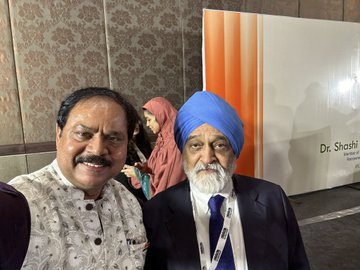
Former Deputy Chirman of the Planning Commission Montek Singh Ahluwalia (Image X.com)
By TRH News Desk
Montek Singh Ahluwalia: India’s Economic Challenges Need Reforms, Not Dismissal as “Fear Mongering”
New Delhi, May 25, 2026 — Former Deputy Chairman of the Planning Commission Montek Singh Ahluwalia has pushed back against claims that concerns over India’s economic trajectory amount to “fear mongering.” He argued that while the economy has notable strengths, structural weaknesses remain and require deeper reforms and clearer policy signals.
Speaking to Rajdeep Sardesai on India Today TV, Ahluwalia responded to recent remarks by Finance Minister Nirmala Sitharaman, who had defended the economy and criticised pessimistic assessments. “I’m not a fear mongerer,” Ahluwalia said, while acknowledging that political debate naturally produces competing narratives. However, he argued that the government must present a “consistent picture” of why it believes the economy remains strong.
According to Ahluwalia, the current challenges cannot be explained only through external shocks such as oil prices. He pointed to long-standing concerns including weak private investment, subdued export performance and broader reform bottlenecks in India’s path toward becoming a developed economy.
“Private investment has been low for several years. Exports have not done well for several years,” he noted, adding that the government itself has acknowledged the need for continued reforms.
The veteran economist also drew attention to global uncertainty, saying international investors are increasingly cautious and seeking clarity on policy direction.
On currency depreciation and external pressures, Ahluwalia defended the decision to allow the rupee to weaken, arguing that exchange rates should reflect market realities. He said capital inflows had slowed over the last two years, making adjustment unavoidable unless India chose to sharply deplete foreign exchange reserves.
“I don’t think allowing the rupee to slip was the wrong decision,” he said, adding that depreciation could aid exports over the medium term.
However, Ahluwalia suggested India must move faster on trade integration and investment reforms. While welcoming free trade agreements signed with the UK and the EU, he argued that Asia remains the centre of global trade expansion and India should consider joining the Comprehensive and Progressive Agreement for Trans-Pacific Partnership (CPTPP), noting that the grouping excludes China.
He also expressed concern over investor confidence and India’s investment protection framework, pointing to the winding up of bilateral investment treaties (BITs) in 2015 and the absence of newer investment protection agreements with major economies.
According to him, uncertainty over investment safeguards and prolonged dispute resolution mechanisms could discourage foreign investors at a time when global capital is becoming more selective.
Ahluwalia called for a modern investment protection architecture comparable to leading emerging economies and suggested that any new BIT framework should be developed transparently and opened for wider discussion.
Follow The Raisina Hills on WhatsApp, Instagram, YouTube, Facebook, and LinkedIn




About The Author