Energy Security, Not GDP Alone, Will Decide India’s Growth Future

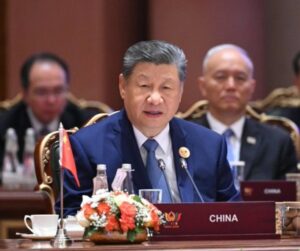
Prime Minister Narendra Modi UAE President Sheikh Mohamed bin Zayed Al Nahyan on Friday. (Image Modi on X)
By Prof. S. S. SOMRA
With crude inflation at 88.06% and fuel inflation jumping to 24.71%, the latest WPI data raises questions over India’s energy preparedness.
Jaipur, May 18, 2026 — The latest Wholesale Price Index (WPI) data released last week has once again exposed a weakness in India’s economy that has been warned about for years—its excessive dependence on imported energy. India meets approximately 85 percent of its crude oil needs from abroad, and a large portion of this import passes through the Strait of Hormuz. When this route becomes critical during times of global tension, it directly impacts the Indian economy.
In April, the WPI rose to 8.30 percent, more than double the 3.88 percent in March and the highest level in the last 42 months. Of greatest concern is the explosive rise in inflation in the fuel and energy sector. Fuel and power inflation increased from 1.05 percent to 24.71 percent, while crude oil inflation reached 88.06 percent. These aren’t just statistics, but a sign of the economic pressure that will impact ordinary citizens’ pockets in the coming weeks. WPI is a pre-eminent indicator of consumer price inflation (CPI).
It reflects the prices paid by manufacturers and traders, not the end consumer. WPI typically takes six to eight weeks to reach retail inflation. This means that while the economy suffered a shock from the oil prices in April, the recent surge in oil, CNG, and LPG prices has yet to fully manifest itself on other daily commodities. Meaning, the true inflation burden is yet to reach the public.
But the biggest question isn’t about rising inflation, but about lack of preparation. This crisis didn’t arise suddenly. Global geopolitical tensions, instability in West Asia, and energy supply risks have long been evident. Despite this, India’s strategic petroleum reserves only cover approximately 10 days of consumption. For a country with a population of 1.44 billion, dependent on the outside world for its energy needs, a 10-day reserve cannot be considered a safety net.
The US maintains an energy security net of two years, while China maintains a one-year energy security net. The government’s response appears more like a knee-jerk reaction than a prudent policy. The hasty increase in petrol and diesel prices will further put pressure on the WPI, which could then lead to a sharp rise in the CPI. This is a cycle that will ultimately impact both consumer demand and economic stability. India controlled its energy costs to some extent by purchasing discounted Russian oil during the Ukraine war. This option remains available today, but if the government is not using it aggressively, the strategy behind it must be clear. Ambiguity on a sensitive issue like energy security increases risks to the economy.
It must also be understood that high wholesale inflation does not always mean economic decline. It means that the economy is earning more money on paper, but the actual production of goods and services is not increasing to the same extent. This means the gap between nominal growth and actual growth is widening. In such a situation, the illusion of development can be created, while the purchasing power of the common citizen continues to weaken. Today, when the global economy is going through a period of slowdown and uncertainty, India’s growth story remains a beacon of hope for the world.
But to ensure sustainable growth, energy security must be given top priority. Increasing strategic petroleum reserves to at least 30 days’ needs is no longer an option, but a necessity. If India does not build large energy buffers, every global crisis, every maritime blockade, and every oil shock will continue to drag down our growth rate. The path to becoming an economic superpower lies not only through high GDP, but also through strong energy security.
(This is an opinion piece. Views expressed in the article are the author’s own.)
Oil, El Niño and Second-Order Inflation Threaten Indian Economy
Follow The Raisina Hills on WhatsApp, Instagram, YouTube, Facebook, and LinkedIn




About The Author