Modi Questions India Inc: Did Corporate Tax Cuts Deliver Higher Salaries, Jobs and Investment?
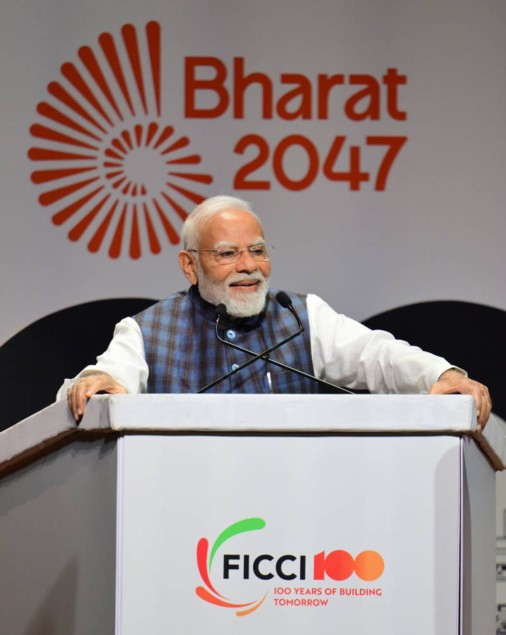
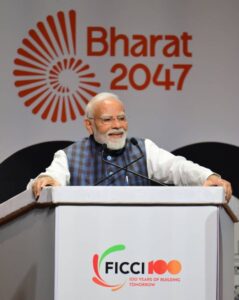
PM Modi challenged corporate leaders to demonstrate how tax relief translated into salary increases, jobs and fresh investments. (Image FICCI on X)
By AMIT KUMAR
At FICCI’s centenary event in New Delhi, Prime Minister Narendra Modi challenged corporate India to demonstrate how tax relief translated into employee pay hikes, fresh hiring and investment, warning businesses against treating the country’s vast domestic market as a guaranteed customer base.
New Delhi, November 19, 2026 — Prime Minister Narendra Modi on Thursday delivered a pointed message to India Inc, questioning whether companies had passed on the benefits of corporate tax reductions to employees through higher salaries, created new jobs or stepped up investment.
Speaking at the Federation of Indian Chambers of Commerce and Industry (FICCI) in New Delhi, Modi recalled that the government reduced the basic corporate tax rate from 30% to 22%, but asked business leaders what tangible outcomes had followed for workers and employment.
“Did you increase the salaries of your employees? Did you increase the number of employees? No,” Modi said, challenging corporate leaders to reflect on their response to the tax relief.
The remark became one of the most striking moments of his address, in which he urged industry to move beyond seeking government concessions and demonstrate greater commitment to national economic priorities.
Modi argued that the government had undertaken significant reforms to improve the business environment, simplify taxation, reduce compliance burdens and expand market opportunities. He cited income-tax relief, quicker refunds, GST reforms and trade agreements as measures intended to boost demand and create opportunities for businesses.
But the Prime Minister suggested that policy support alone could not deliver economic transformation without corporate action. He criticised what he described as a complacent attitude among companies relying on India’s domestic market of 140 crore people rather than investing in quality, competitiveness, technology and exports.
He urged industry to treat the domestic market as a springboard for global expansion instead of an assured market where products would sell regardless of quality.
Modi also pressed companies to invest in sectors where India remains dependent on imports, including pharmaceutical ingredients, specialised steel, aluminium alloys, machinery and engineering products. He called for greater investment in agriculture, food processing and value-added manufacturing, arguing that India must capture more value from its resources and production capabilities.
The address comes as India seeks to sustain growth, expand manufacturing and increase its competitiveness in global supply chains. Modi said industry must examine its shortcomings, develop long-term investment plans and align business decisions with the ambition of building a developed India by 2047.
His message to corporate leaders was clear: tax relief and reforms are not an end in themselves. The government expects industry to respond with investment, innovation, employment and higher-quality products.
GST Reforms: Wider Tax Credits, Faster Refunds and Fewer Arrest Powers—What Changes?
Follow The Raisina Hills on WhatsApp, Instagram, YouTube, Facebook, and LinkedIn




About The Author