Saudi Arabia’s 14-Nation Red Sea Alliance Takes Shape as the US-Iran War Reignites
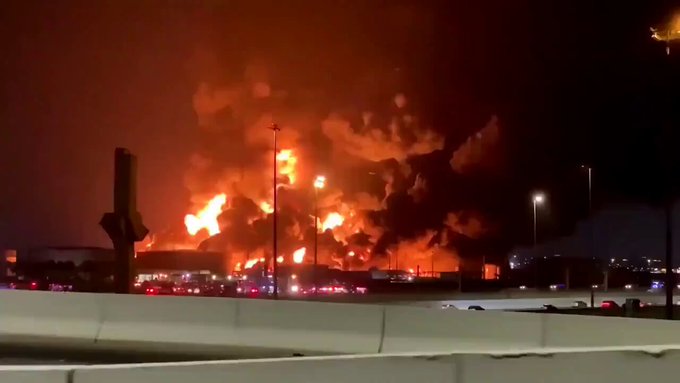
Saudi Arabia accused Iran of attack on its airport in Riyadh. (Image video grab X)
By TRH World Desk
Saudi Arabia’s 14-Nation Red Sea Alliance Takes Shape as Iraq-Based Strikes and the US-Iran War Widen the Crisis
New Delhi, July 31, 2026 — The Middle East is now managing three overlapping fronts at once: a Red Sea shipping crisis, a drone campaign launched from Iraqi soil, and a renewed exchange of fire between the United States and Iran. Each is technically distinct. Together, they are reshaping how Gulf states think about their own security.
The Red Sea Alliance: Riyadh Steps Into a Leadership Role
On Thursday, July 30, Saudi Arabia’s Ministry of Defence hosted military representatives from 43 countries and an EU delegation in Riyadh to discuss a new maritime security framework. By the end of the meeting, 14 states had signed a joint declaration backing the initiative: Saudi Arabia, Bahrain, Bangladesh, Djibouti, Egypt, Jordan, Kuwait, Nigeria, Pakistan, Qatar, Somalia, Sudan, Turkey and Yemen.
According to Gulf Times, the coalition is designed to strengthen maritime security, safeguard freedom of navigation, secure international trade routes and energy supply lines, and protect shared maritime interests in the Bab el-Mandeb Strait and the Gulf of Aden. Saudi Arabia will host the alliance’s headquarters and serve as its founding lead state, according to The National, which reported the group’s activities may include joint maritime operations, training, intelligence-sharing and exercises.
Notably absent from the founding signatories: the UAE and Oman, though the declaration remains open to additional states completing their internal procedures, per Arabian Business.
The trigger is direct. Al Jazeera reported that the alliance is meant to defend shipping from attacks by Iran-backed Houthis in Yemen, after the Houthis declared a naval blockade of Saudi Arabia on July 20 and began targeting Saudi-linked tankers and oil infrastructure — the first direct clash between Riyadh and the group in years, threatening a 2022 truce that had technically already expired.
Not the Houthis — Iraq-Based Militias Are the Second Front
A separate but parallel threat has emerged from Iraqi territory. Iran-aligned militias — not the Houthis themselves — have launched drone strikes at Saudi oil facilities in the Eastern Province and near Riyadh. Times of Israel reported that Saudi Arabia’s defence ministry said the drones had been launched from Iraq by Iran-backed militias, and it reserved the right to respond, following which Saudi forces struck Houthi military sites in Yemen’s Hodeidah port. The same wave saw drones intercepted over Jordan and reported attacks in Iraq on camps linked to Iranian-Kurdish opposition forces.
This is the pattern regional analysts are flagging: Saudi Arabia is now facing pressure from Iraq to its northeast, Yemen to its southwest, and Iran directly to its east — three simultaneous fronts feeding off the broader US-Iran war rather than one contained conflict.
The US-Iran War Reignites After a Brief Pause
The wider war driving all of this resumed in earnest this week. After a five-night lull, US Central Command carried out a fresh round of strikes on Iranian military targets. Al Jazeera reported Iran’s Revolutionary Guard said three of its personnel were killed in a US missile attack, in retaliation for Iranian missile strikes a day earlier on a US base in Jordan — strikes Saudi Arabia publicly condemned as a breach of international law and good-neighbourliness, according to the Saudi Press Agency as cited by Al Jazeera.
The exchange has since widened further. Al Jazeera’s live coverage noted Iran’s IRGC said it had targeted US bases in Kuwait, Jordan and Bahrain after a US strike on Iran’s Qeshm Island killed a family of three, while a worker was reported killed in an Iranian strike on a building in Kuwait. Egypt also confirmed a drone hit two natural gas vessels at one of its ports, pulling Cairo into the shipping-security conversation as well.
Jennifer Gavito Says US-Iran Conflict Will Ultimately Return to Diplomacy
Global Trade Chokepoints
Two of the world’s most critical chokepoints — the Strait of Hormuz and the Bab al-Mandeb Strait — are now both under strain simultaneously. Gulf oil exports that were rerouted through the Red Sea after Hormuz disruptions are themselves now under threat from the Houthi blockade, which is part of why Riyadh moved so quickly to formalize a multinational response rather than rely solely on its own navy.
Saudi Security Umbrella in the Making? A few questions:
– Alliance membership: Whether the UAE, Oman, and Western navies (the US, UK, and EU states were reportedly invited) formally join the 14-nation core group.
– Iraq’s militias: Whether Baghdad can rein in Iran-aligned factions operating from its territory, or whether Saudi-Kuwaiti strikes on Popular Mobilization Forces sites continue.
– US Senate action: A War Powers resolution to constrain further US strikes on Iran failed 49-50 in the Senate on July 30, showing continued US congressional tolerance for the current campaign.
– Oil prices: Continued disruption at both chokepoints is the single biggest variable for global energy markets through the rest of Q3 2026.
FAQs:
Q: Which 14 countries joined Saudi Arabia’s Red Sea alliance?
A: Saudi Arabia, Bahrain, Bangladesh, Djibouti, Egypt, Jordan, Kuwait, Nigeria, Pakistan, Qatar, Somalia, Sudan, Turkey and Yemen.
Q: Are the Houthis attacking from Iraq?
A: Not directly. The Houthis are operating from Yemen and imposed a naval blockade on Saudi Arabia on July 20. Separately, Iran-aligned militias based in Iraq have launched drone strikes on Saudi oil infrastructure — a related but distinct front tied to the same regional conflict.
Q: Why did Saudi Arabia form a maritime coalition now?
A: In direct response to the Houthi blockade and attacks on Saudi oil tankers and infrastructure in the Red Sea, plus the broader disruption to Gulf shipping caused by the US-Iran war.
Q: Is the US still striking Iran?
A: Yes. After a five-night pause, US Central Command resumed strikes in late July 2026 following Iranian missile attacks on US forces in Jordan, Kuwait, and Bahrain.
American Blood in Jordan: The Iran War Just Got Harder to Sell as “Almost Over”
Follow The Raisina Hills on WhatsApp, Instagram, YouTube, Facebook, and LinkedIn




About The Author