LPG Price Hike Hits Street Food Economy and Cost of Living
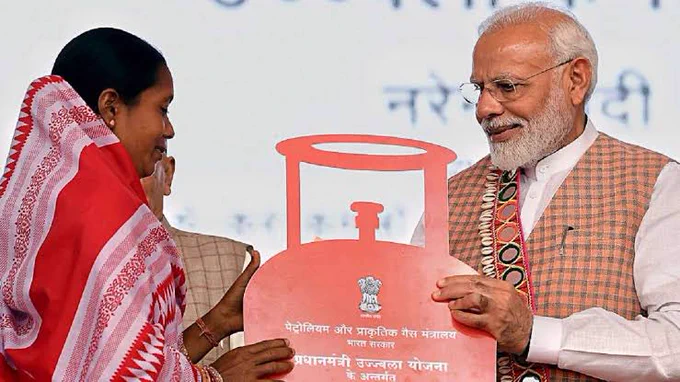
PM narendra Modi with Ujjwala scheme beneficiary
Sharp rise in commercial LPG prices threatens millions of livelihoods, as analyst Manish Anand warns of a widening economic crisis
By TRH Op-Ed Desk
New Delhi, May 2, 2026 — On International Labour Day, the Indian government delivered a blow to the country’s informal food economy: the price of the 19-kg commercial LPG cylinder was hiked by ₹993, in one of the sharpest monthly revisions in recent times, taking the price in Delhi to ₹3,071.50 — up from approximately ₹2,078.50.
The timing is brutal. The hike arrives amid a weakening rupee, an unresolved Middle East conflict disrupting global oil supplies, and a fragile informal economy still recovering from years of stress.
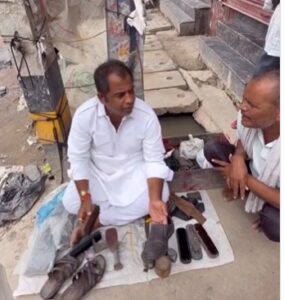
Manish Anand, a geopolitics and economy analyst who hosts The Raisina Hills on YouTube, laid out the full scale of the crisis in a special episode. “One crore people in this country are street food vendors,” Anand said, adding: “Their basic input cost — the LPG cylinder — has gone up 42% in a single stroke. And in the last three months, the cumulative increase has been ₹1,300 per cylinder.”
The numbers translate directly into higher prices for everyday meals. “The tea you used to drink for ₹10 became ₹15. Now, after today’s hike, it could well become ₹20,” Anand explained, adding: “The veg roll you bought for ₹40 was already ₹50. What will it be now?” His point: street food — the backbone of India’s informal dining economy and the daily sustenance of tens of millions of low-income workers — is becoming unaffordable.
Restaurants, hotels, street food vendors, and cloud kitchens are among the worst affected by the commercial LPG surge, which has climbed from around ₹1,747 in Delhi a year ago to over ₹3,000 today — a pattern visible across Mumbai, Chennai, and Kolkata as well.
Domestic LPG cylinder prices have been kept unchanged at ₹913 in Delhi for now, with the government stating that 33 crore domestic LPG consumers remain insulated from the hike. But Anand cautions this relief is temporary. With state election results due on May 4, he argues the political window for keeping petrol, diesel, and domestic LPG prices frozen is closing fast.
“Once the election results are out, the government has already begun laying the groundwork — saying oil marketing companies are losing ₹14 per litre on petrol. The next shoe to drop will be domestic LPG, petrol, and diesel,” Anand warned in his monologue.
The deeper crisis, he argues, is structural. Global oil prices have risen sharply in recent weeks due to energy supply chain disruptions from the West Asian conflict and uncertainty around the Strait of Hormuz. A weaker rupee compounds every import India makes. “The rupee is already hovering around ₹95 per dollar. The day it crosses ₹100 is not far,” Anand said. “We were hoping to become the world’s third-largest economy by overtaking Japan. Now some economists believe we may slip to fifth,” he added.
Foreign institutional investors are pulling out of Indian equities. Foreign exchange reserves are shrinking. Inflation in food and transport is accelerating. “When diesel prices rise, transportation costs go up. When transportation costs go up, vegetables get expensive. When vegetables get expensive, inflation rises. When inflation rises, low-income and middle-class families spend more on basics and save less. When savings fall, consumption falls. When consumption falls, job creation slows,” Anand laid out in a chain of economic consequences.
“This is not a temporary crisis,” he concluded. “This is a prolonged structural crisis. The world order is changing, and India does not yet have a clear answer for how it navigates this,” he added.
With no relief in sight from global energy markets and Washington’s warships once again heading toward the Gulf, India’s informal economy — and the millions who depend on it — faces a long, difficult summer.
Jabalpur Boat Tragedy Exposes India’s Neglect of Water Safety
Follow The Raisina Hills on WhatsApp, Instagram, YouTube, Facebook, and LinkedIn




About The Author