LPG Delivery at Door Sounds Simple. The Reality Is Complicated.
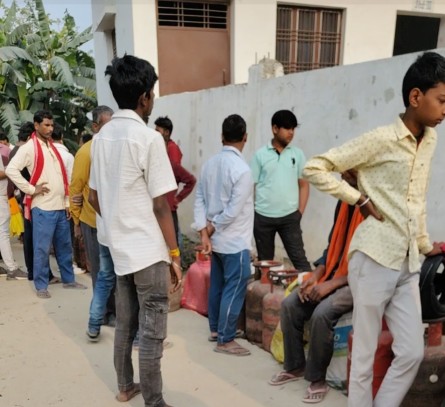
Delays, agency lapses, panic hoarding, and underpaid workers are failing India’s LPG delivery system. (Image Rajeshwar Jaiswal)
The government’s home delivery system for cooking gas is failing ordinary consumers — and the people are bearing the cost.
By RAJESHWAR JAISWAL
Motihari (Bihar), April 3, 2026 — The promise is straightforward: book your LPG cylinder, and it arrives at your door. For tens of millions of Indian households, however, the gap between that promise and lived reality has become a source of daily frustration.
Since the Modi government came to power, people have gotten used to a certain comfort — the habit of getting things easily. But when it comes to LPG cylinders, the delivery system has become the problem, not the gas itself.
The DSC number problem
The DSC — Distributor Serial Code — number has become a bureaucratic bottleneck for consumers trying to get cylinders delivered at home. Without a valid, updated DSC number linked to their account, bookings cannot be completed through official channels.
When people got their DSC number, many felt — now someone will come to my home and deliver the gas. But then seven to ten days pass and nothing happens.
In a pattern, consumers feel frustrated by delays, and they end up travelling to the agency themselves to collect cylinders — effectively defeating the purpose of a home delivery system. People are booking through the app or by phone, but then running to the agency anyway.
Agencies, delivery boys, and a broken incentive structure
A structural failure bares how delivery is incentivised. The government provides a delivery charge per cylinder to agencies, who are then supposed to pass it on to delivery personnel. In practice, the system is breaking down at that final link.
The government gives delivery charges to the agency vendors. But many consumers are not getting delivery at home — and if they do, the delivery boy is sometimes asking for additional charges.
Delivery workers themselves are not simply the villains of the story. Delivery boys have to do very hard work. They deserve to be paid properly. But the system needs to work correctly for everyone.
Hoarding and panic booking
A consumer behaviour pattern has emerged that is worsening the shortage problem: panic hoarding. People are keeping two cylinders at home — one full and one as backup — out of fear. This habit of hoarding gas in one household is creating a shortage for others.
Ministry of Petroleum needs to pay administrative attention to last-mile delivery failures. The administration should ensure that whatever the rule is, people at home get their cylinder. If the problem is reduced, everyone benefits.
Follow The Raisina Hills on WhatsApp, Instagram, YouTube, Facebook, and LinkedIn




About The Author