Orbán Setback After Vance Visit Sparks Soft Power Debate
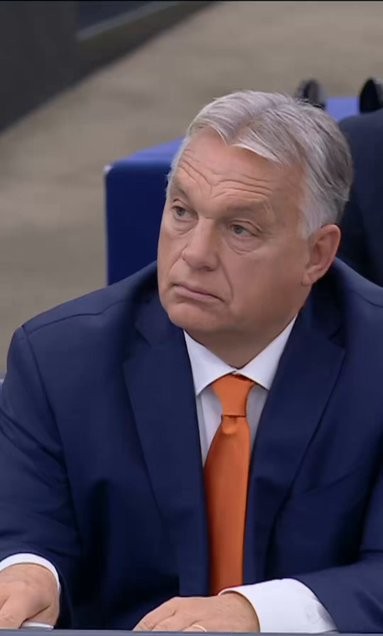
Viktor Orbán lost Hungary election despite open Trump support. (Image X.com)
Former Lithuanian Foreign Minister Gabrielius Landsbergis argues the Hungary debacle reveals a Washington that has traded shared values for naked interests — and lost both
By TRH World Desk
New Delhi, April 17, 2026 — When US Vice President JD Vance flew to Budapest days before Hungary’s parliamentary election to campaign for Viktor Orbán, the Trump administration was betting that Washington’s blessing would move Central European voters the way it once moved a generation of Cold War Europeans. The bet failed — spectacularly.
Orbán’s Fidesz party won just 54 seats, while challenger Péter Magyar’s Tisza party swept 138 of 199 parliamentary seats. Turnout hit 78 percent — the highest in any Hungarian election — and Orbán, who had ruled for over 16 years, conceded defeat. Vance, who later said he was “sad” about the result, acknowledged the administration had known there was a “good chance’ Orbán would lose, but said he went anyway because Orbán had “stood by us for a very long time.”
Now, one of Europe’s most respected diplomatic voices is asking the harder question: not just why the visit failed, but what its failure reveals about America’s standing in the world.
“It’s a fair question — how did the Vice President of the United States fly to Budapest, days before the election, in a clear attempt to boost Orbán’s popularity, but instead end up assisting in a historic defeat?” wrote Gabrielius Landsbergis, former Minister of Foreign Affairs of the Republic of Lithuania, in a widely-read essay published on his personal website.
Landsbergis — whose country credits a US Presidential visit with cementing its path to NATO membership — draws a stark contrast between the soft power of a previous era and what he calls the cynicism of the current one. He recalls President George W. Bush visiting Vilnius in 2002, declaring that “anyone who would choose Lithuania as an enemy has also made an enemy of the United States of America” — words Lithuanians had cast in bronze on the town hall wall. “The US was not forced to defend Lithuania, and there was no ulterior motive to be suspected,” Landsbergis writes. “It was simply the right thing to do.”
Budapest in 2026 was, he argues, the opposite. “US support for Orbán’s Hungary was cynical, and many people sensed that acutely,” Landsbergis writes. Orbán had spent years blocking EU aid to Ukraine, maintaining warm ties with Vladimir Putin even after the invasion, and repeatedly legitimising Moscow’s narrative inside the European bloc. Backing such a leader, Landsbergis argues, stripped the US visit of moral authority before Vance had even landed.
The former minister’s diagnosis goes deeper than one lost election. He identifies a fundamental shift in how Washington now frames its relationships — from shared values to transactional interest. “The policy introduced by the current US administration that shifts the paradigm of transatlantic relations from shared values to the defence of national interests took centre stage in Budapest,” he writes. “This change diminished the very meaning of partnership.”
CNN noted that the Trump administration had built a recent track record of successful interventions in foreign elections, making the Hungary result a notable and high-profile failure. Landsbergis sees it as a warning for what comes next. “The miscalculation in Budapest reveals a deeper problem,” he writes. “The same playbook JD Vance used in Hungary, if applied to Le Pen or the AfD, might well result in an electoral windfall for Macron and Merz.”
The bronze plaque in Vilnius, he concludes, still hangs on the town hall wall. Whether it remains a living promise or becomes “an oxidised epitaph dedicated to times gone by” is now, he says, the defining question of the transatlantic relationship.
Follow The Raisina Hills on WhatsApp, Instagram, YouTube, Facebook, and LinkedIn




About The Author