Iran War: Netanyahu Contradicts Trump on South Pars Attack
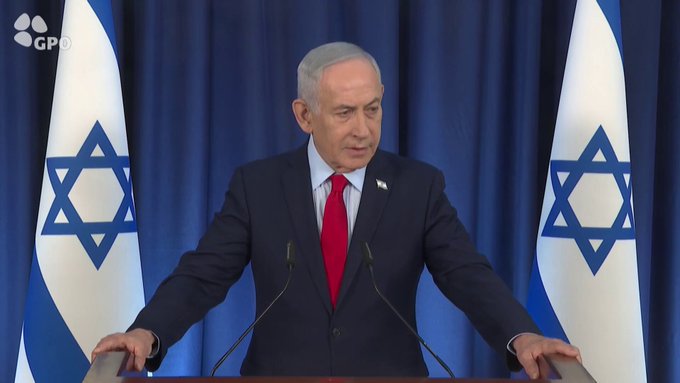
Israel PM Benjamin Netanyahu press conference explained (Image video grab)
Rob McBride unpacks what Netanyahu said, what he avoided, and what the morale-boosting address reveals about where Israel believes the war stands after 20 days
By TRH World Desk
New Delhi, March 20, 2026 — In a morale-boosting address to Israelis after 20 days of conflict, the PM declared Iran “has never been weaker” — while sidestepping his earlier calls for regime change.
Israeli Prime Minister Benjamin Netanyahu held a press conference aimed squarely at his domestic audience on Friday, using it to declare military success, reassure a battered population, and — in one notable moment — directly contradict the United States President on a key point of fact.
Reporting for Al Jazeera, Rob McBride identified the central tension immediately. Netanyahu claimed Israel acted alone in attacking Iran’s South Pars oil field — a statement that places him at direct odds with Donald Trump, who has said the United States knew nothing of the strike, and with senior American and Israeli officials who have since confirmed Washington approved it in advance.
“He says he’s got rid of the nuclear capabilities and missiles, but also says Israel acted alone when it came to the attack on the South Pars oil field — contradictory to Trump,” McBride told the Qatar-based broadcaster.
The press conference, in McBride’s analysis, was designed primarily as a morale exercise. “Overall, this was intended as a morale-boosting exercise for his Israeli audience — to try to reassure people that the past 20 days or so of conflict that they’ve been through has all been worth it,” he said.
Netanyahu acknowledged the human cost plainly: casualties sustained, normal life turned completely upside down, civilians spending days in shelters, schools closed, businesses shuttered. But the frame around those concessions was triumphalist. Israel, he argued, entered the conflict with three goals — and has delivered on two of them with clarity.
The first was the complete destruction of Iran’s nuclear weapons development capabilities and programme. The second was the elimination of Iran’s ballistic missile development capacity. On both counts, Netanyahu claimed success: Iran, he said, can no longer enrich uranium and can no longer develop and build sophisticated ballistic missiles.
The third goal — regime change, or in Netanyahu’s softer formulation, creating “the possibility that Iranians may find a way forward to recreate their country” without the existing regime — received noticeably more guarded treatment. Where weeks ago, he spoke of regime change with what McBride described as “a certain degree of confidence,” on Friday he talked around the subject. The ambition was present; the certainty was not.
The broader claim Netanyahu advanced was strategic rather than tactical: that Israel, with American assistance, is actively reshaping the power structures of the Middle East. “Israel has never been stronger,” he said, adding: “Iran has never been weaker.”
McBride’s framing was precise. The press conference was not a strategic briefing — it was a domestic communication exercise, timed to the three-week mark of a conflict that has disrupted Israeli civilian life in ways the government cannot ignore. Whether the claims about Iran’s degraded nuclear and missile capabilities are independently verifiable, and whether a population that has been in shelters for 20 days finds the trade-off acceptable, are the two questions the press conference deliberately left open.
Follow The Raisina Hills on WhatsApp, Instagram, YouTube, Facebook, and LinkedIn




About The Author