Iran just made the most dangerous threat of this war
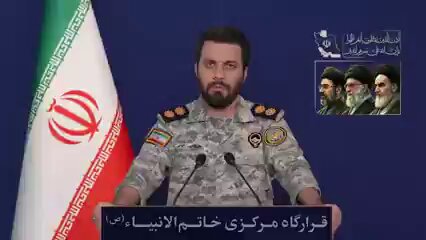
Iran military spokesperson speaks on Thursday (Image X.com)
Tehran warns the next response to any strike on its energy infrastructure “will not stop until complete destruction.” Ian Bremmer, Karim Sadjadpour, and a retired Indian general all arrive at the same conclusion: the US cannot win this.
By TRH World Desk
New Delhi, March 19, 2026 — Iran has issued its most explicit and sweeping threat since the conflict began.
In an official statement, Tehran warned that any further Israeli or American attack on Iranian energy infrastructure would trigger a campaign to destroy all energy infrastructure across the Middle East — permanently. The statement marked a formal declaration that Iran had crossed into a new operational threshold.
“We warn the enemy that you made a major mistake by attacking the energy infrastructure of Iran,” the statement read. “Iran had no intention of expanding the scope of the war to oil facilities and did not want to harm the economies of friendly and neighbouring countries. However, after US/Israel’s aggression on Iran’s energy sector, Iran has effectively entered a new phase of the war, and struck energy facilities linked to the United States and American shareholders. The responses are underway and are not over yet. If terrorism against Iran is repeated again, the next attacks on your energy infrastructures and that of your allies will not stop until their complete destruction”
The language is without precedent in this conflict. Iran is no longer signalling — it is declaring.
The analytical community is arriving at a shared and sombre conclusion. Ian Bremmer stated it plainly: threatening Iran with additional destruction is no longer a deterrent for Tehran’s remaining leaders. The logic of deterrence — that the threat of overwhelming force compels restraint — has collapsed. Iran’s leadership, facing an existential war, has concluded that restraint offers no survival premium.
South Pars gas field: Trump’s threat, the denial that didn’t hold
Karim Sadjadpour, speaking on CNN, identified the structural question at the heart of Israel’s campaign. Israel is targeting what he described as the Islamic Republic’s pillars of repression — but the critical uncertainty is whether these are structural pillars or individuals who can be replaced. The regime’s deep unpopularity and domestic isolation have, paradoxically, hardened its resolve rather than weakened it. A leadership with nothing to lose to its own population has a different risk calculus than one that governs by consent.
Kanwal Sibal, writing in India Narrative, offered the regional dimension. “The overall Iranian objective in an existential war would be to destabilise US presence in the region, even if it is at the cost of its own interests, especially in the UAE, which is a hub for networks that enable Iran to bypass Western sanctions.” The implication is significant: Iran is prepared to damage the infrastructure of its own economic lifelines if doing so accelerates American disengagement from the Gulf.
Mohammed Soliman pushed back on the logic of Iran’s expanding campaign. “A campaign of economic warfare against the Arab Gulf states, which opposed the war from the outset, will only harden their calculus toward finishing the job. A war of economic attrition against the Arabian Gulf will not end well for Tehran,” he wrote in a post on X. The Gulf states — Saudi Arabia, the UAE — are not neutral bystanders absorbing collateral damage. They are actors with resources, alliances, and now, a hardening disposition.
The most direct verdict came from Lieutenant General H S Panag (Retired), writing on X. “Victory may be declared. However, since Iran is unlikely to capitulate, a strategic defeat of the US is ordained.”
That is the prognosis from across the analytical spectrum — from Washington strategists to Indian military commanders. Iran will not win this war in any conventional sense. Its energy infrastructure is damaged, its economy under extraordinary strain, its diplomatic isolation near-total. But it will not capitulate. And a war that ends without Iranian capitulation, with Hormuz having been closed, with Qatar’s LNG hub in ruins, with $110 crude having restructured the global energy order — is not a war the United States wins either.
The threat Tehran issued is a message to every energy market, every Gulf government, and every US ally in the region: the cost of continuing has just been repriced. Upward. Without a ceiling.
Follow The Raisina Hills on WhatsApp, Instagram, YouTube, Facebook, and LinkedIn




About The Author