Iran Has Become the World’s Fourth Military Power, Says Analyst
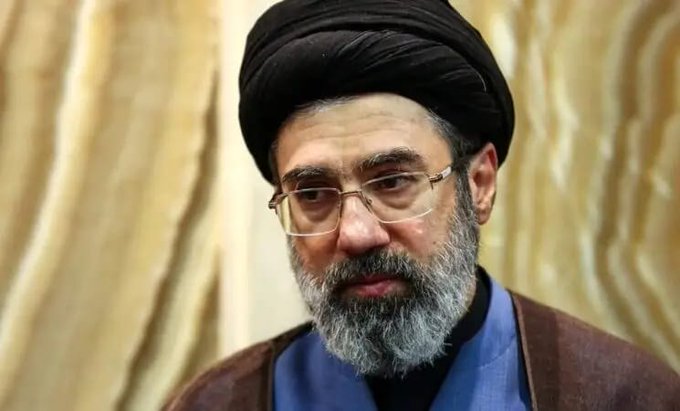
Iran's New Supreme Leader Mojtaba Khamenei (Image X.com)
Citing University of Chicago political scientist Robert Pape’s escalation theory, analyst Manish Anand argues that 33 days of war have fundamentally redrawn the global power map — and India’s long-held ambition of becoming the fourth great military power may have just been overtaken by Tehran.
By TRH World Desk
New Delhi, April 7, 2026 — For years, a quiet but confident narrative ran through India’s strategic community: that New Delhi was on its way to becoming the world’s fourth great military power — after the United States, China, and Russia. That narrative, says geopolitics analyst Manish Anand, may need to be retired.
“In just 33 days of war, something has happened that has never happened before in the history of the world,” Anand said in a special episode of The Raisina Hills. “Iran has emerged as the fourth largest military power on the global stage. Not India — Iran.”
The argument draws heavily on the work of Robert Pape, the prominent University of Chicago political scientist known for his escalation theory, whose commentary on the Iran war has been followed closely across the world.
The Pape Argument: Oil Is Still the Spine of Global Power
Pape’s central thesis, as Anand explains it, begins with fossil fuel. Russia holds approximately 11 percent of the world’s proven oil reserves — and it is that resource base, Pape argues, that finances Moscow’s military machine and underwrites its status as the world’s third military power.
“If Russia can be the world’s third largest military power on 11 percent of global oil reserves,” Anand said, “then consider what Iran represents. Iran holds approximately 20 percent of the world’s oil and gas reserves — nearly double what Russia has. And Iran’s natural gas reserves are incomparable to any other Middle Eastern country.”
The implication, in Pape’s framework, is structural. A post-war Iran that can freely sell its oil and gas to a sanctions-weary world could generate upwards of $100 billion annually. If even 10 to 20 percent of that revenue is directed toward military capability and nuclear enrichment — as Russia directs its fossil fuel income — the resulting military power would be formidable by any measure.
“And that is the Iran that was still under sanctions,” Anand stressed. “That was the Iran that could not sell its oil. That was the Iran that has been absorbing the combined military power of the United States and Israel alone for over a month — and has still managed to shoot down at least five American fifth-generation fighter jets, damage U.S. bases across Bahrain, Kuwait, the UAE and Saudi Arabia, and close the Strait of Hormuz to global shipping.”
Iran Strikes SABIC: Global Industrial ‘Cardiac Arrest’ Feared
Leverage Has Shifted — Pape’s Stage Three
Pape’s escalation theory divides conflicts into stages. His current assessment, as Anand relays it, is that the Iran war has reached Stage Three — the point at which the conflict is no longer manageable on the initiating power’s terms.
“Pape’s argument — and it is shared by many who are not Trump supporters — is that leverage has passed to Iran,” Anand said. “America no longer controls the outcome of this war. The war will end on Iran’s terms, not Trump’s.”
The evidence on the ground supports the analysis. Trump’s approval ratings, according to CNN, have fallen below even Nixon’s lowest point during Watergate — a collapse Anand attributes directly to the war’s unexpected costs and the image of a missing American airman being hunted across Iranian mountains.
The normalization of Iran as an energy supplier — countries quietly queuing to buy Iranian oil despite U.S. sanctions — is, in Pape’s view, irreversible. “Neither Europe nor any Asian country will bow to American pressure on this,” Anand said. “They need the oil and gas, and they will buy it.”
What This Means for India
The geopolitical consequences for India are layered and, Anand argues, underappreciated in the current domestic conversation.
Long queues outside LPG cylinder distribution centres in Indian cities, CNG stations with lines stretching around the block, and fuel rationing already underway in Indonesia — these are not abstract economic indicators. They are proof, Anand says, that fossil fuel remains the backbone of the global economy and that whoever controls its flow controls the levers of world power.
“India has been watching from the sidelines while Iran demonstrated military capability that no one — least of all India’s strategic planners — anticipated,” he said. “The question India must now ask is: where does this leave us?”
The emerging axis of Iran, Russia, and China — three close partners, with North Korea increasingly in the orbit — creates a new geopolitical geometry that directly affects India’s neighbourhood calculus. Iran has previously conducted missile strikes on Pakistani territory. Pakistan’s closest Arab partner remains Saudi Arabia, whose relationship with Iran is anything but friendly.
“India has historically had a traditional friendship with Iran,” Anand said. “The Modi government now needs to revive that relationship — to normalise ties with an emerging power, because the Iran that is coming out of this war is not going to recede. It is going to grow.”
The first step, he argued, is recognising what has already changed. A post-war Iran with $100 billion in annual energy revenues, battle-tested missile and drone capabilities, de facto control over the Strait of Hormuz in partnership with Oman, and a global sanctions regime that is visibly crumbling — that is not the Iran that India’s strategic community has been planning around.
“The fourth great military power,” Anand concluded, “is no longer a vacancy waiting for India to fill it. Iran has walked in and taken the seat.”
Retired U.S. General: Something “Amiss in trump’sPersonality”
Follow The Raisina Hills on WhatsApp, Instagram, YouTube, Facebook, and LinkedIn




About The Author