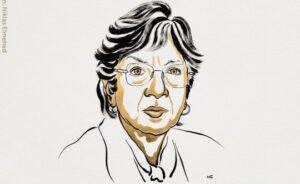
Geeta Mukherjee Who Refused Ministerial Post for Women’s Quota
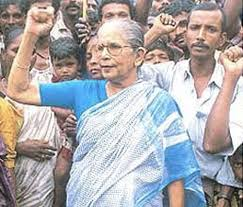
CPI leader Geeta Mukherjee (Image File)
As Modi government moves to pass Women’s Quota Bill by April 18, a veteran journalist recalls the CPI leader who gave up power to pilot the legislation — and wept when Parliament failed her
By NIRENDRA DEV
Kolkata, April 7, 2026 — As the Modi government prepares to push the Women’s Reservation Bill through Parliament in discussions scheduled for April 16, 17, and 18, the nation would do well to remember the woman who sacrificed ministerial office for it — Communist Party of India veteran Geeta Mukherjee, who turned down Prime Minister I K Gujral’s offer of a cabinet berth in 1997 so she could remain chairperson of Parliament’s Joint Select Committee and steer the Bill to passage.
She never succeeded. Parliament failed her repeatedly. But she never stopped trying.
“What Will I Do Becoming a Minister?”
The story was told to this correspondent in or around 1999, at Constitution Club in New Delhi, where Geeta Mukherjee had come to attend a seminar on rural development. The journalist — then barely a year into Delhi reporting, having shifted from Nagaland in 1998 to join Press Trust of India — found himself in conversation with a woman born in 1924, older than his own father.
“Anek mantri toh dekhlam…. mantri hoeye ki korbo; tai neelam na,” she said in Bengali — I have seen enough numbers of ministers in this life. What will I do becoming one; so I declined I K Gujral’s request.
She had laughed when addressed, almost accidentally, as “Madam Geeta Di.” When told it was difficult to call her Didi because his father was younger than her, the journalist added that his father had long been an admirer of hers. It was not flattery. His father had appreciated her parliamentary speeches — even with limited access to video clippings or live telecasts of Lok Sabha debates.
The Nagaland Letter and the Question She Asked
When she learned her interlocutor had studied and worked in Nagaland, Geeta Mukherjee immediately recalled a letter sent to her as chairperson of the Joint Select Committee on the Women’s Reservation Bill. It had come from the Naga Students’ Federation — opposing the Bill outright, arguing it conflicted with Naga tradition and culture.
Weeks earlier, the Nagaland Legislative Assembly had passed a unanimous resolution against the Bill, piloted by Parliamentary Affairs Minister Z. Lohe, with Chief Minister S.C. Jamir presiding over the state government.
Geeta Mukherjee’s response was characteristically direct: “Are they really opposed to the Bill? What are Naga women doing?”
It was a question with no easy answer in 1998-99 — Naga women were not yet assertive enough as a political force to push back. Nagaland would not elect its first woman legislator to the state assembly until 2023, when two NDPP nominees — including Salhoutuonuo Kruse, now Minister for Women Resource Development and Horticulture — made history. Credit for that political breakthrough is attributed significantly to the BJP’s central leadership.
The August 14 Gambit — and the Male Members Who Objected
The most dramatic episode in Geeta Mukherjee’s long campaign came on August 14, 1997 — the last day of the Monsoon Session of Parliament — when she had the opportunity to occupy the Chair as a member of the panel of presiding officers.
She used it immediately.
The Women’s Reservation Bill had been placed as item number 24 on the day’s List of Business — a technically adroit manoeuvre by those who wanted no debate. Item 24 would never be reached. As soon as she occupied the Chair, Geeta Mukherjee declared the Bill would be taken up for discussion.
Some male members were reportedly displeased. BJP’s Ram Naik reminded her that proceedings had to follow the rules. When the Chair later passed to Nitish Kumar, Geeta Mukherjee — now back on the floor as a member — demanded that the Bill be taken up. Kumar could only assure her the matter would be addressed after business under Rule 377 was concluded. When that time came, it was the hour of Private Members’ Bills, and Kumar — described by those present as a textbook adherent of procedure — said he could do nothing.
Geeta Mukherjee was furious. She called on women MPs across party lines to walk out in protest. She led five Left and Congress women MPs out of the House. Sushma Swaraj of BJP did not join them — but was observed slipping out quietly, shortly after.
A moment of unexpected solidarity came from an unlikely quarter: Priya Ranjan Dasmunshi, then MP from Howrah and a senior Congress leader, also left the House in support of his women colleagues.
Speaking to journalists afterwards, Geeta Mukherjee was visibly shaken. “Even when my husband died, I was brave,” she said. “But today, I’ve been reduced to tears.”
She had married legendary Communist leader Biswanath Mukherjee in 1942. She had survived a serious heart surgery in the 1980s. Parliament, it seems, broke through what illness and personal loss had not.
Caste Census 2027: Is Modi Trying to Rewrite Mandal Politics?
The Opposition She Faced — and the Allies Who Retreated
The Bill’s opponents were not confined to the right. The Samajwadi Party and RJD were firmly against it. Janata Dal leader Sharad Yadav — later to become a significant voice in OBC politics — backed the opposition and made his now-infamous remark that the legislation would only benefit “par-kati Mahilaen” — women with cropped hair, a dismissive phrase implying elite, urban, Westernised women.
Geeta Mukherjee had counted on the Left, Congress, and BJP together to build a majority. She was supported by cross-party women colleagues including Mamata Banerjee — then still in Congress until 1997 — Sushma Swaraj of BJP, Najma Heptullah, and Margaret Alva of Congress.
But those parties also retreated, using “lack of consensus” as a convenient excuse. She had said so plainly to this correspondent.
In Parliament in 1997, she had placed on record: “Sir, I would like to inform the House that the hon. Speaker had given us a word of honour that on the 29th July 1997, the Women’s Reservation Bill would be there in the List of Business.” It was not.
The Sub-Quota She Rejected
The Geeta Mukherjee-led Joint Select Committee’s 1997 report also took a firm position against sub-reservation — a quota within the 33% quota for OBC women — noting there was no precedent for OBC reservation in legislative bodies or Panchayats, and arguing that the problem of OBC women’s representation could be addressed without sub-quotas if political parties simply fielded OBC women candidates in OBC-dominated constituencies.
That position remains relevant today, as the Rohini Commission’s recommendations on OBC sub-categorisation hover over the present government’s implementation plans.
Vajpayee, Gujral — and the Tailpiece
The pattern of promise and retreat extended into the Atal Bihari Vajpayee years. Even after the Prime Minister’s assurances, the Women’s Reservation Bill was not introduced. Geeta Mukherjee and others compared Vajpayee with Gujral — both described, with a mixture of affection and exasperation, as “good leaders in bad parties.”
Now, nearly three decades after Geeta Mukherjee wept outside Parliament’s doors, the Modi government says it will get the job done by April 18, 2026 — with implementation from 2029.
Whether it does or not, the woman who turned down a ministry to fight for this moment deserves to be remembered.
Geeta Mukherjee was born in 1924. She died on March 4, 2000.
(This piece is based on a personal interview conducted by the author circa 1998-99 at Constitution Club, New Delhi, and parliamentary records of the Joint Select Committee on the Women’s Reservation Bill, 1996-97.)
West Bengal: Women’s Quota Bill Puts TMC in Political Crossfire
Follow The Raisina Hills on WhatsApp, Instagram, YouTube, Facebook, and LinkedIn




About The Author