Iran’s AI Lego Targets US in ‘TikTok War’ Amid 2026 Conflict
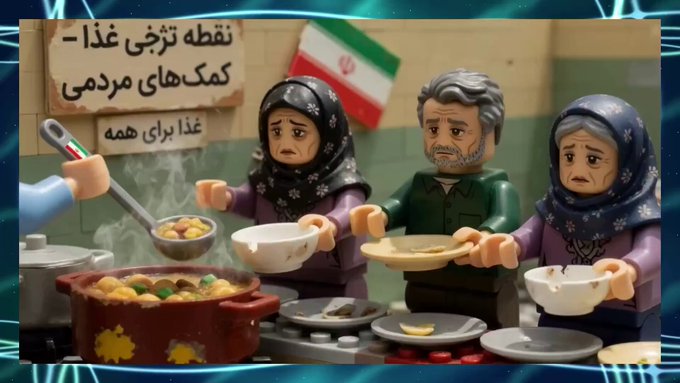
Tehran-linked digital outfit uses AI-generated Lego-style videos to exploit US political faultlines (Image video grab)
Tehran-linked digital outfit uses AI-generated Lego-style videos to exploit US political faultlines and reshape global opinion during 2026 conflict
By TRH World Desk
New Delhi, May 3, 2026 — There is something deeply unsettling — and strategically brilliant — about the fact that one of the most effective weapons deployed against the United States in 2026 is made of toy bricks.
Not real ones. Animated ones. Powered by artificial intelligence, scored with rap music, and designed for the scrolling thumb of an American teenager on TikTok.
Meet Explosive Media — the Tehran-based digital outfit that has turned the most recognisable children’s toy in the world into a geopolitical missile.
The Playbook: Bricks, Beats and Brutal Messaging
A series of artificial intelligence-stoked animated videos produced by an overseas firm has spread across social media, racking up millions of views while seeking to exploit legitimate questions about US President Donald Trump’s chaotic statements, the Epstein files, and Israel’s influence on US foreign policy.
The content is as audacious as it is calculated. One video opens with Lego versions of Trump, Israeli Prime Minister Benjamin Netanyahu and a devil figure sitting together examining a folder labelled “Epstein file.” Trump then pushes a button, launching a missile with a US flag. The missile hits an Iranian school. And it’s set to rap music.
Another video goes further in its cultural provocation. A British voice raps: “America is a 250-year civilization of war, greed and profit. A nation birthed in war will die by war. Iran is a 7,000-year civilization.”
These are not crude, state-issued pamphlets. They are slick, culturally literate, algorithmically optimised content — designed not to preach to the converted, but to infiltrate the feeds of ordinary Americans.
Who Is Behind the Bricks?
Explosive Media is an Iranian digital media enterprise known for producing AI-generated videos of a satirical nature about Iran–United States relations for the Iranian government. Its short films during the 2026 Iran War — produced in the style of Lego movies and lampooning the US side in the conflict — were widely shared both by Iranian and American social-media accounts, becoming, according to The New Yorker, “inescapable artifacts” of the war.
The group claims independence, yet the connections to state interests are not hidden. The firm behind the Lego videos, Explosive Media, acknowledged to the BBC that the Iranian government was a customer. One of the creators explained the choice of Lego simply: it is a “world language.”
Their self-description is even bolder. As Fortune reports, the group told the Associated Press: “They’ve long dominated the media landscape and, through that power, imposed narratives on many nations. But this time, something feels different. This time, we’ve disrupted the game. This time, we’re doing it better.”
The Strategy: Exploit America’s Own Faultlines
What makes these videos dangerous is not what they fabricate — it is what they accurately identify. The messaging is not built on lies alone. It is built on America’s real wounds.
Al Jazeera reports that analyst Zaka described the approach as genuinely intelligent: the videos, by focusing on faultlines within US domestic politics — such as on the Epstein files — had been really “smart.” “They’re just calling it the ‘Epstein regime’, and that’s a domestic fissure that they’re choosing to bring forward again. They’re also using the election MAGA tropes and being subordinate to Israeli interests, so in that the way they’re doing it, it seems like fun, but it’s really, really smart.”
The videos also carry a deeper historical charge. One animated video rapidly shuttles between a range of people who’ve been victims of the United States government — from Black Americans in chains to survivors of Iraq’s notorious Abu Ghraib prison complex. Missiles are labelled with inscriptions dedicating vengeance “For the stolen Blacks,” “For the people of Hiroshima and Nagasaki.”
This is not random. This is a curated inventory of American shame, weaponised for the social media age.
The New Frontier of Information Warfare
Scholars are watching this unfold with a mixture of alarm and fascination. As The Conversation notes, the 2025 to 2026 conflict between the US, Israel and Iran can be thought of as the first TikTok War, and the first major AI War. AI has ushered in new forms of information warfare that target perceptions, information environments, and trust itself.
Professor Marc Owen Jones, quoted by Al Jazeera, argues that Iran’s military limitations make this narrative war existential: Iran knows that it can’t win militarily. “Their best bet of success is to have public opinion on their side, pressuring the United States to stop. And the communications game in this day and age is one in which this kind of troll propaganda, this kind of ‘owning smack-talk type’ propaganda wins.”
The mechanics of why this works are explored by RTÉ Brainstorm: the Lego-style clips spread not because users consciously seek out Iranian propaganda, but because they are visually unusual, absurdly formatted and immediately legible in the grammar of social media. They look like the kind of content people already consume. Their political payload rides piggyback on their entertainment value.
Emma Briant, a British expert on information warfare quoted by MS Now, puts it starkly: “These new technologies have given Iran an ability to leverage culture in a way that they never have been able to before. Even five years ago, trying to make something that was culturally entertaining and sticky to a Western audience would be very, very difficult.”
Trump’s Own Rhetoric: Handing Iran the Script
There is a painful irony at the centre of this story. The Trump administration’s own conduct during the conflict has, in the view of analysts, made Iran’s job dramatically easier.
Briant said the Trump administration has made Iran’s job easier by talking about the war in an extreme and unprecedented way, such as Trump’s threat to destroy Iranian civilization and White House videos making light of bombings and killings. “The most disturbing part of this is what the president has done to take the world’s eyes entirely off how the Iranian regime was for months and months beforehand, slaughtering its own people. The story has entirely changed and stoked this propaganda, which is now all about Trump.”
US Secretary of War Pete Hegseth, when asked about the videos, dismissed them as lies. “That’s disgusting and detached from reality,” he said, adding: “Iran says a lot of things in the propaganda space based on complete lies.” A denial, yes — but not a counter-narrative.
What Iran’s Lego campaign reveals is a fundamental shift in the architecture of influence. The battlefield is no longer just geography — it is the algorithm. And on that battlefield, a country with vastly inferior military resources has found a way to fight a superpower to a standstill in the war for global public opinion.
Follow The Raisina Hills on WhatsApp, Instagram, YouTube, Facebook, and LinkedIn




About The Author