International Labour Day 2026 Theme Focuses on Mental Health
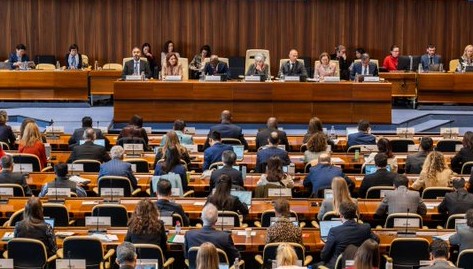
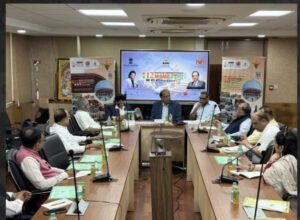
A conference of International Labour Organisation. (Image ILO on X)
“Ensuring a Healthy Psychosocial Working Environment” highlights global push for mental well-being, fair wages and safe workplaces
By PRADEEP KUMAR PANDA
Bhubaneswar, May 1, 2026 — International Labour Day 2026, also known as May Day, spotlights mental health and workplace well-being with a global focus on creating safer and more inclusive work environments. The theme for International Labour Day (also known as May Day or International Workers’ Day) 2026 is “Ensuring a Healthy Psychosocial Working Environment.”
This theme aligns closely with the International Labour Organization’s (ILO) focus for its World Day for Safety and Health at Work 2026 (observed on 28 April), which emphasizes creating healthy psychosocial environments at work, addressing issues like mental health, stress, workplace culture, and psychosocial risks.
Several sources highlight related priorities under this broad umbrella:
- Mental health and psychosocial well-being — Tackling stress, burnout, and digital-age workplace pressures.
- Social justice and equality — Including fair wages, inclusive environments, and empowering women workers.
- Sustainable and safe workplaces — Linking to climate action and modern labor challenges.
History of International Labour Day (International Workers’ Day / May Day)
International Labour Day, observed annually on 1 May, commemorates the struggles of the labour movement for workers’ rights, particularly the demand for an eight-hour workday. Its roots lie in the industrial struggles of the late 19th century in the United States, even though the holiday is now widely celebrated around the world (except in the US and Canada, which observe Labor Day in September).
Origins in the United States (1886)
In the 19th century, workers often laboured 12–16 hours a day, six or seven days a week, under harsh conditions. The push for shorter working hours gained momentum.
- In 1884, the Federation of Organized Trades and Labor Unions (later the American Federation of Labor) passed a resolution declaring that, from 1 May 1886, eight hours would constitute a legal day’s work. They called for a nationwide general strike to enforce this.
- On 1 May 1886, hundreds of thousands of workers (estimates range from 300,000 to 500,000) across the US went on strike. Chicago became the epicentre, with around 40,000 workers participating.
The strikes were largely peaceful at first, but tensions escalated. On 3 May, police fired on strikers at the McCormick Reaper plant in Chicago, killing several workers. In response, anarchists and labour activists called a protest meeting for the next day at Haymarket Square.
The Haymarket Affair (4 May 1886)
On 4 May, a large crowd gathered peacefully at Haymarket Square. As police moved in to disperse the remaining demonstrators, an unknown person threw a bomb at the police, killing one officer instantly. Police then opened fire on the crowd, resulting in deaths and injuries on both sides (several police officers and civilians died, with dozens wounded).
Eight labour activists (known as the Haymarket Eight or “Haymarket Martyrs”) were arrested and tried for conspiracy. The trial was widely criticized as unfair — the evidence linking them directly to the bomb was weak, and the jury was biased. Four were hanged on 11 November 1887, one committed suicide in prison, and the remaining three were later pardoned by Illinois Governor John Peter Altgeld in 1893, who called the trial a miscarriage of justice.
The Haymarket Affair became a powerful international symbol of workers’ repression and resistance.
Internationalization of May Day (1889–1890)
In 1889, the Second International (an organization of socialist and labour parties) met in Paris on the centenary of the French Revolution. French delegate Raymond Lavigne proposed that 1 May 1890 be observed internationally as a day of demonstrations in support of the eight-hour day and in memory of the Haymarket victims.
- The first coordinated International Workers’ Day was held on 1 May 1890, with large demonstrations in Europe, the US, and parts of South America.
- It quickly became an annual event. By 1891, the Second International formally recognized it.
Over time, May Day evolved beyond just the eight-hour demand to represent broader workers’ rights, solidarity, fair wages, safe conditions, and social justice. In many countries, especially those with strong socialist or communist traditions, it became a public holiday marked by rallies, marches, and political speeches.
Observation in India
India’s connection to Labour Day began in the early 20th century during the freedom struggle and growing trade union movement.
- The first May Day celebration in India was organized on 1 May 1923 in Madras (now Chennai) by the Labour Kisan Party of Hindustan, led by Singaravelu Chettiar (also known as M. Singaravelar).
- Two meetings were held — one on Marina Beach (opposite the Madras High Court) and another at Triplicane Beach. A resolution was passed demanding that 1 May be declared a national holiday. The red flag (a symbol of labour solidarity) was used for the first time in India during these events.
- Today, Labour Day (also called Kamgar Din or Antarrashtriya Shramik Diwas) is a public holiday in several Indian states and union territories. It is marked by trade union rallies, meetings, and discussions on workers’ issues. India has a massive workforce (hundreds of millions), making the day particularly significant.
Global Spread and Modern Significance
By the early 20th century, many countries officially recognized 1 May as a holiday. In the Soviet Union and later socialist states, it became a major state-sponsored event with military parades. In the West, it often carried more radical or union-focused tones.
The United States distanced itself from the May 1 date due to its association with socialism and the Haymarket events. In 1894, President Grover Cleveland signed legislation making the first Monday in September the official Labor Day holiday.
Today, International Labour Day continues to highlight ongoing issues such as:
- Decent working conditions
- Fair wages
- Elimination of child labour and exploitation
- Mental health and psychosocial safety at work (a growing focus in recent years)
- Gig economy challenges and climate-just transitions for workers
It serves as both a celebration of labour’s historical gains and a call to address current inequalities. The day also overlaps with traditional spring festivals (May Day), but its modern meaning is firmly rooted in the labour movement.
Labour Day Celebration Blends Worker Tribute with Eco-Art Innovation
Follow The Raisina Hills on WhatsApp, Instagram, YouTube, Facebook, and LinkedIn




About The Author