India’s Women in Politics: From Indira to April 18 Milestone
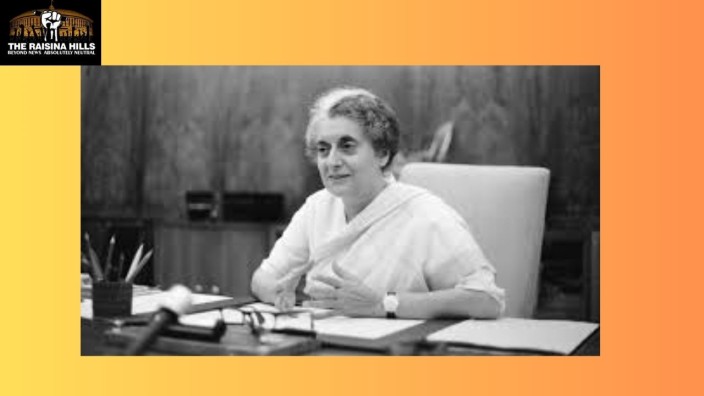
Former Prime Minister Indira Gandhi (Image INC India)
From Indira Gandhi to the Women’s Reservation Bill — India’s journey toward political parity reaches a defining moment
By NIRENDRA DEV
New Delhi, April 12, 2026 — India stands at the threshold of a historic reckoning. A special three-day sitting of Parliament has been convened from April 16 to 18, where an amendment bill to the Women’s Reservation Act — the Nari Shakti Vandan Adhiniyam — is expected to be passed, increasing Lok Sabha seats to 816 with 273 reserved for women.
PM Narendra Modi has said that provisions will be made to ensure at least 33 per cent of MPs in the 2029 Lok Sabha elections are women. There may still be hurdles — political, procedural and constitutional. Congress president Mallikarjun Kharge has claimed the proposed amendment could violate the Model Code of Conduct and have “grave consequences,” with the opposition questioning both the timing and the intent behind the special session.
And yet — whatever the political theatre around it — the moment itself demands a reckoning with how far India’s women have already come.
Ahead of the West
Remarkably, Indian women entered the arena of governance and high office long before their counterparts in older democracies. Indira Gandhi became Prime Minister in 1966. Margaret Thatcher became Britain’s first female PM only in May 1979. As for the United States — despite 250 years of democracy — it is yet to see a woman in the Oval Office.
India, for all its social contradictions, got there first. And yet the underrepresentation of women in Parliament and state assemblies remains a stubborn, uncomfortable fact. Male chauvinism persists. Netas with feudal mindsets have long sought ways to stall what is a long-overdue correction.
Geeta Mukherjee Who Refused Ministerial Post for Women’s Quota
The Women Who Wrote History
Congress gave India its first two women chief ministers — Sucheta Kriplani in Uttar Pradesh and Nandini Satpathy in Odisha. The roll call since then is remarkable: Mamata Banerjee, Uma Bharti, Anandiben Patel, Vasundhara Raje, Mayawati, J. Jayalalitha, Rajinder Kaur Bhattal, and Janaki Ramachandran all broke through in their respective states.
Delhi has had four women CMs — Sushma Swaraj, who also served as External Affairs Minister from 2014 to 2019 under PM Modi; Sheila Dikshit, who led the Congress government for 15 years; Atishi from the AAP, and Rekha Gupta of the BJP. Assam’s Syeda Anwara Taimur remains the only Muslim woman to have served as chief minister of an Indian state.
Sonia Gandhi’s political arc is one of the most consequential of the post-Independence era. First offered Congress presidency as a grieving widow after Rajiv Gandhi’s assassination in 1991, she formally took charge as AICC president on March 14, 1998, and held the office until December 2017. She returned to steer the party again in August 2019. Maneka Gandhi — Sanjay Gandhi’s widow and political fighter in her own right — served as a minister under Vajpayee, VP Singh and Narendra Modi.
Before all of them were the freedom fighters. Aruna Asaf Ali hoisted the Congress flag at Gowalia Tank Maidan in Bombay during the Quit India Movement of 1942, and was honoured posthumously with the Bharat Ratna in 1997. Ammakutty Swaminathan was a member of the Constituent Assembly itself.
The Yahya Khan Tailpiece
No account of Indian women in power is complete without the story of what happened when a man chose to underestimate one.
On November 27, 1971, Pakistan’s military ruler General Yahya Khan boasted to a group of western journalists: “If that woman thinks she is going to cow me down… I refuse to take it.” Within two weeks, he had lost the war, and Pakistan had lost its eastern wing — now Bangladesh.
India has a word for that kind of lesson. The word is history.
April 18 could write a new chapter of it.
FAQ
Q: What is the Women’s Reservation Bill being discussed in April 2026?
A: It is an amendment to the Nari Shakti Vandan Adhiniyam that will increase Lok Sabha seats to 816, with 273 — or 33.4% — reserved for women, effective from the 2029 general elections.
Q: When is the special Parliament session for the Women’s Reservation Bill?
A: A special three-day sitting has been convened on April 16, 17 and 18, 2026.
Q: Who was India’s first woman Prime Minister?
A: Indira Gandhi, who became Prime Minister in 1966 — more than a decade before Margaret Thatcher became Britain’s first woman PM in 1979.
Q: Which party gave India its first women chief ministers?
A: The Congress party — Sucheta Kriplani in Uttar Pradesh and Nandini Satpathy in Odisha.
Q: Why is the opposition questioning the Women’s Reservation Bill in 2026?
A: Congress has raised concerns about the timing of the special session, possible Model Code of Conduct violations ahead of state elections, and the delimitation methodology attached to the bill.
27 Years, 5 PMs, One Stalled Bill: What’s Next for Women’s Quota
Follow The Raisina Hills on WhatsApp, Instagram, YouTube, Facebook, and LinkedIn




About The Author