India’s Air Travel Boom Hits 339 Million Passengers — Here’s Why It’s Not Slowing Down
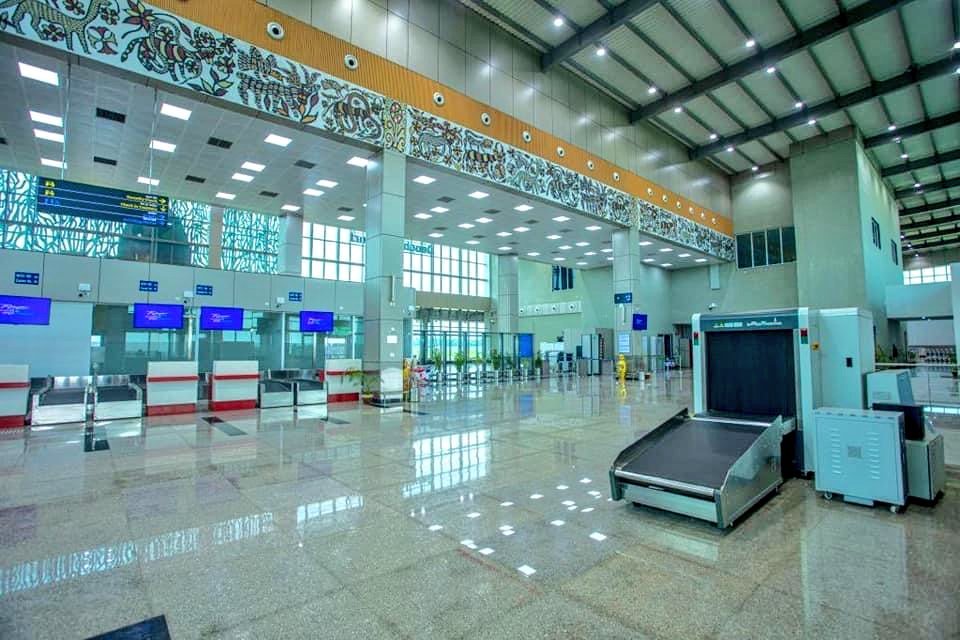
Deoghar airport in Jharkhand! (Image X.com)
By KUMAR VIKRAM
From 105 million to 339 million in five years — India’s domestic skies have never been busier. Here’s why analysts say the boom isn’t close to peaking.
New Delhi, August 3, 2026 — India’s domestic skies have gone from grounded to record-breaking in the space of five fiscal years. Domestic air passenger traffic climbed from a pandemic-battered 105 million in FY21 to roughly 339 million by FY26 — a more than threefold jump — and industry analysts, airline executives and government officials all point to the same conclusion: this is a structural shift in how India travels, not a temporary rebound.
A Market ICRA Says Is Still Under-Forecast
Ratings agency ICRA has repeatedly had to revise its own projections upward through the year. In its September assessment, the agency said domestic passenger traffic was expected to grow 4-6% in FY26, reaching 348-355 million, after a modest 2.6% rise in April-August. ICRA’s sector head for corporate ratings, Vinay Kumar G, per media reports, tied the growth split to shifting travel patterns, noting that “international traffic continues to outpace domestic traffic growth, driven by healthy international tourism activity, along with improved connectivity to newer destinations.”
That international outperformance doesn’t mean domestic demand is cooling — it means the base is now so large that percentage growth naturally moderates even as absolute passenger numbers keep climbing to record highs.
Airlines Are Betting Billions on the Trend Continuing
Nowhere is the confidence in India’s flying boom clearer than in fleet orders. IndiGo, which now controls more than 63.6% of the domestic market with a fleet that has crossed 440 aircraft, has laid out plans to nearly double its size. Per the carrier’s own targets, IndiGo expects annual passenger numbers to rise from 123 million in fiscal year 2026 to 200 million by fiscal year 2030, with fleet size increasing from 441 aircraft to more than 550.
Outgoing CEO Pieter Elbers framed the moment in explicitly global terms at the IATA summit, telling reporters that “India is taking its place on the world stage.” Elbers, who relocated to India to lead the carrier’s expansion, has also pointed to the sheer pace of demand growth industry-wide — a sentiment echoed by aircraft lessors watching the market from outside. Dubai Aerospace Enterprise CEO Firoz Tarapore told Reuters bluntly that “the demand growth is unlike what we see in any other jurisdictions.”
The “Why”: Cheap Fares, New Airports, and a Growing Middle Class
Analysts converge on three structural drivers behind the surge, rather than one-off pandemic recovery effects.
First, fares: India’s low-cost carrier model has pushed ticket prices down to where flying now competes directly with premium rail travel. Industry research firm IMARC Group’s market analysis argues IndiGo’s no-frills, high-frequency approach has “democratized air travel to price points approaching premium train fares for routes above 500 km,” calling this inflation-adjusted decline in domestic airfares “the commercial aviation sector’s single most important structural driver.”
Second, infrastructure: the government has more than doubled the country’s airport count in a decade, and the buildout is accelerating. The same IMARC analysis notes India’s airport network expanded from 74 airports in 2014 to 159 in 2024, with new mega-projects including Navi Mumbai International Airport targeted for 2026 commissioning.
Third, demographics and income: rising disposable incomes are pulling first-time flyers into the market at scale. Aviation analyst Mark Martin captured this dynamic during an earlier surge in flying, telling the BBC that “there was no growth for two years during Covid. What we are witnessing now is a snowballing of that pent-up demand,” adding that India’s air traffic has typically grown at twice the pace of GDP as disposable incomes rise across Asia’s third-largest economy.
Turbulence Along the Way
The boom hasn’t been without disruption. FY26 growth was choppier than expected after an Air India crash in Ahmedabad in June triggered fleet-wide safety inspections, and a December operational meltdown at IndiGo forced regulators to intervene. Coverage of the slowdown noted that Air India scaled back its winter schedule by 10% after the crash, while DGCA ordered a similar 10% cut to IndiGo’s schedule following its failure to manage revised pilot duty and rest-hour rules. ICRA’s own commentary acknowledged the disruption directly, stating the downgrade followed “a weaker-than-expected start to the current financial year amid rising global tensions and the grounding of aircraft amid fleet inspections after the Air India plane crash in Ahmedabad in June.”
Officials See This as Just the Beginning
Government messaging has consistently framed the growth as a long-term trajectory rather than a peak. Civil Aviation Minister Jyotiraditya Scindia has previously pointed to the milestone of 456,082 passengers flying in India in a single day, calling the “skyrocketing domestic passenger traffic post-Covid a reflection of India’s high growth.”
With airport capacity, fleet orders, and airfare economics all still expanding, the consensus across ICRA, IndiGo, and independent analysts is the same: India’s aviation boom is a demand curve still climbing, not one that has topped out. The open questions for FY27 and beyond aren’t whether growth continues, but whether infrastructure, pilot supply, and aircraft deliveries can keep pace with it.
Noida International Airport: Asia’s Next Aviation Giant Arrives
Follow The Raisina Hills on WhatsApp, Instagram, YouTube, Facebook, and LinkedIn




About The Author