‘The Idea of China’: Xu Guoqi’s New History Asks Who Gets to Define Chineseness
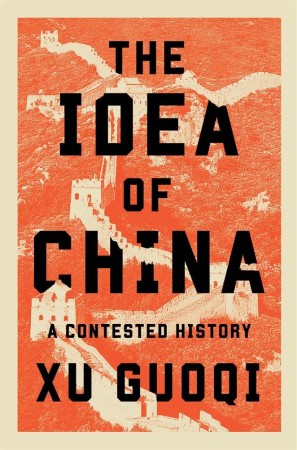
Xu Guoqi’s new book The Idea of China A Contested History argues that Chinese identity has been repeatedly reshaped through centuries of dialogue with the outside world. (Image book cover)
By TRH Book Desk
The Hong Kong-Based Historian’s Latest Book Argues That “China” Has Always Been a Contested, Transnational Idea — Not a Fixed Civilization
July 2026 — Xu Guoqi has spent two decades building a career out of a single, disarmingly simple move: taking subjects that look purely domestic — Chinese labour, Chinese sport, Chinese diplomacy — and showing how thoroughly they were shaped by contact with the outside world. His new book, The Idea of China: A Contested History, published by Harvard University Press, applies that method to the biggest subject of all: what “China” itself actually means.
The book opens from two questions Xu poses as deceptively simple: what counts as China, and who counts as Chinese. His answer, developed across centuries of material, is that neither has ever had a stable answer.
According to the University of Hong Kong’s Centre for the Study of Chinese Culture and the West, where Xu serves as a senior fellow, the book traces how the idea of China has been reshaped repeatedly through dialogue and confrontation — with neighbouring states, with more distant outside powers, and with Chinese speakers and writers inside mainland China, Hong Kong, Taiwan and the diaspora.
That framing extends even to concepts Chinese nationalists often treat as bedrock. The HKU summary notes that even core cultural touchstones like Confucianism were reimported into China only after being translated and reworked in Korea, Japan and Vietnam — a detail that undercuts any simple story of an unchanging, self-contained Chinese civilization radiating outward to its neighbours.
Xu’s Larger Argument About Nationalism
Where the book turns pointed is in its treatment of the present. Xu situates China’s turn toward an increasingly nationalist cultural agenda — one built on the mystique of the Middle Kingdom and nostalgia for twentieth-century resistance — as the latest chapter in this much older pattern of construction and reconstruction, rather than a return to some essential Chinese identity.
His conclusion, as summarized by his publisher, is that China is fundamentally constituted by shared history rather than a fixed essence, and that recognizing this could help move the world past the great-power rivalry framing that now dominates discussion of China’s rise.
That is a notably different register from the “clash of civilizations” narratives common in Western China commentary — not surprising, given Xu’s institutional position. As the David H. Y. Chang Professor of History and founding director of the Institute of Transnational History of China at the University of Hong Kong, Xu writes from inside one of the very border zones — a Chinese-speaking global city with its own contested relationship to “Chineseness” — that his book treats as central rather than peripheral to the story.
Reception So Far
Early endorsements have come primarily from historians of China rather than mainstream critics. Yale-trained China scholar Odd Arne Westad praised Xu’s consistent use of a transnational lens to read China’s development, while China-watcher Orville Schell credited the book’s handling of the historical manipulations behind the notion of “being Chinese.” Those assessments track with Xu’s earlier, similarly structured books — including Chinese and Americans: A Shared History and Asia and the Great War — both of which used cultural exchange, rather than politics or conflict alone, as their organizing lens.
The Verdict
For readers of Xu’s earlier work, The Idea of China will read as the culminating statement of a career-long argument: that China, like every nation, is a continuing invention rather than a timeless given — and that the current moment of nationalist consolidation is one more iteration of a very old, very unfinished process. Whether that argument lands as illuminating or contentious will likely depend on where the reader already stands on the question the book refuses to let settle.
‘The Shampoo Effect’ by Jenny Jackson Is the Summer’s Buzziest Beach Read
Follow The Raisina Hills on WhatsApp, Instagram, YouTube, Facebook, and LinkedIn




About The Author