Gyanesh Kumar Row Deepens as Congress Links ECI Dissent to Supreme Court Appointment Case
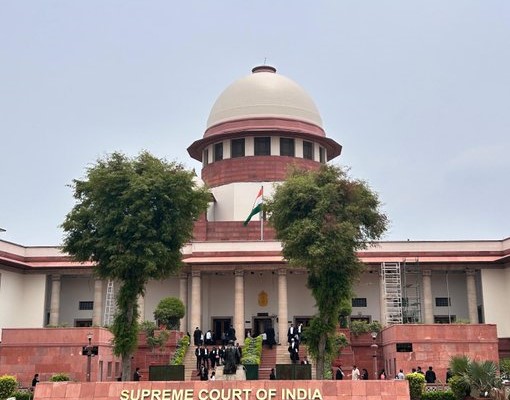
Image credit X.com
By AMIT KUMAR
Jairam Ramesh targets CEC Gyanesh Kumar after reports of internal objections over electoral-roll decisions; Supreme Court sends challenge to 2023 appointment law to Constitution Bench
New Delhi, September 24, 2026 — The political confrontation over Chief Election Commissioner Gyanesh Kumar intensified after Congress communication chief Jairam Ramesh accused the CEC of compromising the independence of the Election Commission, while simultaneously linking the controversy to a Supreme Court split verdict on the mechanism for appointing election commissioners.
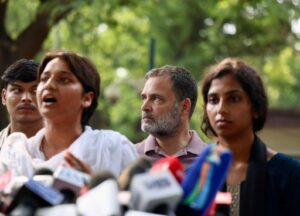
Ramesh, in a post on X, described Kumar as an “absolute disgrace” to the constitutional office and alleged that he had acted at the behest of the Union government. These are political allegations by the Congress and have not been established as findings by a court or other competent authority.
The remarks followed an The Indian Express report that Election Commissioners Sukhbir Singh Sandhu and Vivek Joshi had recorded objections at least 14 times over 10 months concerning decisions related to electoral rolls, Form 6 and technology controls.
The Election Commission, however, pushed back against the interpretation of an institutional split. EC officials said all decisions concerning the Special Intensive Revision (SIR), as well as other decisions of the Commission, were unanimous. They acknowledged that Sandhu and Joshi had raised concerns on aspects of voter deletion and data handling but maintained that the final decisions had their approval.
The removal notice
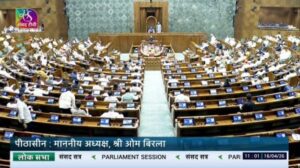
Ramesh also revived the issue of the removal process against Kumar. Seventy-three Opposition Rajya Sabha MPs submitted a notice on April 24, 2026, seeking initiation of proceedings for Kumar’s removal on allegations of “proven misbehaviour”. The notice was submitted under Article 324(5), read with the constitutional provisions governing removal of the CEC.
Ramesh said the notice remained pending and suggested that Opposition parties could move fresh removal motions if Parliament were to meet in a special session.
The procedural status of the April notice should, however, be distinguished from earlier notices that were rejected. Reports from April recorded that the Opposition had submitted multiple notices and that earlier attempts in both Houses had faced procedural rejection.
Supreme Court adds another layer
The timing of Wednesday’s Supreme Court proceedings has given the political controversy a wider constitutional dimension.
A two-judge Bench comprising Justices Dipankar Datta and Satish Chandra Sharma delivered a split verdict on whether petitions challenging the Chief Election Commissioner and Other Election Commissioners (Appointment, Conditions of Service and Term of Office) Act, 2023 should be referred to a larger Bench.
Justice Datta opposed the reference sought by the Centre, while Justice Sharma favoured consideration by a Constitution Bench. The matter will now go before the Chief Justice for constitution of a larger Bench.
The 2023 law changed the composition of the selection committee by replacing the Chief Justice of India with a Union Cabinet minister nominated by the Prime Minister. The committee now comprises the Prime Minister, the Leader of Opposition and the nominated Union minister.
This is significant because, in Anoop Baranwal v. Union of India in March 2023, the Supreme Court had directed that, until Parliament enacted a law, appointments should be made on the recommendation of a committee comprising the Prime Minister, Leader of Opposition and Chief Justice of India.
Justice Datta has separately questioned whether the present arrangement gives the executive an overwhelming role, while Justice Sharma has held that the constitutional questions warrant examination by a larger Bench.
The two controversies therefore intersect around one central institutional question: how much independence should the Election Commission have from the executive, both in the appointment of its members and in its internal decision-making?
For the Congress, the reported objections by two Election Commissioners reinforce its long-standing criticism of the poll panel. For the Election Commission, the position remains that the decisions under scrutiny were collectively approved.
The Constitution Bench proceedings, along with the continuing debate over SIR and the reported internal objections, will now provide the institutional forum for determining the legal questions. Political allegations, meanwhile, remain part of the wider contest over the credibility and independence of India’s electoral machinery.
Congress Demands Gyanesh Kumar’s Removal After Report of EC Dissent
Follow The Raisina Hills on WhatsApp, Instagram, YouTube, Facebook, and LinkedIn




About The Author