Gandhinagar Civic Polls: BJP, Congress and AAP Face Key Test Before Gujarat 2027
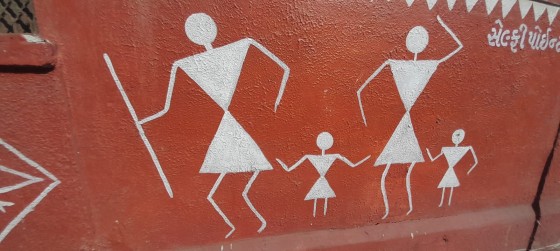
Gandhinagar Municipal Corporation election campaign ahead of the October 11 civic polls. (Image Nirendra Dev)
By NIRENDRA DEV
With 44 seats across 11 wards, the October 11 GMC election puts local governance, taxes, candidate selection and opposition strategy in focus.
Gandhinagar, September 24, 2026 — The Gujarat Assembly election is still more than a year away, but political attention in the state has increasingly shifted towards the Gandhinagar Municipal Corporation (GMC) election on October 11.
The civic contest covers 44 seats across 11 wards, with counting scheduled for October 13. The Gujarat State Election Commission issued the election notification on September 21. Candidates can file nominations until September 26, scrutiny will take place on September 28 and withdrawals are permitted until September 29.
For the BJP, Congress and Aam Aadmi Party (AAP), the election provides a test of organisation, candidate selection and ward-level mobilisation.
The Congress has released a local manifesto centred on transparency, municipal governance and relief to residents.
Among its promises are a 25% reduction in residential property tax and 10% relief on commercial property tax. The party has also proposed restrictions on party office-bearers and corporators receiving government contracts or sub-contracts, along with measures aimed at addressing alleged nepotism.
Gujarat Congress chief spokesperson Manish Doshi told The Raisina Hills that the party has deployed senior office-bearers across all 11 wards, with particular attention to complaints involving roads, sanitation and water. “We are taking the battle of Gandhinagar most seriously. After many years we have seen a change in public mood. The BJP will face the beginning of the countdown in Gujarat,” Doshi said.
The assessment of a change in public mood is the Congress’s political claim and will ultimately be tested by the voting figures.
The BJP has started its ward-level consultation, or “sense-taking”, exercise across the 11 wards and 44 seats. The process involves feedback from prospective candidates and party workers.
Party observers including Purnesh Modi, Shabdsharan Brahmbhatt and Dushyant Patel have been assigned to the exercise. The BJP has also reported applications from young aspirants, including more than 100 applications from Gen Z and younger candidates.
Senior BJP leaders have held discussions over candidate selection, with further decisions expected before the nomination deadline.
The scale of the contest is significant for the BJP because it won 41 of the 44 GMC seats in 2021. Congress won two and AAP one. Subsequently, the two Congress councillors joined the BJP, taking the BJP’s tally in the corporation to 43.
AAP seeks to repeat its 2021 vote-share breakthrough
AAP is also preparing for the Gandhinagar contest and has begun its candidate-selection process.
AAP Gujarat MLA Gopal Italia has highlighted the party’s performance in the 2021 GMC election, when it entered the corporation’s electoral contest for the first time. The party won one seat and secured 21.3% of the vote.
The 2021 result demonstrated that AAP could secure a substantial vote share even with limited representation in seats. Its presence also coincided with a sharp reduction in Congress’s seat tally: Congress’s vote share fell from 46.93% in 2016 to 27.97% in 2021.
Whether AAP can again maintain a significant vote share will be one of the important features to watch on October 11.
Why Gandhinagar matters
The civic election is taking place more than a year before the next Gujarat Assembly election, making it an early test of local political organisation.
However, a municipal election and an Assembly election involve different issues, constituencies and campaign dynamics. The GMC contest is likely to revolve more directly around roads, water, sanitation, drainage, property taxes and municipal administration.
The political parties are therefore using the election to build ward-level networks while seeking to establish broader narratives for the coming electoral cycle.
For Congress, the emphasis is on municipal governance and public grievances. The BJP is concentrating on organisation and candidate selection. AAP is attempting to build on the vote share it secured in its first GMC contest.
Election calendar
The official schedule leaves little time for the parties to finalise their campaigns. Voting will take place on October 11, with counting on October 13. Repolling, if required, is scheduled for October 12. The Model Code of Conduct is already in force in the areas covered by the elections.
Gandhinagar’s 44-seat contest will therefore provide a closely watched snapshot of the three parties’ local organisation before Gujarat enters the larger political cycle leading towards the Assembly election.
The broader electoral calendar will subsequently bring Gujarat into the 2027 Assembly cycle alongside Goa, Uttarakhand, Punjab, Manipur, Uttar Pradesh and Himachal Pradesh. In 2028, elections are scheduled in Tripura, Meghalaya, Nagaland, Karnataka, Mizoram, Chhattisgarh, Madhya Pradesh, Rajasthan and Telangana.
For now, however, the immediate political test is Gandhinagar.
Follow The Raisina Hills on WhatsApp, Instagram, YouTube, Facebook, and LinkedIn




About The Author