China After Xi? Why the World Must Prepare for a Possible CCP Collapse
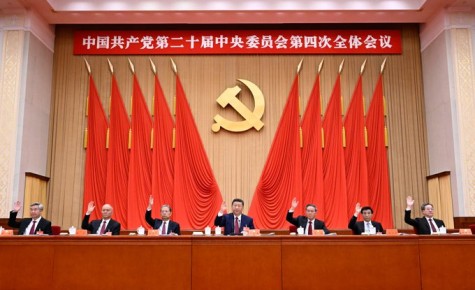
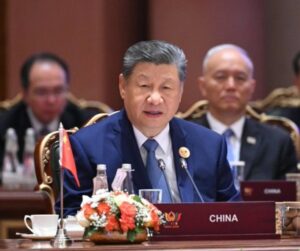
China's President Xi Jinping at Fourth Plenum in Beijing. (Image China MFA, X)
By TRH World Desk
Miles Yu argues that a sudden collapse of communist rule in China could trigger military, financial and political crises far beyond its borders.
New Delhi, September 16, 2026 — The possibility of the Chinese Communist Party (CCP) losing power is increasingly being discussed not as an immediate forecast, but as a strategic contingency that governments may need to prepare for.
In a September 14 commentary published by The Washington Times, Miles Yu, senior fellow and director of the China Center at the Hudson Institute, argues that policymakers have spent decades preparing for competition with a powerful and enduring Chinese Communist Party while giving comparatively little attention to what could happen if communist rule were to suddenly collapse.
Yu’s central argument is that the consequences of a sudden political collapse in China could extend far beyond China’s borders.
“The greatest strategic challenge posed by China may not be what happens if the Chinese Communist Party succeeds, but what happens if it suddenly fails,” Yu writes, framing the issue as a contingency-planning challenge rather than predicting an imminent collapse.
China’s scale makes any political transition potentially consequential for the global economy and security architecture.
Yu points to China’s nuclear arsenal, People’s Liberation Army, security and intelligence agencies, biological facilities, state-owned enterprises, financial institutions and globally integrated supply chains as areas that could face disruption if central authority were suddenly weakened.
The questions, according to Yu, would be immediate: Who controls China’s nuclear weapons? Who commands the PLA? How would China’s financial system function? What happens to the renminbi, state enterprises, foreign reserves and sovereign obligations?
The argument is particularly focused on the possibility that a political vacuum could produce multiple crises simultaneously — including military fragmentation, financial instability, humanitarian emergencies and disputes over control of strategic assets.
Lessons from the Soviet collapse
Yu draws heavily on the experience of communist Europe.
The collapse of communist governments in Eastern Europe in 1989 and the dissolution of the Soviet Union in 1991 demonstrated that political systems that appear durable can change rapidly. But Yu also stresses that the aftermath depends heavily on whether institutions capable of governing exist when the old system disappears.
Poland’s Solidarity movement, Czechoslovakia’s dissident networks and East Germany’s civic movements provided some institutional and political capacity during their respective transitions.
Russia, by contrast, entered the post-Soviet period with weaker democratic institutions and without a comparable consensus on how political and economic transformation should proceed. Yu argues that the consequences included political improvisation, oligarchic accumulation of state assets and institutional weakness.
Yu’s argument is built around the sheer complexity of China’s political system.
A collapse of CCP rule would raise questions over the future of the PLA, People’s Armed Police, Ministry of State Security and domestic surveillance infrastructure. It would also raise difficult questions over Tibet, Xinjiang, Hong Kong and Taiwan.
The economic dimension could be equally disruptive.
China’s financial system, state-owned enterprises, property sector, banking system and international trade relationships are deeply interconnected with the global economy. A disorderly political transition could therefore have consequences well beyond East Asia.
Yu argues that these questions should be considered before a crisis rather than after one.
In 2025 Hudson Institute report titled China After Communism: Preparing for a Post-CCP China, edited by Yu, examined possible problems ranging from securing sensitive facilities and restructuring China’s financial system to managing the PLA and security services and establishing mechanisms for constitutional and political transition.
The report’s premise is not that CCP collapse is inevitable. Instead, it argues that the consequences would be sufficiently consequential that governments should have contingency plans in place.
Yu explicitly distinguishes contingency planning from a policy of imposing political change on China.
His argument is that the United States and its partners should prepare for the possibility of a post-CCP environment without attempting to dictate China’s political future.
China’s Fourth Plenum: Empty Chairs, Purges, and Fear in Beijing
Follow The Raisina Hills on WhatsApp, Instagram, YouTube, Facebook, and LinkedIn




About The Author