Bollywood-Underworld Nexus: From Ajit’s ‘Lion’ Dialogue to Decades of Extortion and Intimidation
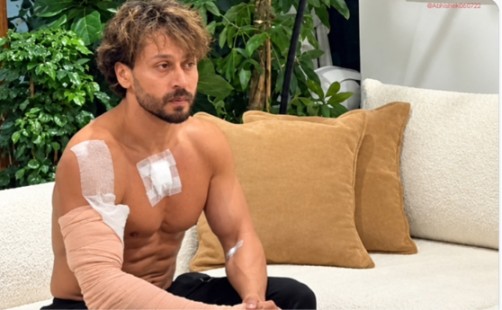
From alleged gangster financing and coercive casting to the shootings of Gulshan Kumar and attacks on filmmakers, the nexus between organised crime and Bollywood spans decades. (Image video grab Maharashtra Dy CM)
By NIRENDRA DEV
From alleged underworld funding and coercive casting to shootings and threats, Bollywood’s association with organised crime has a history spanning decades.
New Delhi, October 19, 2026 — The iconic dialogue, “Saara Seher Mujhe Lion Ke Naam Se Jante Hai,” helped establish Ajit as one of Hindi cinema’s memorable villains. But beyond the screen, Bollywood’s relationship with Mumbai’s underworld has long been associated with stories of financing, extortion, intimidation and alleged interference in filmmaking.
The reported attack on actor Tiger Shroff on October 18, 2026, has brought renewed attention to the history of crime and violence surrounding the Hindi film industry. Three men accused of opening fire at Shroff’s car in Mumbai have been arrested in Rajasthan’s Kota. The accused have been identified as Phool Singh and Rehan, both from Haryana, and Hrithik Kumar, a resident of Bihar.
The incident recalls a much longer history in which organised crime groups allegedly attempted to influence film financing, casting decisions and distribution rights.
Hindi cinema has repeatedly drawn inspiration from Mumbai’s criminal underworld. The relationship between the two, however, has extended beyond fictional portrayals.
Ram Gopal Varma’s 2002 film Company, featuring Ajay Devgn and marking Vivek Oberoi’s entry into Bollywood, was loosely based on the real-life underworld organisation D-Company and the split between Dawood Ibrahim and Chhota Rajan. Oberoi played Chandrakant Nagre.
Manoj Bajpayee’s portrayal of Bhiku Mhatre in Satya also earned critical acclaim, bringing the world of Mumbai’s mafia into mainstream cinema.
In Shootout at Wadala, Sonu Sood played Dilawar Imtiaz Haskar, a character based on Dawood Ibrahim. Bollywood has continued to revisit the lives of underworld figures, including through films such as Once Upon a Time in Mumbaai and the 2013 spy thriller D-Day.
In D-Day, Rishi Kapoor played the crime lord Goldman, also known as Iqbal Seth, a character widely modelled on Dawood Ibrahim.
The real-life connections, however, have often been more complicated than their cinematic portrayals.
Indian agencies reportedly intercepted conversations between underworld don Chhota Shakeel, described as a leading organiser of Bollywood events in the UAE, and other underworld operatives in 2015.
The conversations indicated that arrangements were being made to welcome a Bollywood superstar at Dubai’s Meydan Hotel in Nad Al Sheba.
An aide reportedly assured Shakeel that he would take Dawood Ibrahim’s son and daughter-in-law to meet the star. A subsequent conversation involved Shakeel asking the aide to refer to him when speaking to the Bollywood event organiser and to arrange a good photo opportunity for the “children”.
The episode illustrated how the underworld’s reported connections with Bollywood extended beyond film production to celebrity events and access to prominent stars.
Rishi Kapoor also wrote in his autobiography, Khullam Khulla, about meeting Dawood Ibrahim in Dubai. Other prominent actors and filmmakers were reportedly invited to social gatherings or received expensive gifts.
For decades, the Hindi film industry faced difficulties securing formal financing because cinema was not recognised as an official industry by Indian banks. This created a financial gap that figures such as Dawood Ibrahim and Haji Mastan reportedly exploited.
Underworld figures were alleged to have used film financing to launder illicit money and gain social prestige.
The relationship became more coercive during the late 1980s and 1990s, with criminal groups allegedly financing productions, demanding overseas distribution rights and attempting to dictate casting decisions.
The government amended the rules in 2000 to allow the film industry to qualify for bank credit. By then, however, the underworld’s influence within Indian cinema had already become deeply entrenched.
In a 2011 WikiLeaks cable attributed to the US State Department, the close ties between the multibillion-dollar Hindi film industry and the underworld were highlighted.
“The industry also welcomed funds from gangsters and politicians, looking for ways to launder their ill-gotten gains, known in India as ‘black money’,” the cable noted.
It added that after the government recognised the film industry as legitimate, the corporatisation of Bollywood and the wider entertainment industry began.
Mahesh Bhatt once observed that “there’s hardly anybody in the film industry who has…not been contacted by the mafia.”
Several incidents over the years have illustrated the risks associated with the alleged nexus.
Dawood Ibrahim was reported to have financed several Bollywood films and allegedly pressured directors to cast Mandakini, who later married him. Anita Ayub, a beauty-pageant contestant and actress, was also reported to have had close connections with Dawood.
According to reports, Dawood allegedly pressured producer Javed Siddique to cast Ayub in films. Siddique was shot dead in 1995 after reportedly refusing the demand.
In 1997, film producer Rajiv Rai was shot at by Abu Salem’s alleged hitmen in an incident reportedly linked to extortion.
T-Series founder Gulshan Kumar was shot dead in Andheri, Mumbai, on August 12, 1997, at the age of 41.
In January 2001, filmmaker Rakesh Roshan narrowly escaped an assassination attempt outside his Mumbai office. The attack was reportedly linked to his refusal to sell the overseas rights of Kaho Naa… Pyaar Hai to a criminal organisation.
The contract killing was alleged to have been ordered by an Indian underworld figure based in Dubai, financed through money laundered via Abu Dhabi, planned in Pakistan and carried out in India.
A leaked tape reportedly featured Sanjay Dutt describing how underworld figures harassed a noted actress. Dutt himself completed a five-year jail sentence for possessing illicit weapons supplied by individuals associated with the perpetrators of the 1993 Mumbai terror attacks.
The relationship between Bollywood personalities and underworld figures also extended into personal lives.
Actress Monica Bedi’s relationship with underworld don Abu Salem made headlines in the late 1990s and early 2000s. The relationship became associated with high-profile arrests, a conviction involving a fake passport and Salem’s extradition to India.
Haji Mastan, another prominent underworld figure, married actress Sona. Kangana Ranaut portrayed Sona in Once Upon a Time in Mumbaai. Mastan was also said to have admired Madhubala.
These associations, alongside reports of threats against directors and producers, contributed to the enduring public perception of a Bollywood-underworld nexus.
From underworld-linked financing in the 1960s to reported threats, extortion and shootings in subsequent decades, the relationship between organised crime and Hindi cinema has generated a long trail of allegations and accounts.
The underworld’s reported influence was not limited to financing. It extended to casting decisions, overseas distribution rights, celebrity access and pressure on filmmakers.
Bollywood has also repeatedly transformed this history into commercially successful cinema, creating fictionalised versions of real-life dons and their networks.
The distinction between the on-screen gangster and the real criminal world remains important. Films draw on and reinterpret criminal histories, while allegations involving actual individuals require careful attribution.
Ajit’s famous line about being known as “Lion” across the city belonged to the world of cinematic villains. The history behind Bollywood’s association with the underworld, however, reflects a more consequential story—one involving money, influence, intimidation and the long struggle to separate the film business from organised crime.
Follow The Raisina Hills on WhatsApp, Instagram, YouTube, Facebook, and LinkedIn




About The Author