Navi Pillay Nobel Peace Prize: Why India’s Silence Has Triggered a Political Row
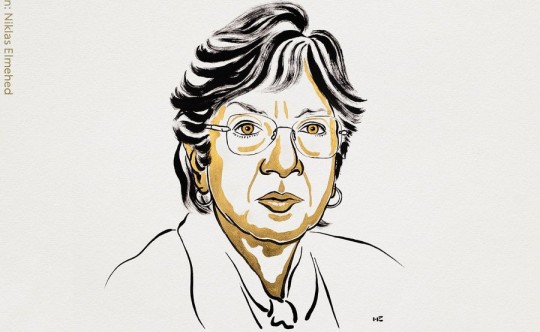
The debate over congratulating the South African jurist highlights competing views on Indian ancestry, human rights criticism and diplomatic priorities. (Image The Nobel Prize on X)
By The Raisina Hills Desk
Shashi Tharoor has questioned the absence of a congratulatory message from New Delhi, while former foreign secretary Kanwal Sibal argues that Navi Pillay’s record of criticism of India makes such recognition a matter of political judgment.
New Delhi, October 19, 2026 — India’s reported silence following Navi Pillay’s Nobel Peace Prize has triggered a debate over diplomacy, human rights and the limits of national recognition. At the centre of the controversy is a question that extends beyond the honour itself: should India congratulate a person of Indian origin whose public record includes sustained criticism of the Indian government?
Congress MP Shashi Tharoor raised the issue on X, expressing dismay that the government had not congratulated Pillay six days after the announcement. Calling her a remarkable woman of Indian origin, Tharoor criticised what he described as a petty decision by those in authority.
Former foreign secretary Kanwal Sibal responded sharply, questioning why India should congratulate someone he believes has repeatedly targeted the country on human rights issues.
The exchange has turned an international recognition into a domestic political debate about how India balances its diplomatic interests, national identity and disagreements with international human rights institutions.
Pillay, who grew up in Durban in a family of Indian Tamil descent, built an international career in law and human rights. According to the Nobel Prize’s account of her life, she established her own law firm in South Africa in 1967, later studied at Harvard University and became the first non-white woman to serve as a judge of South Africa’s High Court.
Her career subsequently took her into international judicial and human rights institutions. She served as the United Nations High Commissioner for Human Rights from 2008 to 2014 and has been associated with international legal bodies.
Her Indian ancestry has become central to the present controversy. For Tharoor, the absence of a congratulatory message is an occasion to recognise an accomplished woman with ancestral links to India. For Sibal, ancestry alone does not settle the question of whether the government should extend official recognition.
The distinction reflects two competing ideas of national identity: one that celebrates achievement and heritage irrespective of political disagreements, and another that places an individual’s public positions and record in the context of national interests.
Sibal’s argument rests primarily on Pillay’s record as UN High Commissioner for Human Rights. He cited her criticism of India on Kashmir, alleged mass graves and disappearances, the Armed Forces (Special Powers) Act, sexual violence and caste and gender discrimination.
He also referred to her interventions following the 2012 Delhi gang rape and her calls for legal and systemic reforms to address sexual violence.
According to Sibal, these interventions produced policy friction between India and Pillay during her tenure, and the Indian government officially responded to her criticism. He further pointed to her association with the International Criminal Court, which India does not recognise.
His central question was straightforward: why should India congratulate her simply because she is of Indian origin?
This position reflects a diplomatic approach in which official gestures are not considered entirely ceremonial. A congratulatory message can be interpreted as an expression of goodwill, but it can also carry political significance, particularly when the recipient has publicly criticised the government.
However, criticism of a government’s human rights record does not, by itself, establish hostility towards the country. The distinction between criticism of state policy and opposition to national interests is important in assessing the competing arguments.
Journalist AVS Namboodiri raised a separate question on X, suggesting that the absence of a congratulatory message might be connected to Pillay’s role in a UN commission of inquiry on Gaza.
The commission she headed concluded that Israel had committed genocide in Gaza. Namboodiri questioned whether this position might explain New Delhi’s silence.
Nevertheless, the Gaza issue introduces another dimension to the debate. India’s response to international human rights findings can intersect with its diplomatic relationships, positions on international law and approach to conflicts in West Asia.
Delhi Police Action Raises Alarms Over Democracy and Civil Liberties
Follow The Raisina Hills on WhatsApp, Instagram, YouTube, Facebook, and LinkedIn




About The Author