Bangladesh Measles Outbreak: Over 300 Deaths Raise Alarm
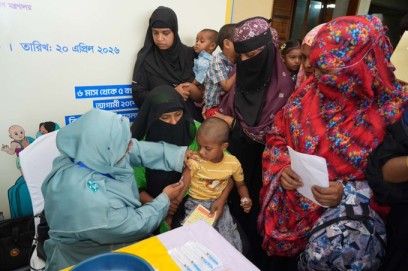
Bangladesh measles outbreak (Image US Embassy in Dhaka)
Falling vaccination rates, supply shortages, and testing delays fuel a deadly measles surge, with children in vulnerable communities most affected
By TRH World Desk
New Delhi, May 6, 2026 — Bangladesh is grappling with a rapidly escalating measles outbreak that has claimed more than 300 lives, with children bearing the brunt of the crisis, according to a report by The Daily Star.
The report states that since March 15, deaths from measles and measles-like symptoms have risen to 317, including a spike of 17 deaths in a single day on May 4—the highest daily toll so far. By May 5, an additional six children had died. Confirmed cases have crossed 5,700, while suspected infections stand at over 42,000, highlighting the scale of the outbreak.
Health authorities and experts attribute the resurgence of Measles—a vaccine-preventable disease—to declining immunisation coverage, vaccine shortages, and systemic gaps in public health response. The World Health Organization has classified the national risk as “high,” noting that the outbreak has spread across 58 of the country’s 64 districts.
Children under five account for nearly 79% of reported cases, with infants and toddlers most at risk. Measles, one of the most contagious diseases, can infect up to 18–20 individuals from a single case, making even small drops in vaccination coverage dangerous.
Data cited by The Daily Star show that Bangladesh’s first-dose measles-rubella (MR1) vaccine coverage fell from over 96% in 2024 to about 92.7% in 2025, while second-dose (MR2) coverage dropped below the critical 95% threshold required for herd immunity.
Experts blame multiple factors for the crisis, including procurement delays, vaccine stockouts between 2024 and 2025, and the failure to conduct a nationwide supplementary immunisation campaign since 2020. Routine immunisation programmes also suffered disruptions, leaving large numbers of children vulnerable.
Testing bottlenecks have further compounded the problem. The Institute of Public Health in Dhaka reportedly receives around 300 samples daily but can process only a fraction due to shortages of testing kits. With Dhaka as the primary testing hub, delays in diagnosis have slowed isolation and treatment efforts, allowing the virus to spread more rapidly.
The outbreak has disproportionately affected children in densely populated urban slums, remote hill regions, and underserved rural communities, where access to healthcare remains limited. Poor nutrition, overcrowding, and logistical barriers to reaching hospitals have heightened the risks.
In response, Bangladesh has launched a nationwide measles-rubella vaccination drive targeting approximately 18 million children aged six months to five years. However, experts warn that success will depend on reaching the most vulnerable populations often missed by routine healthcare systems.
The crisis underscores deeper structural challenges in public health delivery—from vaccination gaps and supply chain failures to weak surveillance systems—raising urgent questions about whether interventions can move quickly enough to prevent further loss of life.
Follow The Raisina Hills on WhatsApp, Instagram, YouTube, Facebook, and LinkedIn




About The Author