Rising Oil Prices, Not War, May Decide US Voters: Dubke Warns
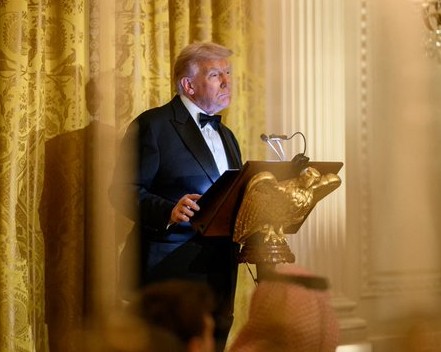
US Presdent Donald trump at a welcome ceremony for Saudi Arabia Crown Prince Mohammed bin Salman. (Image The White House on X)
Former White House official says “kitchen table economics” and soaring fuel costs will outweigh Iran conflict in shaping electoral sentiment within a critical six-month window
By TRH World Desk
New Delhi, May 6, 2026 — Former White House Communications Director Michael Dubke has warned that surging fuel prices—not geopolitical rhetoric—could ultimately shape voter sentiment in the United States, as the economic fallout from tensions involving Iran continues to ripple through global energy markets.
Speaking to Al Arabiya English, Dubke invoked a familiar market adage: oil prices “go up like a rocket and come down like a feather.” His concern was blunt—while history suggests prices will eventually ease, the timeline may not align with political realities.
“Kitchen Table Economics” Takes Center Stage
Dubke emphasized that American voters are more likely to respond to everyday financial pressures than to the strategic contours of an overseas conflict. With gasoline prices nearly doubling in some regions, he argued that household budgets—rather than battlefield developments—will define the political mood.
“The American people are going to look at their kitchen table, their bills, their energy costs, and make decisions based on that,” he said, pointing to rising costs of fuel and essential goods as a decisive factor.
The former communications chief flagged what he described as a “closing six-month window” for prices to stabilize. If relief does not materialize soon, the political consequences could be significant, particularly for incumbents navigating an already volatile economic environment.
The remark comes amid heightened uncertainty in global oil supply chains, especially around the Strait of Hormuz—a critical artery for global crude shipments that has seen increased military and strategic attention in recent weeks.
War vs Wallet: A Familiar Trade-Off
Dubke’s comments highlight a recurring dynamic in US politics: foreign policy crises often take a backseat when domestic economic pain intensifies. While the ongoing tensions involving Iran continue to dominate headlines, their indirect impact—via inflation and energy prices—may prove more politically consequential.
Analysts note that energy shocks tend to cascade quickly through the economy, affecting transportation, food prices, and overall inflation. In such scenarios, voter behaviour historically aligns more with cost-of-living concerns than with abstract geopolitical objectives.
The warning adds pressure on policymakers to prioritize economic stabilization alongside strategic goals. Efforts to secure energy supply routes, ease market volatility, or pursue diplomatic de-escalation may increasingly be judged through the lens of consumer price relief.
As Dubke put it, the urgency is clear: “We need that feather to start falling soon.”
Trump Pauses ‘Project Freedom’; Experts Warn of Strategic Failure
Follow The Raisina Hills on WhatsApp, Instagram, YouTube, Facebook, and LinkedIn




About The Author