Assam Tea Tribe Emerges Kingmaker with Influence on 50 Seats
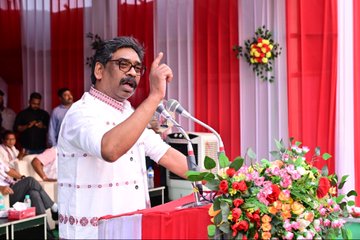
Jharkhand CM Hemant Soren addressed a public meeting in Assam this week (Image JMM on X)
BJP, Congress and JMM intensify outreach as tea tribes become decisive force in Assam elections
By NIRENDRA DEV
Guwahati, March 30, 2026 — With Assam heading into a crucial election cycle, the state’s tea community has emerged as a decisive electoral bloc, capable of shaping outcomes across dozens of constituencies. With over 35 lakh voters influencing nearly 50 seats, political parties have intensified outreach efforts to consolidate support among tea tribes.
The community, which forms the backbone of Assam’s plantation economy, has historically played a kingmaker’s role, particularly in eastern Assam where its presence is concentrated.
BJP Gains, Congress Holds Ground
Over the past two decades, the BJP-led NDA has made significant inroads into the tea belt through welfare schemes, wage revisions, and targeted financial assistance. This has made the voting pattern of the community more competitive.
At the same time, the Indian National Congress continues to retain pockets of influence, especially in key constituencies where tea community votes remain decisive.
JMM Entry Adds New Twist
The entry of the Jharkhand Mukti Morcha (JMM) has added a new dimension to the electoral battle. Contesting 16 seats, the party is attempting to mobilise tea tribes with roots in the Chhotanagpur region.
Hemant Soren has visited Assam twice, highlighting issues of tribal identity and welfare. While JMM is allied with Congress in Jharkhand, talks for a similar tie-up in Assam did not materialise.
Direct Contests in Key Seats
Both the BJP and Congress have fielded eight candidates each from the tea community, underlining its political importance.
Several constituencies are witnessing direct contests between leaders from the community:
Udharbond: BJP’s Rajdeep Goala vs Congress’s Ajit Singh
Doomdooma: BJP’s Rupesh Gowala vs Congress’s Durga Bhumij
Titabor: BJP’s Dhiraj Gowala vs Congress’s Pran Kurmi
Rangapara: Congress’s Kartik Chandra Kurmi vs BJP’s Krishna Kamal Tanti
Assam: AIUDF’s Barbhuiya Quits, Cites ‘Nitish Model’ for Muslims
Massive Workforce, Massive Influence
With over 850 tea gardens, the tea community is the largest workforce in the state and a formidable political force.
Decisive role in at least 38 Assembly seats
Potential influence in 10 additional constituencies
Welfare vs Structural Debate
While the BJP has pushed welfare-driven outreach, Congress leaders have questioned its sustainability. Assam Chah Mazdoor Sangh president and former MP Paban Singh Ghatowar said: “Direct benefit transfers may offer temporary relief but do not address structural issues like wage adequacy and income security.”
He also flagged unmet demands such as the long-pending ₹350 daily wage and warned about rising public debt. His son, Congress candidate Pranjal Ghatowar, added: “Inflation is rising, unemployment is increasing… voters are realising that rhetoric alone is not enough.”
Electoral Track Record
Despite BJP’s gains, Congress has demonstrated continued relevance with tea community support: Victory in Titabor Assembly seat (2021); and Gaurav Gogoi’s win in Jorhat Lok Sabha seat (2024)
BJP’s Key Faces
The BJP has fielded prominent leaders from the community, including: Rameswar Teli (Duliajan); Sanjay Kishan (Makum); Pallab Lochan Das (Biswanath); and Rupjyoti Kurmi (Mariani).
Congress has fielded candidates like Roselina Tirkey (Khumtai) and Dr Amit Kumar Kalwar (Borkhola).
At a Glance
Voter Strength: 35 lakh+ tea community voters
Seat Impact: Influence over 50 constituencies
Core Region: Eastern Assam tea belt
Key Contest: BJP vs Congress, with JMM as new entrant
JMM Factor: Contesting 16 seats, targeting tea tribes
Welfare Debate: Cash support vs long-term wage security
Electoral Role: Kingmaker in at least 38 seats
Assam BJP candidate list: full breakdown — who’s in, who’s out
Follow The Raisina Hills on WhatsApp, Instagram, YouTube, Facebook, and LinkedIn




About The Author