ARC Haircuts and Public Money: Why the Supreme Court’s JKM Infra Remarks Matter
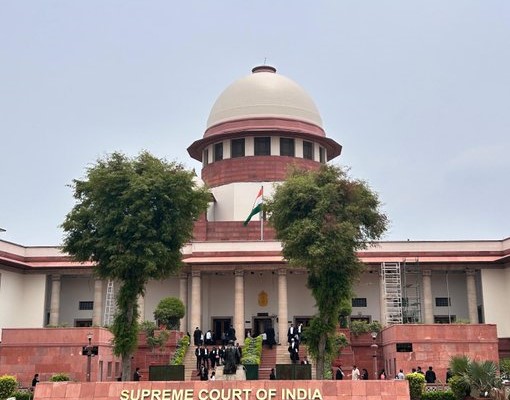
Image credit X.com
By P. SESH KUMAR
Can massive corporate debts be settled at deep discounts while public sector banks absorb losses? The Supreme Court’s remarks in the JKM Infra matter have reignited a crucial debate on transparency, accountability and the future of India’s ARC ecosystem.
New Delhi, June 24, 2026 — For nearly three decades, India’s banking system has wrestled with the recurring spectre of stressed assets. Asset Reconstruction Companies (ARCs), conceived under the SARFAESI framework as specialist institutions to rescue distressed loans and revive productive assets, were expected to cleanse bank balance sheets and accelerate recovery. Instead, recent judicial observations of the Supreme Court in the JKM Infra matter have reopened an uncomfortable national debate: have parts of the ARC ecosystem evolved into a shadow market where enormous public debts are quietly extinguished at astonishing discounts, allowing defaulting promoters to return through the back door while taxpayers absorb the losses?
The Courtroom That Exposed a Quiet Banking Crisis
India’s banking system has rarely lacked drama. The Harshad Mehta securities scandal, the global financial crisis, the era of corporate loan excesses, the collapse of large infrastructure groups and the subsequent insolvency wave have repeatedly exposed the vulnerabilities of public finance. Yet the recent observations of the Supreme Court perhaps strike at something deeper: the possibility that parts of the debt recovery ecosystem itself may have become instruments of value destruction.
While hearing petitions relating to the JKM Infra debt settlement, the Supreme Court expressed concern over what it described as a potentially “deep-rooted nexus” among banks, borrowers and asset reconstruction companies. The Court questioned how liabilities running into more than Rs 1,500 crore could eventually be settled for a tiny fraction of the original exposure. The concern was not merely about one transaction. The larger question was whether the system had created an avenue through which borrowers could strategically default, wait for their loans to be sold at deep discounts and subsequently regain effective control over their own assets.
These observations struck a sensitive nerve because they touched the very foundation of public banking. Unlike private lenders risking private capital, public sector banks manage public deposits and taxpayer-supported capital. Every substantial write-off, haircut or discounted settlement therefore carries implications that extend beyond banking and enter the domain of public accountability.
The Supreme Court’s remarks have thus transformed what appeared to be a technical question of debt recovery into a larger debate about fiduciary responsibility, governance and the stewardship of public money.
Why ARCs Were Created
The ARC framework emerged from the SARFAESI Act of 2002. At the time, Indian banks were choking under growing bad loans and lengthy court proceedings. Recovery through civil courts often took years. Enforcement mechanisms were weak. Bank officers became reluctant to take difficult commercial decisions.
ARCs promised a specialized solution.
Banks would sell their non-performing assets to specialized institutions. These institutions would possess restructuring expertise, legal capabilities and turnaround skills. Instead of bank managers acting as reluctant industrialists, specialized professionals would revive businesses, recover value and maximize returns.
The concept itself was sound. Similar distressed asset funds operate globally. American private equity funds acquired troubled assets after the global financial crisis. European bad banks cleaned up banking systems following sovereign debt crises. Japan itself established mechanisms to deal with banking distress during its lost decades.
The Indian adaptation, however, evolved differently.
Rather than becoming aggressive turnaround specialists, many ARCs became intermediaries in discounted settlements. Their role increasingly shifted from business rehabilitation toward negotiated exits.
India’s IBC Course Correction Signals Preventive Reform Shift
The Great Haircut Economy
Nothing illustrates the crisis more vividly than the mathematics of modern debt resolution.
A loan of Rs 1,000 crore may eventually be sold to an ARC at Rs 150 crore. The ARC may settle with the borrower at Rs 250 crore. The bank records a loss. The ARC books a profit. The borrower regains economic value. The ultimate loser is often the public institution that originally financed the project.
Defenders of the system argue that the original loan had already become unrecoverable. They contend that delayed litigation, deteriorating assets and weak market conditions justify substantial discounts (they abhor the word ‘haircut’). A bird in hand, they argue, is worth more than years of fruitless litigation.
Critics, however, ask a disturbing question. If the borrower can eventually arrange funds to settle at a discounted value, why could similar negotiations not occur before the bank absorbed enormous losses? More importantly, are promoters or related entities sometimes the ultimate beneficiaries of these discounted transactions?
The opacity surrounding many ARC transactions has amplified these concerns.
Commercial Wisdom versus Public Accountability
Perhaps no phrase has enjoyed greater legal sanctity in recent years than “commercial wisdom.”
The doctrine evolved primarily under the Insolvency and Bankruptcy Code (IBC). Courts repeatedly held that financial creditors possess the expertise to assess economic viability, and judicial interference in commercial decisions should remain limited.
This principle was necessary. Judges are not bankers. Courts cannot conduct valuation exercises. Yet commercial wisdom becomes problematic when it operates without transparency.
A public sector bank deciding to accept a ninety percent haircut is not merely exercising commercial discretion. It is effectively deciding the fate of public funds. The absence of competitive bidding, independent valuation and public disclosure transforms commercial wisdom into an opaque shield against scrutiny.
The Supreme Court’s recent observations appear to reflect precisely this concern. Commercial decisions cannot become immune from accountability simply because they involve financial institutions.
Courts Do Not Price Deals-They Police Process
The Supreme Court has repeatedly held under the IBC that the commercial wisdom of the Committee of Creditors (CoC) is ordinarily not open to judicial review on merits. However, that principle does not automatically immunize ARC transactions or bank settlements from scrutiny. The distinction lies in the nature of the decision, the statutory framework, and the public interest involved.
The landmark judgment in Committee of Creditors of Essar Steel India Ltd. V. Satish Kumar Gupta held that courts cannot substitute their own commercial assessment for that of the CoC. Similarly, in K. Sashidhar v. Indian Overseas Bank, the Court observed that once the requisite voting threshold is met, the commercial decision of creditors is generally non-justiciable. Later decisions such as Jaypee Kensington Boulevard Apartments Welfare Association v. NBCC (India) Ltd reiterated that the judiciary cannot sit in appeal over the economic wisdom of creditors.
The rationale is straightforward. Under the IBC, financial creditors are risking their own money. They negotiate competing resolution plans within a detailed statutory framework supervised by the NCLT and the Insolvency and Bankruptcy Board. Speed, certainty, and market-based outcomes are considered more important than judicial second-guessing.
The ARC situation that appears to have troubled the Supreme Court in the JKM Infra matter is somewhat different.
First, many public sector banks are dealing with public deposits and, in many cases, substantial government ownership. The losses ultimately affect public institutions and, indirectly, taxpayers. Second, the concern expressed by the Court does not appear to be that a particular haircut is commercially unwise. Rather, the Court seems concerned about possible collusion, lack of transparency, or a “deep-rooted nexus” among borrowers, banks, and ARCs.
This distinction is crucial. The Court has consistently said that commercial wisdom is protected, but fraud, bad faith, arbitrariness, or illegality are not. Even under the IBC, the Supreme Court has never held that CoC decisions are immune if there is fraud, material irregularity, conflict of interest, or violation of statutory provisions.
The ARC Performance Record: Two Decades of Limited Success
After more than twenty years of operation, the overall performance of India’s ARC industry presents a mixed picture.
Recovery rates have remained modest. Various studies and regulatory assessments indicate that overall recoveries have often remained within the range of 15 to 25 percent of acquisition values. These numbers compare unfavourably with several international distressed asset markets.
The industry itself has remained highly concentrated. A handful of large players dominate the market. Smaller ARCs have struggled with inadequate capital, weak operational capacity and limited restructuring expertise.
Moreover, many ARCs relied heavily on Security Receipts rather than cash acquisitions. Consequently, banks frequently continued to retain substantial economic exposure to the same assets they supposedly transferred. The result was an illusion of risk transfer rather than genuine resolution.
The RBI Finally Unsheathes the Sword
The Reserve Bank of India increasingly became uncomfortable with developments in the sector. The October 2022 regulatory overhaul represented perhaps the most significant tightening of ARC regulations since the industry’s inception.
Minimum Net Owned Funds requirements were increased from Rs100 crore to Rs 300 crore. Governance norms were strengthened. Independent directors became mandatory. ARCs were required to retain greater exposure to Security Receipts, ensuring greater “skin in the game.”
The regulator also began actively investigating questionable practices. The most visible action involved restrictions imposed on certain ARC activities after allegations involving evergreening and information-sharing practices. The message was unmistakable: the era of regulatory tolerance had ended.
These interventions reflected the RBI’s recognition that the industry required stronger governance, better capitalization and improved accountability.
NARCL: The State Enters the Battlefield
The creation of the National Asset Reconstruction Company Limited (NARCL) represented an extraordinary acknowledgment by policymakers that private ARCs alone had not delivered the desired outcomes.
The so-called “Bad Bank” was established to aggregate large stressed accounts and facilitate coordinated resolution.
By early 2026, NARCL had acquired dozens of large accounts involving debt exposures exceeding Rs 1.6 lakh crore. Unlike many private ARCs, NARCL benefited from sovereign support, government guarantees and stronger institutional backing.
Some transactions have produced encouraging results. Several recoveries have exceeded acquisition costs. Yet NARCL also raises fundamental questions.
If private markets cannot efficiently resolve distressed assets without government intervention, does this not suggest structural weaknesses in the ARC model itself? If the State must ultimately establish a public bad bank to clean up private and public banking failures, the underlying architecture clearly requires reassessment.
How the Companies Act 2013 and IBC Reshaped Indian Capitalism
The IBC and the Shadow Resolution Market
The Insolvency and Bankruptcy Code (IBC) was perhaps India’s most ambitious financial reform of the last decade. It introduced transparency, competitive bidding, creditor committees and judicial supervision. Resolution plans became public. Competing bidders emerged. NCLT oversight imposed discipline.
The ARC route increasingly appears to function alongside this system as a parallel and often less transparent channel. Under IBC, promoters face restrictions on regaining control. Competitive bidders participate. Valuations are tested. Under certain ARC transactions, however, settlements may occur privately. Public scrutiny diminishes. Competitive tension disappears.
This creates what may be termed the “IBC paradox.” The country has spent years constructing a transparent insolvency architecture while simultaneously allowing certain distressed assets to migrate into comparatively opaque bilateral settlements.
This divergence encourages regulatory arbitrage. Borrowers may prefer the less transparent route. Banks may prefer quicker settlements. ARCs may profit from discounted acquisitions. Public accountability becomes the casualty.
The Moral Hazard Problem
Every financial system depends on incentives. If borrowers believe that default eventually leads to massive discounts, repayment discipline weakens. If promoters anticipate reacquiring assets at discounted values through indirect channels, strategic default becomes attractive. If bankers believe future investigations are unlikely because decisions can be justified under “commercial wisdom,” incentives become distorted.
The ARC framework was intended to punish failure and maximize recovery. In certain cases, it risks rewarding failure. This moral hazard may prove more damaging than the immediate financial losses because it alters future behavior throughout the credit system.
International Lessons
International experience offers valuable guidance. American distressed asset markets emphasize competitive auctions and investor transparency. European bad banks typically operate under strict oversight frameworks. Several Asian jurisdictions require extensive disclosures regarding related-party transactions.
Our ARC ecosystem remains comparatively opaque regarding valuation methodologies, settlement negotiations and ultimate beneficiaries.
The absence of standardized disclosure requirements creates room for suspicion even where no wrongdoing exists. Transparency itself becomes a mechanism of confidence.
Lessons
The first lesson is that commercial wisdom cannot become commercial secrecy especially in ARC matters. Decisions involving public funds require standards of disclosure that exceed ordinary private transactions.
The second lesson is that distressed asset resolution is not merely a banking issue but a matter of public finance. Every significant haircut affects taxpayers, depositors and government finances.
The third lesson is that parallel resolution systems create opportunities for arbitrage. The coexistence of IBC transparency and ARC opacity generates incentives to choose the path of least scrutiny.
The fourth lesson is that governance matters more than legal architecture. Even well-designed institutions can produce undesirable outcomes when incentives become distorted.
Finally, public confidence in the banking system depends not only upon recovery rates but also upon the perception of fairness. A system that appears to reward large defaulters while imposing losses on the public eventually loses legitimacy.
Illuminating ARC Framework
The ARC framework does not require dismantling. It requires illumination.
Large ARC transactions above specified thresholds should be subjected to mandatory disclosure of valuation methodologies, competing offers and recovery assumptions. Independent valuation panels could be introduced for substantial public sector bank exposures.
The RBI should require banks to explicitly justify why the IBC route was not pursued before approving major ARC sales. This “IBC-equivalence test” would discourage the use of ARCs merely as opaque settlement channels.
Related-party restrictions should be strengthened to prevent promoters or connected entities from indirectly benefiting from discounted settlements.
Parliamentary committees, bank boards and vigilance mechanisms should periodically review large haircuts involving public sector banks.
The Comptroller and Auditor General (CAG) may also consider thematic examinations of stressed asset resolution practices involving substantial public funds, particularly where recapitalized public sector banks are involved.
Most importantly, the doctrine of commercial wisdom must coexist with public accountability.
The Supreme Court’s observations have performed a valuable service. They have forced the country to confront an uncomfortable possibility: that the machinery created to recover value may, in certain circumstances, have become a vehicle for its destruction.
India’s banking system has travelled a long distance from the era of hidden NPAs and regulatory forbearance. Yet the shadow of stressed assets still lingers.
Whether ARCs become instruments of recovery or sanctuaries for default will depend upon the willingness of regulators, courts, banks and policymakers to insist that public money must never disappear quietly into the dark corridors of financial engineering.
(This is an opinion piece. Views expressed are the author’s own.)
FAQs
1. What are Asset Reconstruction Companies (ARCs)?
Asset Reconstruction Companies are specialized financial institutions created under the SARFAESI Act, 2002, to acquire stressed loans from banks and recover value through restructuring, resolution or asset sales.
2. Why did the Supreme Court express concern in the JKM Infra case?
The Court questioned how liabilities reportedly exceeding ₹1,500 crore could be settled for a small fraction of the original amount and raised concerns about a possible nexus involving borrowers, banks and ARCs that could undermine public accountability.
3. How are ARC transactions different from resolutions under the Insolvency and Bankruptcy Code (IBC)?
IBC resolutions involve competitive bidding, creditor committees and judicial oversight through the NCLT. ARC settlements are often negotiated privately, which critics argue can reduce transparency and public scrutiny.
4. What is the role of NARCL in India’s stressed asset ecosystem?
The National Asset Reconstruction Company Limited (NARCL), often called the “Bad Bank,” was established to acquire and resolve large stressed assets. It was created to address limitations in the existing ARC-led resolution framework.
5. Why are large debt haircuts controversial?
Critics argue that deep discounts can impose losses on public sector banks and taxpayers while potentially allowing defaulting promoters to benefit indirectly. Supporters contend that such settlements may be necessary when assets have significantly deteriorated and recovery prospects are weak.
Follow The Raisina Hills on WhatsApp, Instagram, YouTube, Facebook, and LinkedIn




About The Author