West Bengal Election 2026: Why TMC Lost and BJP Won
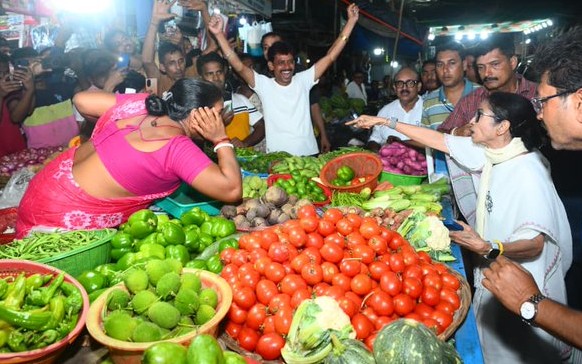
West Bengal CM Mamata Banerjee at a vegetable shop in Kolkata on Sunday evening. (Image AITMC on X)
From governance failures to grassroots strategy, multiple factors explain TMC’s fall and BJP’s rise
By RAJESHWAR JAISWAL
Patna, May 6, 2026 — The aftermath of the West Bengal election has once again exposed a familiar, uncomfortable truth: electoral verdicts in the state rarely end at the ballot box. Reports of clashes between cadres of the Bharatiya Janata Party (BJP) and the All India Trinamool Congress (TMC) point to a deeper structural problem—where politics is not just competitive, but often coercive.
The current wave of violence is less an aberration and more a continuation of a long-standing cycle. From the days of Left rule to the rise of TMC, and now the BJP’s ascent, each regime has faced similar accusations of cadre-driven dominance. The result is a political culture where “victory” often translates into territorial control rather than democratic transition.
Beyond the Narrative: Why Did the TMC Lose?
The scale of the BJP’s victory suggests that this was not merely anti-incumbency—it was a consolidation of multiple strands of discontent. Several underlying factors explain the poll outcome in the state.
First, governance failures appear to have eroded trust. The controversy surrounding the RG Kar Medical College case became a flashpoint, particularly among women voters. Allegations of mishandling and delayed justice created a perception that the state machinery was unwilling—or unable—to act decisively. In a state where identity politics often dominates discourse, this issue cut across social lines.
Second, the long-running teacher recruitment controversy—linked to alleged corruption involving former minister Partha Chatterjee—alienated a crucial educated constituency. Thousands of aspirants saw their careers disrupted, and the backlash translated into electoral mobilisation, especially through postal ballots and organized campaigning by affected groups.
The BJP’s Ground Game
While opposition parties and sections of the media underestimated the BJP’s chances, the party’s extensive grassroots mobilisation proved decisive. Unlike its rivals, the BJP invested heavily in booth-level outreach—door-to-door engagement, micro-targeting, and sustained organisational work.
This model, already tested in states like Uttar Pradesh and Bihar, helped convert incremental vote gains into a decisive mandate. Elections are often won not by sweeping narratives but by marginal gains—“two to four votes per hundred”—accumulated through relentless ground effort.
Fear, Fatigue, and Political Messaging
Another critical factor was what many voters described as a climate of intimidation at the local level. Allegations that cadres warned voters about losing protection after central forces withdrew appear to have backfired. Instead of reinforcing loyalty, it may have deepened resentment and triggered a counter-consolidation.
At the same time, the BJP successfully amplified narratives around governance deficits, alleged appeasement politics, and law-and-order concerns. Whether entirely accurate or politically constructed, these narratives resonated with sections of the electorate who felt excluded or unheard.
Beyond identity and governance, economic concerns played a quiet but decisive role. Limited local employment opportunities, rising costs of living, and dissatisfaction with welfare-only approaches contributed to voter fatigue. As Jaiswal suggests, “five kilos of free grain cannot substitute for stable income and opportunity.”
A Warning for the Future
Yet, the BJP’s victory comes with its own test. If post-election violence continues unchecked, it risks reinforcing the very political culture it campaigned against. The challenge now is to transition from a movement-driven campaign to a governance model that restores institutional neutrality—especially in policing and administration.
West Bengal’s political history shows that power without restraint often breeds backlash. If the new dispensation fails to break the cycle of retribution, it may only be a matter of time before the pendulum swings again.
For now, the 2026 verdict is not just a change in government—it is a referendum on governance, accountability, and the limits of political dominance in one of India’s most politically charged states.
(This is an opinion piece. Views expressed are the author’s own.)
Follow The Raisina Hills on WhatsApp, Instagram, YouTube, Facebook, and LinkedIn




About The Author