Vijay Solvex Share Price Rises 15% — What’s Driving the Rally?
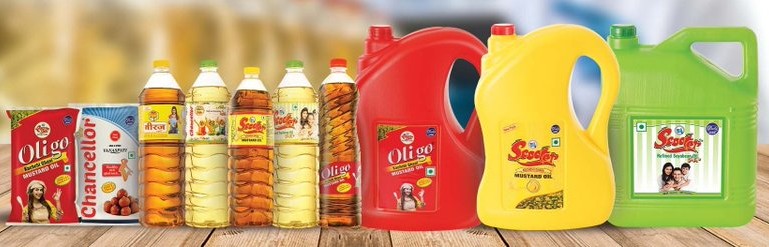
Shares of Vijay Solvex jumped 15 percent on Friday (Image company website)
Vijay Solvex Shares Jump 15% in a Single Session — Here’s Why the Market Is Suddenly Paying Attention
By S. Jha
Mumbai, March 7, 2026 — Shares of Vijay Solvex Ltd, the Alwar-based edible oil and vanaspati manufacturer, surged about 15 percent on Friday, marking a sharp rebound for a stock that has been among the most battered small caps over the past year. The sudden spike has drawn the attention of retail traders and value investors, particularly given the company’s steep discount to its book value.
The rally comes after prolonged underperformance. Data from Screener.in shows the stock delivered a 1-year return of –45 percent and a 3-year CAGR of –17 percent, suggesting the latest move may reflect a mean-reversion after sustained selling pressure.
A key attraction is valuation. Vijay Solvex is trading at around 0.47 times its book value, a level that often attracts bargain hunters in India’s small-cap universe, especially when the company remains profitable.
Q3 FY26: Profitable Despite Thin Margins
For the quarter ended December 2025, the company reported revenue of ₹605 crore and net profit of ₹5.37 crore, with an operating margin of 1.32 percent.
Revenue grew 11.19 percent year-on-year, though profit fell 28 percent and EBITDA declined to ₹7.99 crore from ₹11.40 crore a year earlier.
Earnings per share for FY26 so far show volatility: ₹3.31 in Q1, ₹19.02 in Q2, and ₹16.77 in Q3, implying an annualised EPS near ₹52 and a trailing P/E around 7.7 at the ₹403 price level.
Long-Term Financial Picture
Over the past decade, Vijay Solvex has recorded 9 percent sales CAGR and 14 percent profit CAGR, though performance has weakened over shorter periods due to commodity-cycle pressures. Encouragingly, TTM sales growth has rebounded to 21 percent, while TTM profit growth has jumped about 90 percent, a combination that often attracts momentum-oriented investors.
The company’s book value stands at ₹1,094 per share, with ROCE of 7.32 percent and ROE of 5.52 percent. Borrowings have risen from ₹9 crore in FY24 to ₹54 crore by September 2025, largely reflecting higher working-capital needs amid rising revenues.
Operational efficiency remains tight, with debtor days at 5 and inventory days at 25, typical for commodity processors.
Shareholding and Business Model
Promoter holding has increased steadily from 66.79 percent in March 2023 to 68.96 percent in December 2025, often viewed as a sign of insider confidence. The remaining 31 percent public shareholding has no institutional investors.
The company primarily processes mustard seeds into edible oil sold under brands such as Scooter, Chancellor, Neeraj and Oligo, with solvent extraction capacity of 1.47 lakh tonnes per year at its Alwar facility.
Risks Remain
Despite the valuation appeal, challenges persist. Margins in the edible-oil business rarely exceed 2 percent, making profits vulnerable to commodity price swings and policy changes on import duties. The company has also not paid dividends in a decade, while borrowings and interest costs have risen in recent quarters.
(Investors should conduct their own due diligence. This article is for informational purposes and not financial advice.)
Kirloskar Oil Engines: 798% in 5 Years — Rally Ahead of Reality?
Follow The Raisina Hills on WhatsApp, Instagram, YouTube, Facebook, and LinkedIn




About The Author