US Gas Prices Surge Deepens Economic Strain: Report
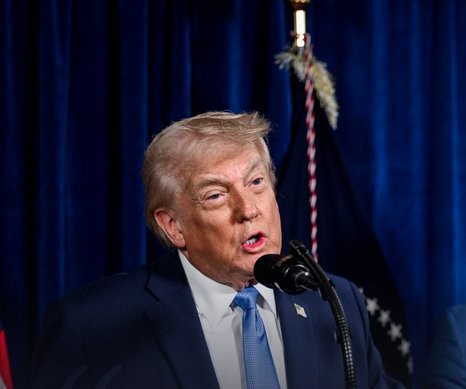
US President Trump delivers remarks on Operation Epic Fury from the White House.
CBS report highlights fuel price surge, airline collapse, and rising economic strain on American households amid ongoing conflict
By TRH World Desk
New Delhi, May 3, 20226 — Sixty-one days into the Iran war, Americans are facing a sharp surge in fuel costs, with ripple effects spreading across industries and household budgets.
According to a report by CBS Evening News, “a gallon of regular averages $4.43 right now,” marking an increase of $0.35 in just one week and a staggering $1.45 rise since the conflict began. The Midwest has been particularly hard hit, with prices in Ohio, Indiana, and Michigan climbing by about a dollar over the past seven days.
Reporting from Florida, CBS correspondent Olivia Gazis highlighted the broader economic toll, noting that the near doubling of fuel prices has already contributed to major business disruptions. One of the most visible casualties has been Spirit Airlines, whose collapse underscores the strain on the aviation sector.
The administration, however, has pointed to earlier policy decisions as contributing factors. Transportation Secretary Sean Duffy blamed the demise of Spirit Airlines on the blocking of a proposed merger with JetBlue Airways in 2024 under the previous administration. That deal had been rejected over concerns it would reduce competition and lead to higher fares by eliminating a low-cost carrier.
Spirit Airlines itself cited soaring fuel costs—driven in part by the closure of the Strait of Hormuz—as a key factor in its financial distress. The disruption of this critical oil transit route has sent energy prices to historic highs, feeding into inflation across the broader economy.
For ordinary Americans, the impact is immediate and tangible. One driver told CBS that filling up a tank now costs around $80, reflecting gas prices exceeding $5 per gallon in some areas. The strain is forcing households to rethink spending habits.
A recent survey cited in the report found that 42% of Americans are cutting back on household expenditures. Analysts say high fuel prices act as a psychological signal of broader inflation, discouraging consumer spending even beyond energy costs.
With midterm elections approaching, Donald Trump has sought to reassure voters, promising that prices will fall once the conflict ends. “I thought oil would be much, much higher than it turned out to be,” he said, adding that prices would “come crashing down as soon as this war is over.”
However, the timeline for de-escalation remains uncertain. While Trump told lawmakers that hostilities with Iran had “terminated” following an April ceasefire, he also warned that Iran continues to pose a significant threat to U.S. forces in the region. Approximately 50,000 American troops remain deployed.
As geopolitical tensions persist, the economic aftershocks—especially in energy markets—continue to weigh heavily on businesses and consumers alike, with no immediate relief in sight.
Follow The Raisina Hills on WhatsApp, Instagram, YouTube, Facebook, and LinkedIn




About The Author