Trump’s Repeated Iran Threats Could Lose Their Deterrent Effect, Warns Former US Ambassador
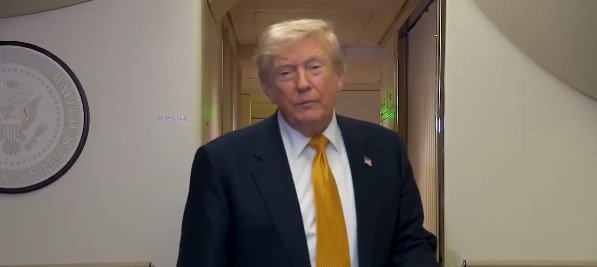
US President Donald Trump aboard Air Force One while on way to Ankara for NATO Summit. (Image White House)
By TRH World Desk
Former US Ambassador tells Al Arabiya English that repeated warnings without sustained strategy could weaken deterrence, while ruling out a US ground war in Iran ahead of the midterm elections.
New Delhi, July 10, 2026 — As tensions between Washington and Tehran continue to simmer following recent military exchanges, former US Ambassador Matthew Bryza has cautioned that President Donald Trump’s repeated public threats against Iran could gradually lose their credibility and undermine American deterrence.
Speaking to Al Arabiya English, Bryza compared Trump’s increasingly frequent warnings to the classic tale of “the boy who cried wolf,” arguing that excessive threats risk becoming less persuasive over time.
“I very much do. It’s like the old fairy tale of the boy who cries wolf,” Bryza said when asked whether repeated warnings could weaken future US threats.
Bryza noted that Trump has found himself in similar situations before, where strong rhetoric eventually increased pressure on him to demonstrate resolve through military action.
According to Bryza, Trump appears determined to convince Tehran that the United States possesses overwhelming military capability, particularly against Iran’s ability to threaten commercial shipping through the strategically vital Strait of Hormuz.
Bryza referred to Trump’s recent remarks aboard Air Force One, where the US president reportedly escalated his rhetoric after describing an earlier Iranian strike as a “level one” attack.
“He said earlier, ‘They hit us at a level of one. We’ll hit them at ten.’ Later aboard Air Force One, he spoke about responding at an even higher level,” Bryza said, suggesting the messaging was intended to project overwhelming military superiority.
However, the former ambassador questioned whether Washington actually possesses the capability to permanently eliminate Iran’s capacity to disrupt maritime traffic in the Strait of Hormuz without launching a far broader military campaign.
“I don’t think the US really has that capability without boots on the ground,” Bryza told Al Arabiya English. He added that such an option remains politically implausible.
“There is zero chance President Trump wants US soldiers on the ground in Iran as the midterm elections approach in just four months,” Bryza said.
While the US continues to maintain a formidable naval and air presence across the Gulf, many analysts believe that neutralising Iran’s dispersed missile, drone and naval infrastructure would require a sustained campaign carrying significant military and political risks.
Bryza’s remarks suggest that Washington may continue relying on economic pressure, limited military strikes and diplomatic signalling, rather than committing to a prolonged ground conflict that could reshape the regional balance and become a major issue in domestic US politics ahead of the elections.
Iran Ceasefire Crisis: Can Diplomacy Survive Military Escalation?
Follow The Raisina Hills on WhatsApp, Instagram, YouTube, Facebook, and LinkedIn




About The Author