TMC Rebels, NCPI, and Art of Constitutional Escape: An Explainer
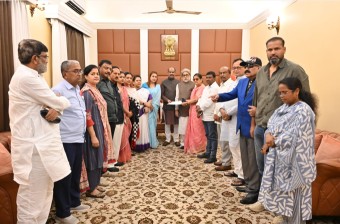
TMC Rebels, NCPI Merger & Anti-Defection Law Explained (Image special arrangement)
By AMIT KUMAR
Why did 20 TMC rebel MPs merge with a Tripura party that has never even contested a Lok Sabha seat? Because of a 1971 Supreme Court ruling, a 2023 constitutional bench judgment, and a loophole that India’s Parliament has been fighting over for decades. A full explainer.
New Delhi, June 15, 2026 — Politics pines for drama. That brings emotional connections. In West Bengal politics, Mamata Banerjee scripted “Khela Hobe” for high drama quotients. She now finds her party, the Trinamool National Congress (TMC), deserted. Twenty of her Lok Sabha MPs on Sunday announced merger with the Nationalist Citizens Party of India (NCPI), an outfit not known even to veteran political observers.
A day after the merger, the NCPI Organisational General Secy Shantanu Dey told PTI that his party leaders will hold discussions with the MPs and decide on the next course of actions. He said that no one spoke to him about the merger of the bloc of 20 MPs with his party. Dey also told the news agency that his party will “hold talks with the TMC.”
His assertions suggest that the whole exercise was scripted at an individual level. The political drama surrounding the TMC’s rebel MPs is now turning out to be a show stopper for news bulletins.
It seems that the NCPI has been taken over by a gang of 20 MPs while its leaders weren’t even knowing of the fate falling on them. With zero electoral footprint, the NCPI is turning out to be one of the largest allies of the BJP-led NDA at the Centre.
To understand why the TMC’s 20 rebel MPs went merging with the NCPI, you need to understand a 1971 Supreme Court case, a 2023 constitutional bench ruling, the Tenth Schedule of the Constitution, and a very recent precedent involving AAP’s seven Rajya Sabha MPs from Punjab.
What Happened
Following TMC’s defeat in the 2026 West Bengal assembly elections, a rebellion brewed among the party’s Lok Sabha MPs. Senior parliamentarians including Sudip Bandyopadhyay, Kakoli Ghosh Dastidar, and Satabdi Roy led a faction of 20 MPs — more than two-thirds of the party’s 28-seat strength — towards the exits. By merging with NCPI instead of defecting individually or forming a new group, the rebels aimed to claim the protection of a “legitimate party merger” under the anti-defection law rather than individual defection.
Abhishek Banerjee, the TMC’s parliamentary party leader, wrote to Speaker Birla urging him not to recognise the breakaway faction, arguing that the Constitution and the anti-defection law do not permit the formation of a separate group within an existing political party. Meanwhile, NCPI’s Dey also told The Wire that he was opposed to the merger with the rebel TMC MPs, whom he said were “tainted by the Narada and Saradha scams.”
The Anti-Defection Law: The Tenth Schedule Explained
The Tenth Schedule was inserted into the Constitution in 1985 by the 52nd Amendment to stop the epidemic of floor-crossing that had plagued Indian democracy. Originally, Paragraph 3 of the Anti-Defection Law permitted a split if one-third of members broke away. However, by the 91st Constitutional Amendment in 2003, Paragraph 3 was deleted — meaning splits are no longer a valid defence.
What remains is Paragraph 4: the merger clause. The law allows a party to merge with or into another party provided that at least two-thirds of its legislators are in favour of the merger. In such a scenario, neither the members who decide to merge, nor the ones who stay with the original party, face disqualification.
The rebels’ entire strategy rests on this provision. Twenty MPs out of 28 comfortably clears the two-thirds bar. But the law’s requirements go deeper.
The 1971 Sadiq Ali Ruling: The Three Tests
Before the Tenth Schedule even existed, the Supreme Court in Sadiq Ali vs Election Commission of India (1971) laid down a framework for determining which faction in a split party is the “real” one — primarily for the purpose of symbol allotment.
The Supreme Court in Sadiq Ali formulated three criteria for determining which faction is the original political party: the aims and objectives of the party; inner-party democracy and adherence to the party constitution; and majority support, assessed across both the legislative and organisational wings.
The third test — numerical majority — became the Election Commission’s preferred tool over decades. If you had more MPs and more organisational representatives, you were likely to be recognised as the “real” party. Rebel factions exploited this logic repeatedly: gather enough legislators, and you become the party.
The 2023 Subhash Desai Judgment: The Brakes Applied
The Eknath Shinde rebellion against Uddhav Thackeray in Maharashtra in 2022 forced the Supreme Court to revisit and tighten the rules. In Subhash Desai vs Principal Secretary, Governor of Maharashtra (2023), a five-judge Constitution Bench led by then-CJI DY Chandrachud delivered a landmark ruling, per PRS Legislative Research.
The Supreme Court in Subhash Desai distinguished between a “legislative party” and a “political party,” ruling that they cannot be conflated. Joining another party is not a valid defence in disqualification proceedings under the Tenth Schedule unless the original political party itself merges with another party.
When legislators are facing disqualification, the court said, the legislative-majority test is diluted — because the legislators whose conduct is being examined are themselves part of the count being relied upon. To let their numerical strength settle the question would be to let the alleged defectors vote on whether they have defected. This is “not a game of numbers, but something more,” said the court.
In plain terms: the political party must first agree to merge at an organisational level. The legislative wing cannot go ahead on its own, even with two-thirds support in the House.
The AAP Precedent: Why the BJP Did It Then and Is Blocking It Now
The TMC rebels are not the first to travel this road in 2026. On April 27, Rajya Sabha Chairman C P Radhakrishnan accepted that seven AAP MPs — including Raghav Chadha — had joined the BJP, reducing AAP’s strength in the Upper House from 10 to three and pushing NDA’s tally to 148 seats.
AAP fought back hard. AAP leader Sanjay Singh filed a petition seeking disqualification, arguing that neither the law nor the Tenth Schedule recognises splits or breakaway groups in either House, even with two-thirds support, because AAP as a political party had not merged with BJP at an organisational level.
Senior advocate and independent MP Kapil Sibal per Live Law reports stated the constitutional position precisely: the party must merge first; only then does the question of the fate of MPs arise. Two-thirds of the legislature party cannot merge with the BJP without AAP merging at the organisational level through a resolution.
The BJP, as the receiving party in the AAP case, had every incentive to accept the merger. In the TMC case, the dynamic reverses: the BJP benefits from the rebels’ support, but the rebels are not merging with BJP — they are merging with the NCPI and then supporting NDA. That technical buffer is deliberate. The BJP’s opposition to immediate recognition stems partly from wanting to be seen as following constitutional propriety after the AAP controversy, and partly because the rebels’ legal position remains genuinely shaky.
The Core Legal Question
The anti-defection law, as interpreted in Subhash Desai, requires a formal organisational merger of the original political party, and at least two-thirds of elected lawmakers must agree to the merger to avoid disqualification. The TMC as a political party has not merged with the NCPI. Mamata Banerjee’s organisation remains intact. The TMC leadership has challenged the rebels’ claim before the Speaker, arguing that the Constitution and the anti-defection law do not permit recognition of a separate faction within a political party.
The Lok Sabha Speaker now holds the first decision. But as the AAP case has shown, whatever the presiding officer decides, the courts will have the last word. India’s anti-defection law has, once again, become the arena in which political battles are refought as constitutional arguments — and the NCPI, a party whose own office-bearers didn’t want the rebels, finds itself at the centre of a national political crisis it never sought.
TMC Crisis: Mamata Banerjee’s Party Implodes — What Lies Ahead?
Follow The Raisina Hills on WhatsApp, Instagram, YouTube, Facebook, and LinkedIn




About The Author