From ₹84 to ₹510: Sterlite Technologies Surges with $1B AI Order
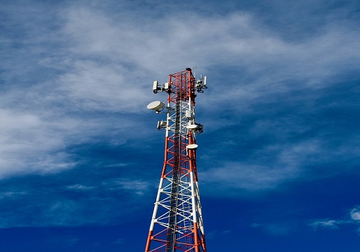
Sterlite Technologies’ share surge makes it the stock of 2026. (Image X.com)
By S. JHA
A full-spectrum investigation into India’s most explosive stock move of 2026: the catalysts, the fundamentals, the technicals, the innovation edge — and the risks the market may be choosing to ignore
Mumbai, May 28, 2026 — The numbers, stated plainly, are startling. From the levels of ₹231.22 on April 10, the counter has delivered multibagger returns to investors. The rally has been even stronger from its 2026 low of ₹84.60, touched on January 27. Since then, shares of Sterlite Technologies have skyrocketed almost 600%.
The stock locked at its upper circuit of 5.0% on May 27, 2026, closing at ₹510 — a new 52-week and all-time high. The 5% price band capped the rally, effectively freezing trading at the ceiling price, with buyers queuing and no sellers willing to part with shares.
On a year-to-date basis, the stock had spurted 351.9%, resulting in wealth gains for investors. In the span of barely four months, Sterlite Technologies has moved from a distressed small-cap nursing a multi-year earnings slump to India’s most talked-about AI-infrastructure play.
The proximate trigger for the most recent surge was filed to stock exchanges on the evening of May 22, 2026, after market hours.
Sterlite Technologies’ subsidiary secured a multi-year supply agreement valued at $1.11 billion from a global hyperscaler for AI-ready data centre infrastructure projects in the US. The company said its subsidiary received a Product Award Letter (PAL) from an international hyperscale partner for the supply of optical connectivity products between FY27 and FY29. Purchase orders will be released periodically over the contract tenure, with both parties operating under a reciprocal risk-sharing framework that caps financial liabilities in the event of supply shortages or lower-than-expected demand.
The identity of the hyperscaler remains undisclosed. The framework, however, is forensically significant: the agreement includes a reciprocal risk-sharing framework, defining capped financial liabilities for both parties in case of demand shortfalls or supply constraints. This is not a standard purchase order. It is a structured partnership with shared downside protection — the kind of arrangement a hyperscaler extends only to a supplier it regards as mission-critical.
In a regulatory filing, Managing Director Ankit Agarwal stated: “Under this agreement, STL, through its optical solutions, will support building AI data center infrastructure in the US for this hyperscaler. We are enabling connectivity backbone for the AI data centers.”
In rupee terms, the international supply order is valued at more than ₹10,000 crore. To contextualise: STL’s entire FY26 revenue was ₹4,745 crore. The order, spread across FY27–FY29, is worth more than two full years of the company’s current annual revenues.
This is not a commodity optical fibre play. The market is pricing something more specific.
STL launched its Neuralis AI Data Center portfolio, featuring ultra-high-density pre-terminated fibre cables designed for GPU-intensive AI clusters, along with high-speed data centre interconnect solutions under the Celesta IBR cable series, which support up to 6,912 fibres.
More significantly, STL has developed proprietary next-generation transmission technology. STL introduced India’s first Hollow Core Fibre (HCF) cable, capable of approximately 46% faster transmission, and continued to scale its Multi-Core Fibre (MCF) technology to meet the extreme bandwidth demands of modern hyperscalers.
Hollow Core Fibre — where light travels through air rather than glass — represents a fundamental leap in latency performance. In AI data centres, where GPU clusters exchange data at nanosecond intervals, a 46% speed improvement is not incremental. It is architectural. The fact that STL holds this capability in-house and has launched it commercially is what elevates the company from component supplier to technology partner in the eyes of the hyperscaler community.
The stock’s re-rating is not built on hope alone. The FY26 earnings, approved by the board on April 29, 2026, represent a credible operational turning point.
Sterlite Technologies reported revenue of ₹4,745 crore for FY26, representing 18.8% year-on-year growth. The company achieved EBITDA of ₹628 crore for FY26 with margins of 13.2%, marking the sixth consecutive quarter of sequential margin improvement. Q4 FY26 EBITDA stood at ₹218 crore with margins of 15.1%, driven by higher utilization and improved product mix.
The profit line deserves particular attention. STL delivered a consolidated net profit of ₹59 crore in Q4 FY26, compared to a loss of ₹17 crore in the previous quarter — a company that was loss-making just one quarter earlier turned profitable in its final quarter of the year.
The order book tells the forward story. The total open order book stands at ₹73.09 billion. FY26 order intake reached ₹76.90 billion against ₹36.70 billion in FY25 — a 109% growth rate. A doubling of order intake in a single year is a leading indicator of extraordinary revenue potential over the next 24–36 months.
On the balance sheet: PAT from continued operations reached ₹56 crore, marking a positive turnaround. The company successfully reduced its net debt to ₹1,128 crore, resulting in a healthy net debt-to-equity ratio of 0.5.
STL has outlined a clear financial target to bring its net debt-to-EBITDA ratio to below 1.20x by FY27, from the current 1.30x in Q4 FY26.
Sterlite Technologies is trading above all key moving averages — the 5-day, 20-day, 50-day, 100-day, and 200-day averages. This alignment confirms a strong bullish trend.
However, a delivery volume divergence warrants scrutiny. On May 25, delivery volume was 83,880 shares but fell sharply by 70.63% against the 5-day average delivery volume. This decline in delivery volume suggests that while the stock is hitting upper circuit, the buying may be more speculative or intraday in nature rather than backed by long-term accumulation.
The contrast with an earlier upper circuit session is instructive: on May 8, delivery volume rose to 43.66 lakh shares, a 32.73% increase against the five-day average delivery volume, signalling that shares traded were being held, not merely churned. When delivery volumes fall even as the stock hits circuits, it signals thin-liquidity momentum rather than broad institutional conviction — a distinction that matters to any investor entering at these levels.
A rigorous analysis demands that the bears be heard.
Valuation stretch. The stock trades at a price-to-earnings ratio of 266 times and a price-to-book value of 7.01 times, raising questions about sustainability at current levels. Even accounting for the $1.11 billion order, P/E of 266x requires flawless execution across three financial years.
Legacy debt burden. The company’s five-year operating profit contraction of 16.46% annually, weak ROE of 6.21% on average, and high debt-to-EBITDA ratio of 5.81 times — based on the longer historical average — highlight financial constraints that a single order cannot fully erase.
Contract concentration risk. The $1.11 billion order flows through a single unnamed hyperscaler. The contract’s risk-sharing framework protects both parties, but demand concentration in one customer — however large — introduces execution and relationship risk that STL’s historical order mix did not carry.
Identity opacity. The hyperscaler’s non-disclosure is standard practice in US tech contracts. But for Indian retail investors, it means material revenue visibility rests on an unnamed counterparty. Any deterioration in that relationship would be invisible until it hits the numbers.
STL is capitalising on the intersection of three major investment cycles: FTTx, data centers, and 5G. The company is increasingly shifting its focus toward high-growth segments, with Enterprise and Data Center revenues expected to scale up to 30% in the current year.
The AI infrastructure boom is not a single super-cycle. The data centre connectivity market is structurally expanding as GPU clusters require progressively denser fibre connectivity per rack. As AI models become larger and data centers become more GPU-intensive, the amount of data moving between servers increases sharply, requiring significantly higher optical fibre density inside data centres — precisely where companies like STL benefit.
What the market is really pricing is a narrative transition: STL is no longer simply a telecom capex cycle beneficiary. It is now positioned as a direct enabler of the global AI infrastructure build-out — with proprietary technology, a proven hyperscaler relationship, and a vertically integrated manufacturing stack that few Indian companies can match.
Disclaimer: This article is for informational purposes only and does not constitute investment advice or a solicitation to buy or sell securities. STLTECH is a high-momentum small-cap stock with significant valuation risk. Consult a SEBI-registered investment advisor before making any financial decisions.)
Follow The Raisina Hills on WhatsApp, Instagram, YouTube, Facebook, and LinkedIn




About The Author