Putin and Li Qiang Signal Deeper Russia-China Ties as Trade, Energy and BRICS Cooperation Expand
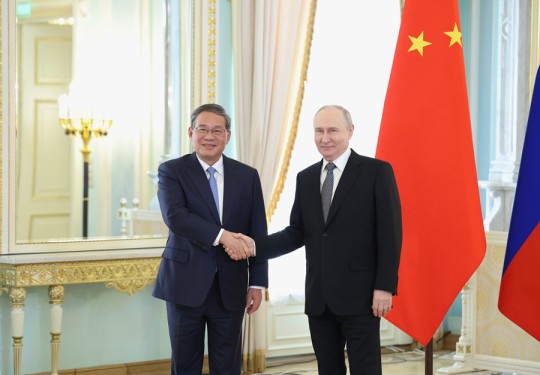
Chinese Premier Li Qiang met with Russian President Vladimir Putin in St. Petersburg. (Image China MFA on X)
By TRH Foreign Affairs Desk
After talks in St Petersburg, Moscow and Beijing reaffirmed strategic coordination, economic cooperation and a shared commitment to multilateral platforms, with agricultural trade between the two countries rising 34% in the first eight months of 2026.
New Delhi, October 22, 2026 — Russian President Vladimir Putin and Chinese Premier Li Qiang have reaffirmed their commitment to strengthening bilateral ties, with energy, agriculture, artificial intelligence, space, transport and multilateral coordination emerging as key areas of cooperation.
Putin met Li in St Petersburg on October 21, following the 31st regular meeting of the Russian and Chinese heads of government, co-chaired by Li and Russian Prime Minister Mikhail Mishustin. The meeting mechanism, established three decades ago, was described by Putin as an effective instrument for translating agreements reached by the two countries’ leaders into practical cooperation.
The latest engagement underscores the importance Moscow and Beijing attach to maintaining momentum in their comprehensive strategic partnership amid a changing international environment. Both sides presented their relationship as grounded in equality, mutual respect, mutual benefit and consideration for each other’s interests.
Putin said Russia-China relations were developing successfully and dynamically, adding that they were not directed against any country and did not depend on the prevailing international situation. He also said the two governments would continue expanding cooperation across key sectors.
Agricultural trade gains momentum
One of the clearest economic indicators cited by Putin was the growth in agricultural trade. Bilateral agricultural trade turnover increased by 34% during the first eight months of 2026, he said.
The Russian president also highlighted cooperation in energy, information technology, space and the peaceful use of nuclear energy. The Chinese statement identified energy resources, trade and investment, transportation and other practical areas as priorities for further cooperation.
The emphasis on economic complementarity suggests that both governments want to deepen commercial links alongside their high-level political engagement. However, the statements did not provide an overall bilateral trade figure or announce a new quantified trade target.
Both sides also stressed cooperation beyond strategic and economic affairs. Putin and Chinese President Xi Jinping launched the China-Russia Year of Education in Beijing in May, with activities now underway, according to the Russian statement.
Li said the two countries should implement the programme effectively and expand exchanges in culture, tourism, sports and youth affairs to strengthen mutual understanding between their populations.
BRICS, SCO and the Global South
The meeting also carried a wider geopolitical message. Li said China was willing to strengthen communication and coordination with Russia on major international issues and work closely through multilateral platforms, including BRICS and the Shanghai Cooperation Organisation (SCO).
He framed this cooperation as part of efforts to unite more forces from the Global South, safeguard common interests and uphold fairness and justice in international affairs. The Chinese statement also criticised unilateralism and hegemonism.
Putin, meanwhile, expressed support for China hosting this year’s APEC Leaders’ Informal Meeting and taking over the BRICS chairmanship next year.
The two presidents have met multiple times in 2026, with Putin referring to three meetings and the Chinese statement referring to two. They are expected to have another opportunity to meet at the APEC Summit in Shenzhen in November, according to Putin.
Putin also referred to the upcoming Fifth Plenary Session of the 20th Central Committee of the Communist Party of China, scheduled for October 26–29, and wished the meeting success.
Strategic alignment with a practical economic agenda
The latest talks show how Russia and China are seeking to reinforce their partnership through regular government-level coordination, expanding economic links and cooperation in multilateral institutions.
For Moscow, maintaining close ties with Beijing supports cooperation across major economic and technological sectors. For Beijing, Russia remains an important partner in energy, trade and strategic coordination. Both governments are also using BRICS and the SCO to advance their positions on global governance and the interests of developing countries.
Their public statements stress that the partnership is not directed against third parties. Yet the emphasis on strategic communication, resistance to unilateralism and coordination across multilateral platforms also reflects a shared preference for a more multipolar international order.
The reported 34% growth in agricultural trade offers one concrete indicator, but the statements provide no overall trade totals or new targets against which broader progress can be measured.
For now, Moscow and Beijing are signalling continuity rather than a dramatic policy shift: stronger practical cooperation at a time of international uncertainty, backed by sustained contact between their political leaders and governments.
Follow The Raisina Hills on WhatsApp, Instagram, YouTube, Facebook, and LinkedIn




About The Author